US craft beer aluminium cans share hits 78%, leading growth to level off, Brewers Association says
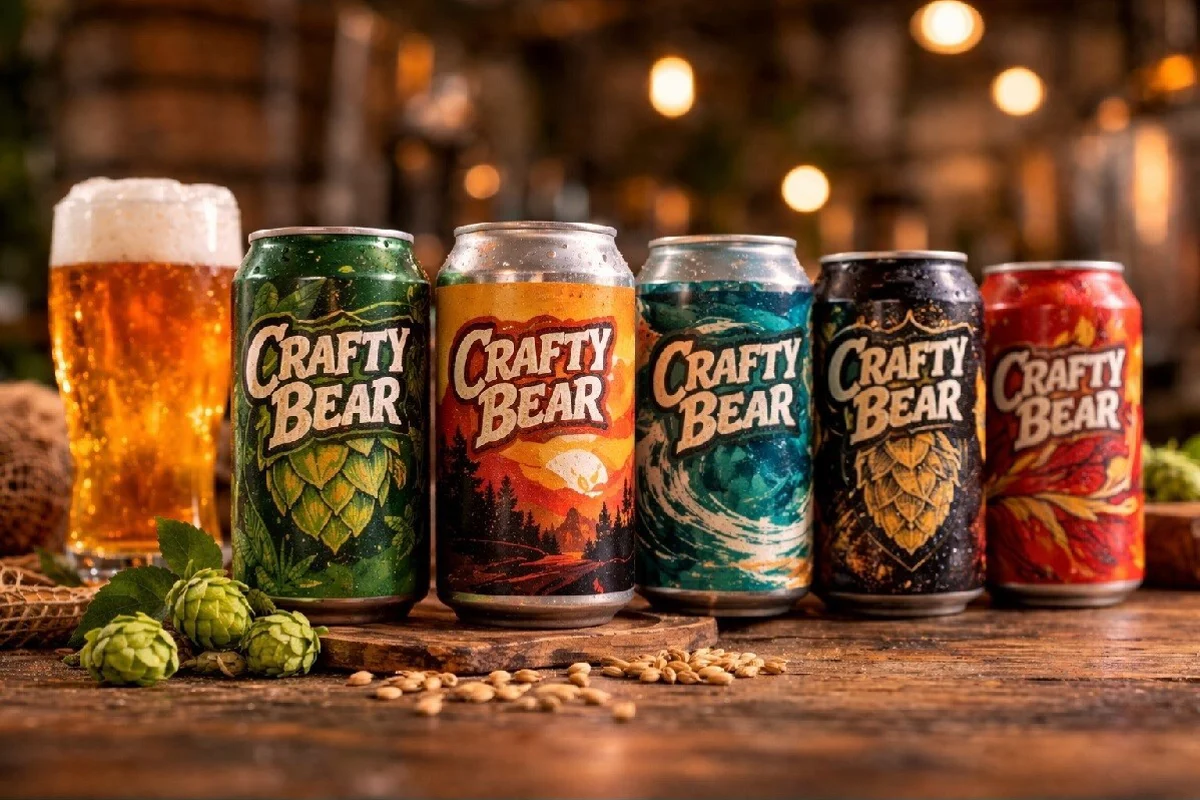
Aluminium cans have become the main packaging format for US craft beer, though the shift away from glass bottles now appears to be slowing. Data for 2025 from the Brewers Association shows that most craft beer is already sold in cans, leaving limited room for further gains.
Cans represented 78 per cent of packaged craft beer volume in 2025, while glass bottles accounted for the remaining 22 per cent. The figures illustrate how strongly aluminium has gained ground over recent years. In 2022, cans held 69 per cent of the market compared with 31 per cent for glass, reflecting a steady movement toward metal packaging across the craft segment.
Regional differences highlight uneven adoption
The transition to cans is not uniform across the country. Some states have already reached near-saturation levels, leaving little room for further change. In Rhode Island, for instance, 92 per cent of craft beer is packaged in cans, indicating that most breweries there have already completed the shift.
“There’s not much more space to give. There are some brands that will always be in bottles,” said Matt Gacioch, staff economist with the Brewers Association, which represents thousands of small and independent brewers.
Other regions still have room for cans to gain share. In states including Mississippi, Kansas and Louisiana, cans account for around 58 per cent or less of craft beer packaging, suggesting additional growth potential in those markets.
Explore- Most accurate data to drive business decisions with Global Aluminium Industry Outlook 2026 across the value chain
Switching packaging formats remains costly
Cost pressures such as tariffs and rising operational expenses continue to complicate brewers’ packaging decisions.
Gacioch said switching away from cans is difficult for many brewers because they have already invested in their own canning lines. Moving to another format would require significant additional capital.
“There’s high switching costs if they were going to try to package something other than cans,” he said. “And so the idea that a cost increase would make them suddenly scrap that and invest in a whole new, say, bottling line or something - it just isn’t the reality.”
As a result, brewers are often left with the choice of absorbing higher costs or passing them on to consumers. The full impact of tariffs may also emerge gradually as breweries renew supply contracts.
“A lot of the tariff price increase will be felt when they’re re-upping those contracts or placing their next big order rather than going through their inventory of aluminium right now,” he said.
At the same time, anecdotal evidence suggests the price gap between glass packaging and aluminium has narrowed, according to Gacioch.
Consumer demand shifting toward value packs
Changes are also visible in the way craft beer is sold. While six-packs remain the most common format, representing 45 per cent of craft beer sales, other pack sizes are gaining momentum.
Single cans account for 8 per cent of craft beer volume, with 19.2-ounce “stovepipe” cans becoming particularly popular. In 2025, these larger single cans made up 60 per cent of individual beer sales, up from 55 per cent in 2024.
At the opposite end of the spectrum, 24-packs also saw increasing demand. Although they represented 2 oer cent of total Brewers Association craft beer volume in 2025, they were the only major pack size to grow year over year. During the same period, average case prices declined 4.6 per cent, while volumes rose 6.4 per cent.
Also read: Aluminium can supply shortage looms large, leading to a deferral of quality control norms
2026 outlook
Gacioch expects only limited changes in the balance between bottles and cans in the near term, indicating that the shift toward aluminium packaging is approaching a plateau. Cans could gain one to two percentage points of share or decline by around one percentage point, but significant movement is unlikely. Even with such fluctuations, aluminium cans are expected to remain in the high-70 per cent range of packaged craft beer volume in 2026.
Must read: Key industry individuals share their thoughts on the trending topics

Image generated by AI for referential purpose
Sweden’s scientist proposes to include aluminium as a maritime transport fuel
Next articleAluminium at the core: iCaur details 03T engineering as T03 and V23 near South Africa debut
Grow with
AL Circle