您想继续阅读英文文章还
是切换到中文?
是切换到中文?

THINK ALUMINIUM THINK AL CIRCLE

Resource galore, wider applications of technologies, world-class road infrastructure, business-friendly industrial policies are some of the key factors that drove the pace of world-class aluminium production in the United Arab Emirates.
{newsStudioGallery}
{alcircleadd}Emirates Global Aluminium, popularly known as EGA is one of the leading UAE-based aluminium smelters. The development of EGA, which began in the 1970s, has taken the UAE from no aluminium production to the fifth largest aluminium producing nation in the world. About 1 tonne in every 25 tonnes of aluminium produced worldwide is made by EGA in the UAE.
So, being one of the leading aluminium producing nations in the world, UAE imports a significant amount of alumina as a raw material for the production. EGA, for instance, imports all the alumina it uses in aluminium production.
The UAE imports alumina from various parts of the globe, but India is one of the major suppliers. According to the global export-import data, the UAE’s estimated alumina imports from India is recording a year-on-year growth since the past three years. This year, the imports volume is expected to grow to 737,858 tonnes from the estimate volume of 704,150 tonnes in 2017, up almost 5 per cent. In 2016, on the other hand, the UAE’s estimated alumina imports volume from India was at 434,162 tonnes. Thus, 2017 saw a sweeping rise in the UAE’s alumina imports from India by 62 per cent.
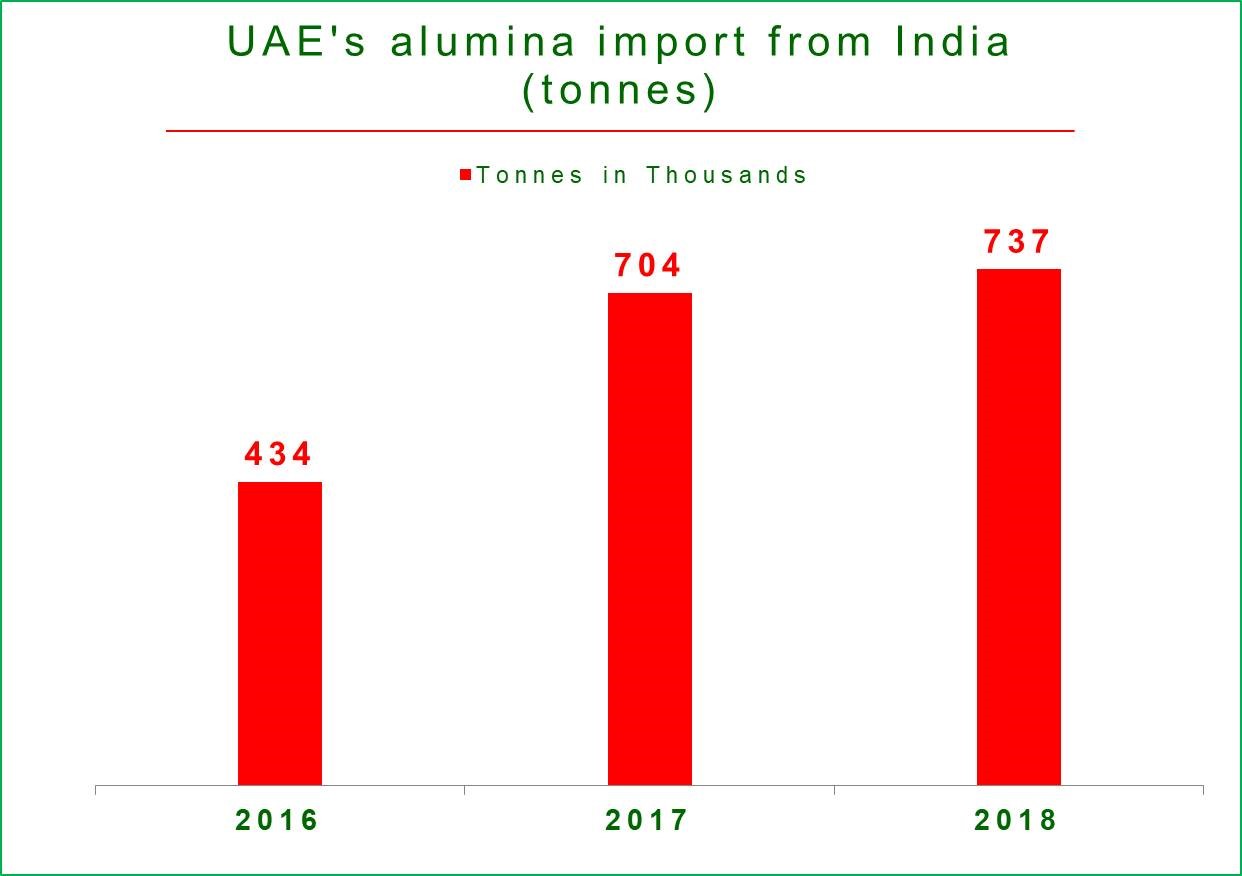

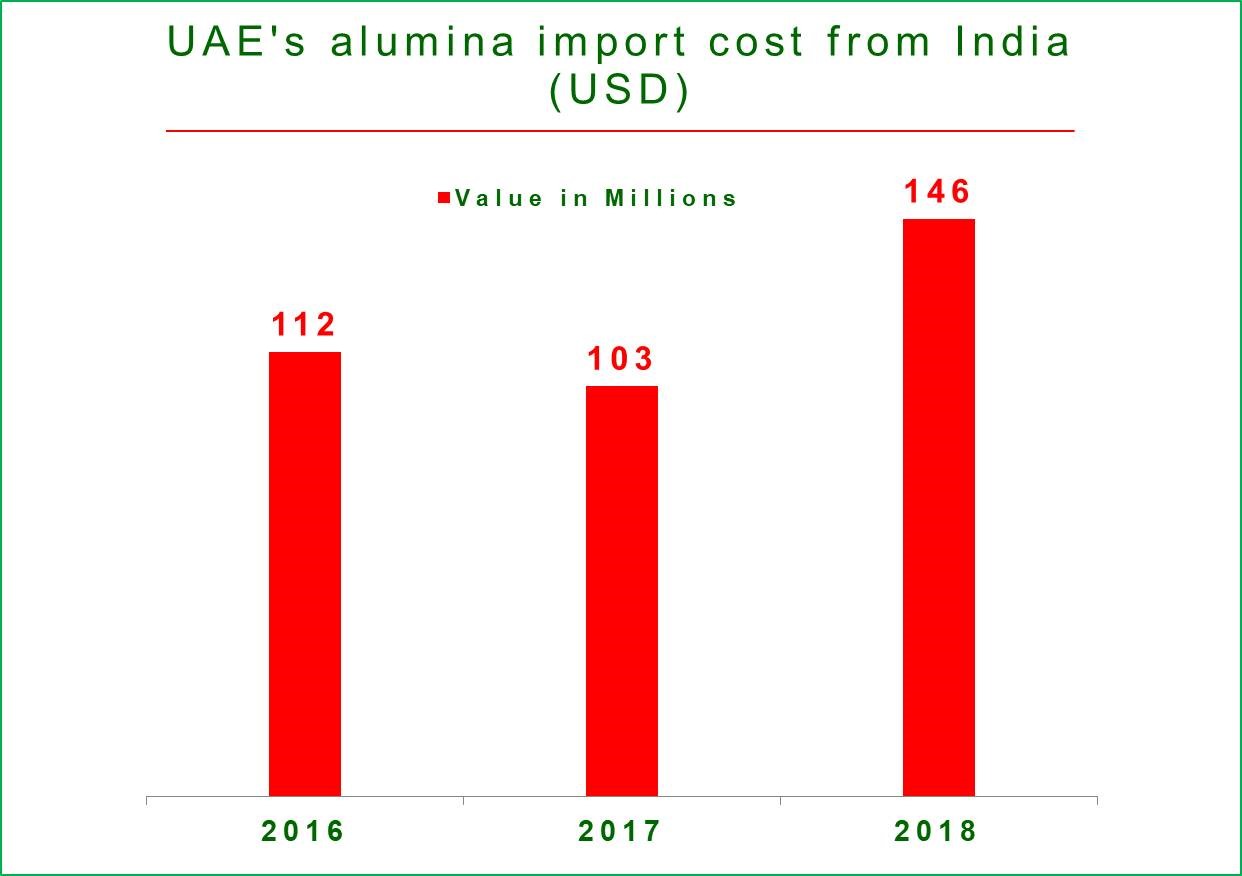
The UAE’s alumina import cost from India is also anticipated to rise in 2018, along with the volume. The cost is estimated to be at US$ 146 million, up 42 per cent from US$ 103 million in 2017. In 2016, on the other hand, the UAE’s estimated alumina import cost from India was at US$ 112 million, which means it was greater than that in 2017 despite a volume stood lower.
The below graph shows the movement of the UAE’s alumina import cost year-on-year.
Responses


A proud
ASI member
AL Circle Private Limited | CIN: U72200WB2017PTC221175
Registered Office: Ecospace Business Park, Block 3A, Unit 401A, New Town, Rajarhat, Kolkata, WB 700160
Corporate Office: Ecospace Business Park, Block 3A, Unit 401A, New Town, Rajarhat, Kolkata, WB 700160
© 2026 AL Circle. All rights reserved. AL Circle is not responsible for content from external sources.