Ukraine’s 2019 bauxite import to record steady growth both in terms of volume and cost
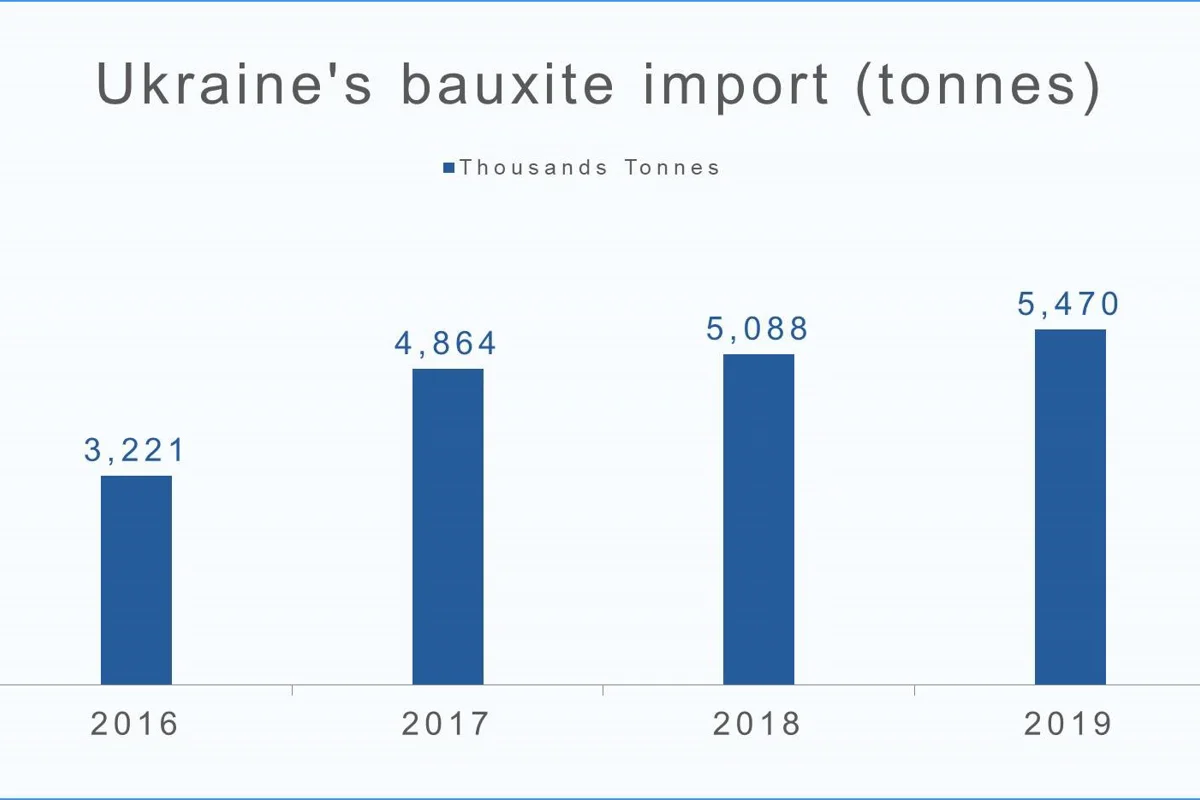
Bauxite import by Ukraine has been recording a steady growth year over year since 2016. According to our third-party data, Ukraine had imported an estimated amount of 3.2 million tonnes in the said year, which in 2017 had risen to 4.8 million tonnes. Therefore, in 2017, Ukraine’s bauxite import had recorded a jump of 50 per cent year-on-year. In 2018, the estimated import amount grew further to 5 million tonnes, up 4 per cent from 2017. This year is expected to show no exception either, as the amount of bauxite import by Ukraine is expected to climb 8 per cent year-on-year to 5.4 million tonnes.
Alongside, Ukraine’s bauxite import cost has been growing as well. From US$122 million in 2016, the country’s estimated cost of import had grown to US$212 million in 2017, up 74 per cent. The year 2018, however, recorded a drop to US$207 million despite a growth in import volume. In 2019, the estimated import cost is expected to be rebounded and stand at US$227 million, up 10 per cent year-on-year.

Guinea and Guyana are the two countries that account for the maximum amount of bauxite import by Ukraine. In 2019, Ukraine is expected to import around 3.8 million tonnes of bauxite at US$120 million from Guinea, compared with 3.7 million tonnes of import at US$118 million in the previous year. From Guyana, on the other hand, Ukraine is likely to import 1.3 million tonnes of bauxite at US$87 million in 2019, in contrast of 1.1 million tonnes of import at US$75 million in 2018.

Ukrainian aluminium industry consists of an alumina refining plant in Mykolaiv and the ZALK aluminium smelting plant in Zaporizhia, which is controlled by RUSAL. Annual capacity is estimated in excess of 1 million tonnes of refined alumina. Only a fraction of it is processed domestically, with a fairly constant production of 0.11 million tonnes of primary aluminium (2003–2007), or 0.3% of global output.
Guinea to increase country's energy production to facilitate bauxite refining in the country
Next articleBauxite miner PT Gunung Bintan Abadi's export permit cancelled, says Ministry
Grow with
AL Circle