UK commits $66m to critical minerals sector, reinforcing aluminium's strategic role
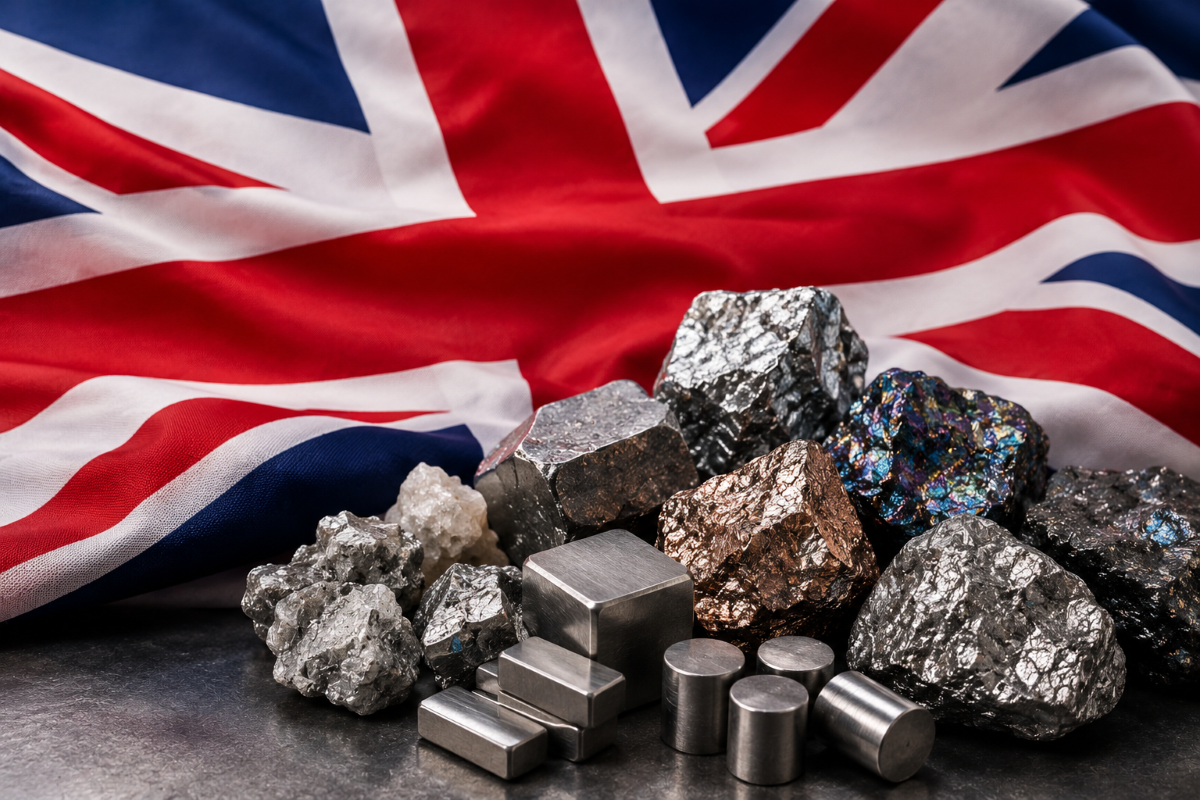
The image used in this article is generated with an AI tool and does not depict any real-time moment
The UK government has announced a GBP 50 million (USD 66 million) investment to strengthen domestic production of critical minerals, as it seeks to reduce reliance on concentrated global supply chains and improve economic resilience. The funding is also expected to support sectors such as aluminium, which was added to the UK's Critical Minerals Strategy in 2024.
The funding will support projects covering mineral extraction, processing and recycling to secure supplies of materials used in products ranging from smartphones and household appliances to electric vehicle batteries. The latest allocation builds on more than GBP 200 million already committed to the sector.
Industry Minister Chris McDonald is expected to launch the programme during a visit to an industrial research hub in northeast England, where companies are developing technologies for metal recovery and processing.
The announcement comes as the UK intensifies efforts to secure critical mineral supplies amid rising global demand and China's continued dominance of the sector. China accounts for around 70 per cent of global rare earth mining and about 90 per cent of rare earth refining.
The government's recent efforts also include the opening of the UK's first commercial rare earth magnet plant in 25 years. Operated by Mkango Resources' HyProMag unit in Birmingham, the facility uses recycled materials to manufacture magnets for electric motors and other technologies.
The UK has also expanded cooperation with countries including the United States and South Korea to diversify access to critical minerals through partnerships focused on supply chains, processing capacity and investment.
The new funding package will be distributed across three areas, including GBP 20 million for a rare earth magnet hub, GBP 25 million for an accelerator programme to help scale projects, and up to GBP 5 million for a platform designed to aggregate industry demand and attract private investment.
Explore: The most comprehensive and forward-looking industry-focused report – Global Bauxite & Alumina Market Forecast to 2036: Supply–Demand, Trade Flows & Price Outlook
Aluminium recognised as a strategic mineral
In 2024, aluminium was formally added to the UK's Critical Minerals Strategy and designated as both a Critical Mineral and a Growth Mineral under the Government's Vision 2035 framework.
The decision followed several years of engagement between the Aluminium Federation (ALFED), government departments and industry stakeholders, with ALFED advocating aluminium's inclusion because of its importance to UK manufacturing, national resilience, economic growth and supply chain security.
ALFED said the government's latest investment package highlights the need to strengthen domestic capability while increasing investment in recycling and processing infrastructure. The organisation noted that critical minerals policy has traditionally focused on mining and primary production, but argued that recycling, remelting and secondary material processing should also play a central role in the UK's long-term resource security strategy.
According to ALFED, expanding domestic recovery, processing and remanufacturing capacity would reduce reliance on imports, improve supply chain resilience and retain greater economic value within the UK. The federation also highlighted that aluminium can be recycled repeatedly without losing performance, while recycled aluminium requires only around 5 per cent of the energy needed to produce primary aluminium.
Explore our e-magazine ALuminium LeaderSpeak 2026 for the latest industry insights and trends.
ALFED outlines priorities for future policy
Looking ahead, ALFED said it will continue to advocate for greater recognition of recycling and secondary materials as strategic sources of supply. The federation is also calling for increased investment in UK recycling, remelting, sorting and advanced processing capacity, along with policies that promote domestic value retention and circular manufacturing.
ALFED also wants greater recognition of aluminium's role in defence, infrastructure, the energy transition and industrial resilience. In addition, it is seeking closer alignment between critical minerals policy, industrial strategy, trade policy and manufacturing competitiveness, as well as continued support for innovation and investment across the aluminium value chain.

Mine to Market: More than a magazine, a steering partner to surf through volatility with peers from across the aluminium value-chain
Next articleLME aluminium price graph: Aluminium prices ease further as exchange inventories continue to decline
Grow with
AL Circle