Türkiye’s 120 GW renewable target puts grid modernisation and aluminium demand in focus
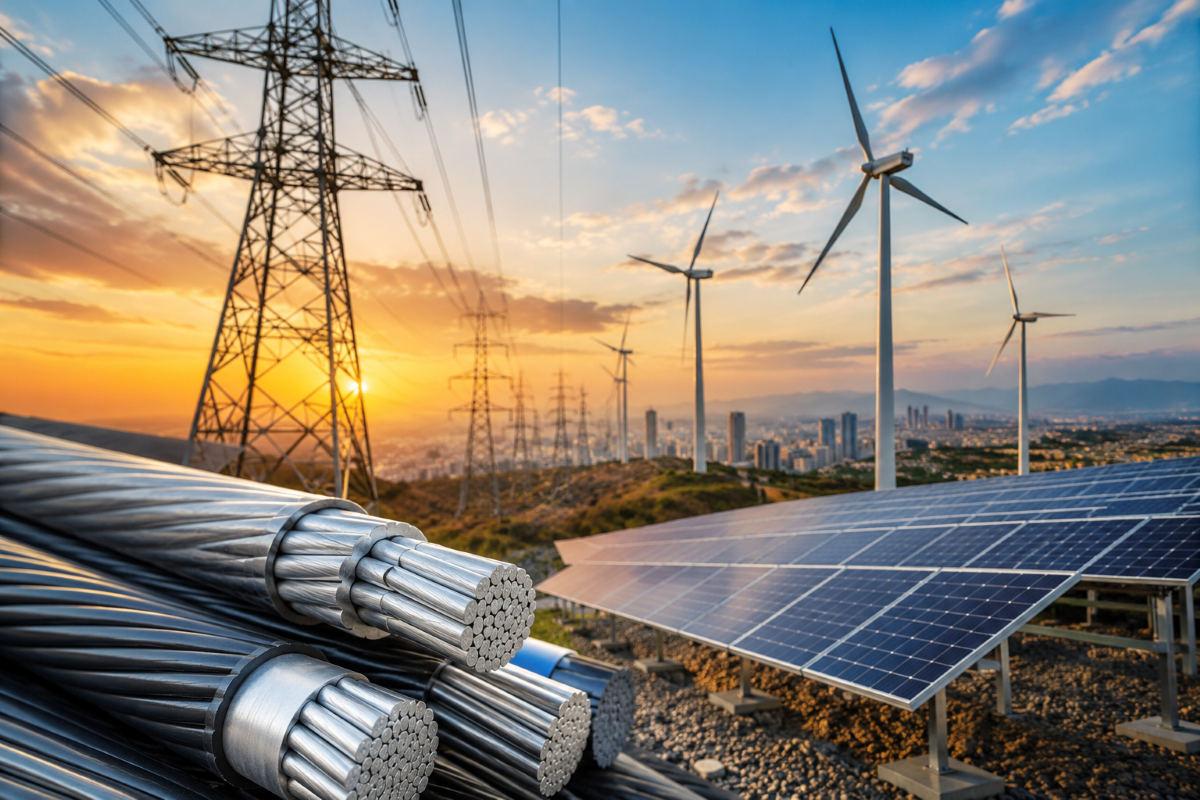
The image used in this article is generated with an AI tool and does not depict any real-time moment
Türkiye’s plan to scale combined solar and wind capacity to 120 GW by 2035 is putting pressure on a less visible part of the energy transition: the networks required to carry growing volumes of electricity. With around USD 80 billion of investment expected in the renewable energy sector, the expansion is also bringing materials such as aluminium into sharper focus because of their role in cables, transmission lines, distribution networks and solar energy systems.
That need is likely to become more pronounced as power demand rises. The International Energy Agency (IEA) expects electricity consumption in Türkiye to continue growing in the coming years, driven by industrial development, the digitalisation of the economy and increasing energy demand. As new generating assets come online, grid modernisation will need to keep pace, widening the requirement for infrastructure solutions that can be deployed efficiently within tight project schedules. Aluminium’s relatively low weight, high electrical conductivity and corrosion resistance make it relevant to this build-out, helping ease structural loads, simplify installation and support longer service life.
Grid economics bring material efficiency into focus
The case for aluminium also extends beyond construction and installation. As energy projects are assessed over longer operating periods, material choices can influence overall efficiency and ownership costs. Aluminium’s conductivity makes it suitable for transmitting electricity across long distances, while its durability and relatively low maintenance requirements can help reduce the total cost of owning and operating energy infrastructure.
Explore: The most comprehensive and forward-looking industry-focused report — Global Bauxite & Alumina Market Forecast to 2036: Supply–Demand, Trade Flows & Price Report
Yiğit Kasapoğlu, Director of RUSAL’s Turkey Representative Office, linked this changing demand picture directly to the need for parallel investment in generation and networks.
“The development of the energy sector requires a comprehensive approach that includes not only the commissioning of new capacities but also the modernization of the infrastructure that enables the transmission and distribution of electricity. As energy consumption increases and new projects are implemented, the demand for materials that can offer reliability, efficiency, and a low carbon footprint simultaneously is also rising. In this context, RUSAL is ready to offer low-carbon aluminum solutions for the cable industry, solar energy, and other areas of energy infrastructure. We foresee that the modernization of Türkiye's energy system will continue to be one of the most important drivers of demand for such products in the coming years,” Kasapoğlu said.
As a result, the longer-term demand story for aluminium is becoming increasingly connected to the physical build-out behind Türkiye’s energy ambitions. Larger electricity networks, new generation facilities and the modernisation of existing systems are widening the metal’s applications and creating additional opportunities for the aluminium sector.
NALCO's $3.5b bet: 0.5Mt aluminium smelter, 1kMW power plant, sustainability push
Next articleHydro, Nexans sign 85kt low-carbon aluminium deal to back Europe’s power grid
Grow with
AL Circle