The intelligence gap in aluminium casting and how to bridge it
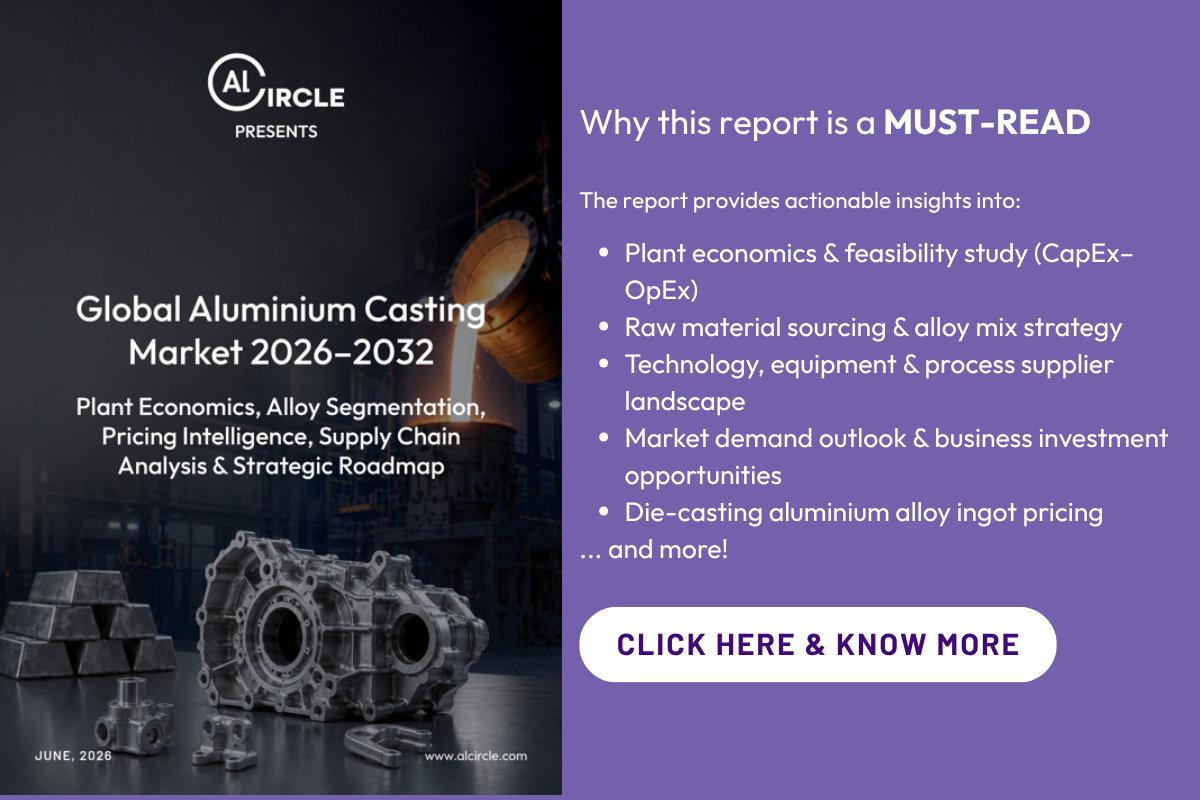
The global aluminium casting industry is becoming more competitive, regionalised and technologically advanced than ever before. Both primary and secondary manufacturers are investing in new casting processes, OEMs are reshaping sourcing strategies, sustainability regulations are influencing production decisions, and lightweighting continues to redefine demand across key industries. Additionally, electric vehicle (EV) adoption, evolving alloy requirements and regional manufacturing shifts are significantly transforming the competitive landscape.
_0_0.png)
However, irrespective of these changes, much of the market research available today continues to follow a familiar formula, including detailed forecasts, regional outlooks and market sizing. Most studies segment the market by casting process, application, end-use industry and geography, supported by market size estimates and long-term forecasts. While these insights are valuable, they have also become the industry standard. The result is a marketplace where many reports appear comprehensive but offer remarkably similar perspectives.
For manufacturers, die casters, OEMs, investors and suppliers, that raises an important question: Is every market report equally capable of supporting strategic business decisions?
This is precisely where AL Circle’s report, "Global Aluminium Casting Market 2026-2032", takes a different approach in six unique ways.
Looking beyond conventional market research
Today's aluminium casting industry demands far deeper intelligence, as businesses are no longer making decisions based solely on market size or CAGR. They need to understand manufacturing competitiveness, alloy evolution, pricing dynamics, sourcing risks, supply chain shifts and process economics before committing capital or expanding production.
While most aluminium casting reports successfully explain what the market looks like through conventional segmentation, comparatively few explain why the market is changing and how those changes will influence future business decisions. Areas such as alloy intelligence, manufacturing competitiveness, pricing dynamics, trade flows and process economics often receive limited attention despite becoming increasingly important for strategic planning.
Knowing which region will grow fastest is useful. Understanding why it is growing, how manufacturing economics are changing, which alloys are gaining preference, how trade patterns are evolving, and what these shifts mean for future competitiveness is where real business value lies.
Market growth means little without manufacturing intelligence
Most industry reports quantify market expansion but provide limited intelligence into what is happening inside the manufacturing ecosystem. While readers gain visibility into production volumes and market forecasts, they often receive little insight into how automation, process optimisation, productivity improvements and technological advancements are reshaping manufacturing competitiveness.
Yet these are precisely the factors influencing investment decisions, capacity expansion and long-term competitiveness.
This is one of the core areas where our report differentiates itself. Besides market forecasts, the report incorporates technical manufacturing insights that connect industry growth with production realities, enabling industry players to understand not only where opportunities are emerging but also how manufacturers are adapting to capture them.
Pricing intelligence is becoming a strategic necessity
Most market reports provide valuable demand forecasts, but comparatively few analyse the commercial factors that influence profitability. As pricing volatility, raw material costs and changing commercial dynamics increasingly affect procurement strategies, contract negotiations and investment decisions, businesses require more than market projections alone.
To bridge this gap, the report "Global Aluminium Casting Market 2026-2032" incorporates pricing intelligence within its research framework, enabling industry players to interpret market developments from both commercial and operational perspectives. For decision-makers, this provides a stronger foundation for evaluating opportunities than relying solely on market size projections.
Trade flows are reshaping global competitiveness
Most aluminium casting reports analyse markets from a regional demand perspective. However, comparatively few integrate trade flow intelligence to explain how import-export movements, changing sourcing strategies and evolving global supply chains influence regional competitiveness. As supply chains become increasingly interconnected and vulnerable to disruption, these insights have become essential for long-term planning.
The report addresses this by incorporating trade flow analysis, helping businesses understand how regional production, exports, imports and supply chain developments may influence future market opportunities and competitive positioning.
Process economics matter as much as process segmentation
Segmentation by casting process has become a standard feature across aluminium casting market reports. Knowing the market share of high-pressure die casting, low-pressure die casting or sand casting provides valuable context, but segmentation alone does not help businesses evaluate long-term commercial viability.
Strategic investment decisions require a deeper understanding of process economics.
- How do production costs compare?
- Which processes are expected to remain commercially competitive?
- Where are manufacturers likely to invest over the coming years?
These questions influence capital allocation, production planning and technology adoption, yet they receive limited attention in many competing studies.
By incorporating casting process economics alongside conventional market segmentation, our report extends beyond market categorisation to provide insights that support long-term manufacturing and investment decisions.
A report designed around business decisions
The difference between a conventional market report and a strategic intelligence report lies in the questions it seeks to answer.
Many aluminium casting reports continue to focus on describing the market through forecasts, regional outlooks and conventional segmentation. Our report has been developed to go a step further by explaining the commercial, operational and technological forces driving those market trends. By combining conventional market analysis with alloy segmentation, manufacturing intelligence, pricing analysis, trade flow integration and casting process economics, the report delivers a broader perspective on the industry's future.
For manufacturers, suppliers, investors, OEMs and procurement professionals, this means gaining access to insights that extend beyond market statistics and support real-world decision-making. If your organisation is evaluating its next investment, expansion strategy or market opportunity, choosing the right research matters just as much as interpreting the data itself.
Pre-book the report, "Global Aluminium Casting Market 2026-2032" today and access a study designed to deliver not just market information, but the strategic intelligence today's aluminium casting industry demands.
Blykalla and Hitachi Energy partner on advanced nuclear systems using aluminium-alloyed steel technology
Next articleGiga-Casting: The aluminium shot - Escaping cost trap via Rheocasting, RidgeAlloy, and Tier 1 consolidation
Grow with
AL Circle