Technological innovations and manufacturing excellence will propel Indian automotive exports to reach $1 trillion by 2035
A new report released on October 4, 2023, indicates that India could achieve a $1 trillion export-driven automotive industry by 2035, focusing on manufacturing excellence, innovation, and technological dominance.
According to a report from the Boston, USA-headquartered international management consulting firm Arthur D. Little, India has the opportunity to generate an additional $400 billion in revenue by 2035, in addition to the existing $600 billion trajectory, through a strategic emphasis on exports, innovation, and technology. This concerted effort could elevate India into a prominent global automotive centre.
The report suggests that players in the Indian automotive industry must enhance their capabilities and establish India as a trusted and competitive centre for vehicle manufacturing, catering to global markets, including those in developed nations.
Dr Andreas Schlosser, the Partner and Global Automotive Leader, said, “We believe that global players could deepen their India footprint further for manufacturing, sourcing, and software, and Indian players could become global champions with a significant international presence as the global industry gets disrupted by megatrends.”

The automotive ER&D (engineering, research & development) and software market on a global scale is projected to experience substantial growth, potentially tripling in value to surpass $400 billion by the year 2030. The report suggests India has a significant opportunity to capitalize on its role as a leading global software hub and the preferred destination for offshoring ER&D activities.
Nonetheless, stakeholders within the industry are encouraged to enhance their product and service portfolios to encompass solutions that align with emerging trends, encompassing areas like zonal architecture design, digital cockpit development, and advanced driver-assistance systems (ADAS).

BC Maitra, the Managing Partner, Arthur D. Little, India & South Asia, said, “India’s automotive software and ER&D strength can thrive by offering solutions aligned with emerging trends like zonal architecture and Advanced Driver Assistance Systems (ADAS). India has the potential to be an automotive innovation leader, with a thriving, well-funded start-up ecosystem.”
In September 2023, Piyush Goyal, the Minister of Commerce and Industry, stated that the electric vehicle major is planning to source automobile parts worth up to $1.9 billion this year from India.
The imports will be around double compared to auto parts worth $1 billion imported by Tesla from India last year, Goyal said while addressing the annual convention of the Automotive Component Manufacturers Association (ACMA). The minister said that in 2022, Tesla had already bought $1 billion worth of components from India; this year, their target is $1.7-$1.9 billion.
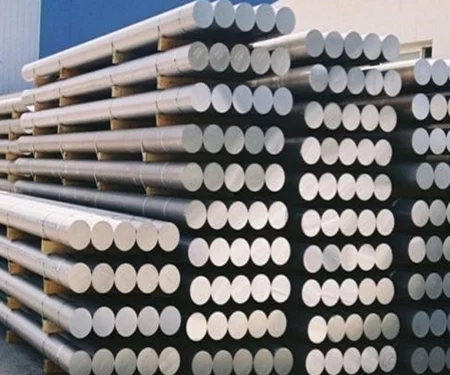
The automotive industry currently stands as one of the foremost driving forces behind the global demand for aluminium, and its prospects for the future are up and coming, especially in the context of electric vehicle (EV) production. As the automotive sector continues to evolve and shift towards sustainable transportation solutions, the demand for lightweight materials like aluminium has surged. With its remarkable strength-to-weight ratio, aluminium has become a preferred choice for EV manufacturers, enabling enhanced energy efficiency, increased range, and reduced environmental impact. Consequently, the automotive industry's reliance on aluminium will grow further as the transition to electric vehicles gains momentum, making it a pivotal player in the future of aluminium.

According to the report, Indian players must also invest in sustainable practices, such as using lightweight materials, secondary aluminium, green steel, and recycling lithium batteries.
Swiss multinational SIG boosts Brazilian expansion with R$49 million investment in carton packaging facility
Next articleAL Circle launches its latest report, “Aluminium Foil and its End-Uses - Current Trends and Forecast”: Book Now
Grow with
AL Circle