Snowy Hydro steps in as NSW races to replace coal with wind ahead of 2026 decarbonisation goals
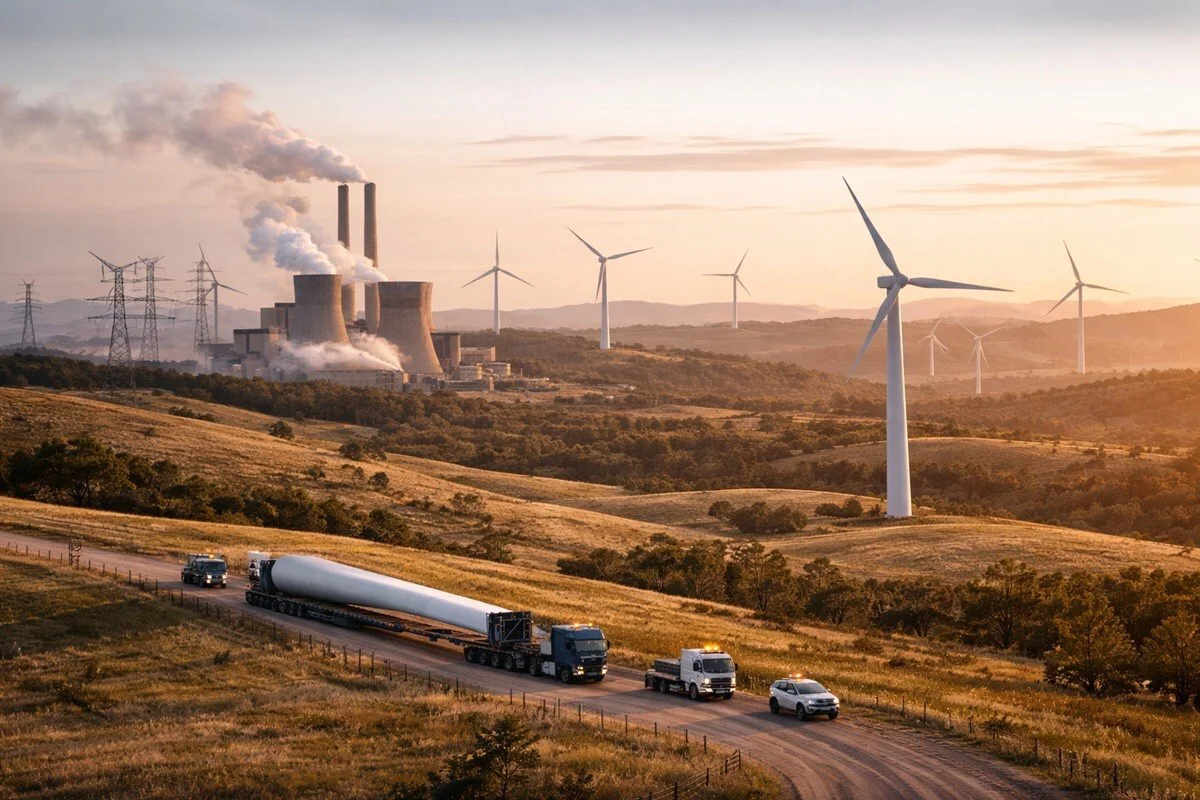
Snowy Hydro could become the “fairy godmother” in the race for power contracts, investment and credibility as New South Wales prepares to close more coal plants. The pressure point is 2026. By then, NSW needs to find about USD 27 billion to finance several wind projects so coal plants can shut while still meeting decarbonisation goals.
Three linked problems now decide whether progress happens:
- signing enough PPAs (long-term power contracts)
- getting equity even though the off-balance-sheet model doesn’t really suit electricity
- dealing with the practical limits of delivering turbines across the state
Wind projects in the South West Renewable Energy Zone (REZ) may be technically stronger than those in Central West Orana, because the land is flatter and the wind is better. But even so, only a few of the many projects are likely to reach final investment decision (FID) in 2026.
The Capacity Investment Scheme was meant to push investment faster, but unlike the old Renewable Energy Target, it hasn’t created real “demand pull.” So what matters most now is execution, not policy. Clearer answers may still be six months away.
To know about 2026 aluminium industry trend, visit: Global Aluminium Industry Outlook 2026.
Money is available - but only if NSW moves first
Over the next 12–18 months, NSW will need, at least USD 8 billion in equity and possibly USD 15 billion in debt and more if everything advances.
South Australia won’t shift the national picture much.Victoria is caught in a difficult moment over offshore wind and may return to onshore - but most onshore projects there don’t look ready for 2026 or 2027. Yallourn remains unresolved.
NSW stands out because policy has been steadier, and there has been gradual progress on:
- coordinating REZs,
- building competitive transmission, and
- involving regional communities.
It is too late to redesign Project EnergyConnect as a 500 kV line, although could still be expanded. Even so, about 2 GW of new southern transmission and more than 5 GW in the Orana REZ should give developers enough room for the next 12–18 months.
The harder challenge is finance, because each owner has different constraints:
- Origin Energy wants to sell - and if Yanco Delta works, more New England projects could follow.
- Someva Renewables has little balance sheet capacity and may need to raise capital or accept dilution, while off-balance-sheet ideas with AGL could create control issues.
- Goldwind builds projects, then sells them.
- AGL plans to move Pottinger into PARF2, similar to earlier Tilt-related structures.
- At Liverpool Range, QIC manages the Future Fund stake and may need more than USD 300 million, plus smaller amounts for Waddi Waddi and Palmer.
Larger projects are still staged, but the stages are now bigger and financing, PPAs and risk profiles can vary from one stage to the next.
Also read: Brazil’s renewable hub expands: CPFL brings $144.8M solar investment to Rio Grande do Norte
Snowy steps into the vacuum
This is where federal ownership of Snowy Hydro becomes important. Like Queensland’s state-owned generators, Snowy can help deliver policy - especially through PPAs connected to Tomago’s electricity needs.
If Snowy signs several gigawatts of PPAs, curtailment risks and the effects on Humelink and VNI West will be considered - but, most importantly, real demand returns to the market. CIS never forced companies to buy renewables; RET certificates did.
Tomago’s cheapest option might actually be buying unhedged electricity from the pool and reducing demand when prices spike - similar to James Hardie - because diversified portfolios reduce firming costs.
But shifting Tomago’s load to Snowy still delivers three big outcomes:
- Tomago keeps operating, even if logic says it might not.
- Snowy becomes a bigger player across households and industry.
- Snowy gets the base to sign 3–4 GW of PPAs.
That immediately focuses attention at AGL, Origin and EnergyAustralia - and possibly Alinta, though Alinta’s priority is likely Victoria. Snowy’s presence becomes the trigger.
Wind can even be built without PPAs (merchant), as Golden Plains showed. Eraring still has to close - meaning new supply must exist first, even if that causes temporarily lower prices, similar to when CSG gas once traded at USD 1–2/GJ before LNG plants were finished.
This turns the transition into a physical, contractual and financial race. Physically, escort rules and transport limits mean only 1–2 turbines per week can reach many sites - sometimes four on other routes. A 1.2 GW wind farm needs about 200 turbines, or two years of deliveries. If two or three big projects build at once, the timeline stretches further.
Contractually, PPAs are still scarce. Financially, most projects are chasing superannuation funds or international equity, except a few like Valley of the Winds and Dinawan.
Project by project: who is likely to move first?
Yanco Delta - likely FID in late 2026 after the federal EPCB process. Origin will probably step back post-sale, with Goldwind and Bechtel involved. Goldwind rarely holds projects long term.
Coppabella - also Goldwind’s. Approvals exist but it hasn’t moved, and it is limited to 4 MW turbines because of transmission.
Liverpool Range - uncertain for 2026. Tilt is prioritising Palmer first. QIC and partners may need about USD 0.8 billion. PPAs may come from AGL or Origin, but neither Liverpool nor Yanco will be ready before Eraring closes in 2027.
Pottinger - could be one of the earliest to move. AGL will take some output via PPA, and Snowy may buy more. Someva lacks capital and could raise funds or sell down. Non-recourse, asset-specific finance may work, but increases structural risk. If Someva adds Hills of Gold and battery access, it becomes a competitor to gentailers.
Dinawan – combines early REZ insight and solid TNB backing - enough balance sheet for USD 4.5 billion, though only 1 GW of rights - yet still lacks a PPA and has taken time through approvals. FID in 2026 likely depends on Snowy.
Valley of the Winds - backed by ACEN and Ayala, but exposure to both this and Robbins Island may require raising more equity. A Class 1 appeal, a possible Snowy PPA and balance sheet decisions will determine whether FID comes by late 2026.
Spicers Creek - sits behind Bungaban in priority. Slow development at Uungula means FID in 2026 looks unlikely.
Bullawah - has 262 MW of rights, manageable through EIP’s majority ownership in BayWa r.e., and could move - but it won’t change the big picture.
Courts, modelling - and what reality actually looks like
Both Hills of Gold and Valley of the Winds face Class 1 merits appeals. These are fresh, full reviews, where IPC decisions are not binding but still influential. They usually take around seven months and involve consultation, though that seems unlikely to help here. Results may arrive by late May — but nothing in law is guaranteed.
Local complaints - including from Marshall Baillieu about noise, visual impact and airfield proximity - were already assessed by the IPC. Without new evidence, the court may reach similar conclusions. Meanwhile, the ISP forecasts fast renewable growth in Central-West Orana and Wagga Wagga, plus later growth in New England and Broken Hill, but slower development in South West NSW.
Reality looks different. The South West already has over 2,000 MW of approvals and access rights and could reach FID in 2026, while Wagga Wagga has almost nothing ready. Renewmap shows how closely Yanco Delta and Dinawan sit together — and how Pottinger and Bullawah also cluster. So as NSW approaches 2026, the transition becomes less about slogans and more about timing, transportation, legal appeals, PPAs - and whether Snowy truly steps in, just as the coal era begins to fade.

NALCO expansion under spotlight as mines secy sets expectations
Next article45MT cap in name only! China’s influence on the global aluminium market lives on through Asia
Grow with
AL Circle