Since 1888, 1.1 billion tonnes of produced aluminium still in use: How much of it did recycling recover?

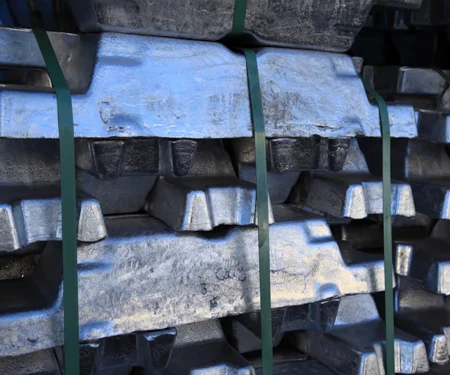
The image used in this article is generated with an AI tool and does not depict any real-time moment
The aluminium industry is undergoing a data-driven transformation, with recycling now delivering up to 95 per cent energy savings, achieving a 75 per cent global can recycling rate, and processing nearly 42 million tonnes of scrap annually. These figures are not just environmental milestones—they are reshaping supply chains, pricing, and national strategies as primary aluminium faces structural deficits and carbon constraints.
Where 1.5 billion tonnes of aluminium went
Of the roughly 1.5 billion tonnes of aluminium produced since 1888, about 1.1 billion tonnes (around three-quarters) remained in productive use in the 2019 estimate. Within that total, approximately 750 million tonnes were still in their first use, while about 370 million tonnes had been recycled and reused. In other words, recycled metal already made up roughly one-third of the aluminium then still in productive use.
The remaining roughly 370 million tonnes were accounted for by material no longer in productive use and by losses across the material cycle. These include aluminium that was not collected after use, material lost during remelting and other recycling processes, and quantities recorded in inventories. The reported breakdown also identifies aluminium used in forms such as powder, paste and steel that are treated as non-recyclable in this accounting. These categories explain why the amount produced over time is greater than the amount still circulating in useful products.
The figures put the recycling opportunity, and its limits, in perspective. Aluminium in first-life products is not all available as scrap today: it may remain in buildings, vehicles, machinery and other long-lived goods for years before reaching end of life. Recycled aluminium is already an important part of the stock in use, but collection and processing losses mean that not every tonne can return to service. The priority is therefore twofold: keep products and metal in circulation for longer, and recover more of the material when products are discarded.
Join the fourth edition of webinar "Hedging for recyclers - Become an expert in 6 hours" by Jorge Dyszel.
Global recycling volumes: 41.9 million tonnes and rising
In 2025, the global aluminium recycling market processed approximately 41.9 million tonnes of scrap, driven by stronger domestic recovery systems and improved processing infrastructure. This volume represents a recycling input rate (RIR) of around 32 per cent, meaning just 320 kg of every tonne of aluminium produced comes from recycled sources.
Regional disparities are significant. In the Americas, the RIR reaches 57 per cent, where recycled aluminium now exceeds primary production. By contrast, many other regions remain below the global average, highlighting substantial untapped potential.
Beverage cans lead the circle: 75 per cent global recycling rate
Aluminium beverage cans achieved a landmark 75 per cent global recycling rate in 2023, the highest among all beverage container materials. This surpasses PET plastic (47 per cent) and glass (42 per cent).
Regional performance is even more impressive:
- East Asia and the Pacific: 94.6 per cent
- Latin America and the Caribbean: 94 per cent
These rates demonstrate that high-collection systems are technically and logistically achievable when policy, infrastructure, and consumer behaviour align.
Market value and growth trajectory: USD 39.13 billion in 2025
The global aluminium scrap market was valued at USD 39.13 billion in 2025 and is projected to reach USD 69.09 billion by 2033, growing at a compound annual rate of approximately 7–8 per cent. Some forecasts place the 2026 market size at USD 56.77 billion, expanding to USD 91.49 billion by 2034.
Price trends reinforce this momentum. In Q2 2026, aluminium scrap prices stood at:
- USA: USD 2,768 per tonne
- China: USD 2,478 per tonne
- India: USD 2,473 per tonne
- Germany: USD 2,630 per tonne
Explore a wide range of aluminium scrap and recycled aluminium products from global suppliers on AL Biz.
Sectoral demand: Transport accounts for 36 per cent of recycled use
The transport sector is the largest consumer of recycled aluminium, accounting for 36 per cent of demand, approximately 11.8 million metric tonnes in 2025. Around half of major automakers are shifting to secondary alloys to meet 2030 emissions targets.
Other key applications include construction and demolition waste recovery (architectural scrap collection rates exceed 90 per cent), packaging (beverage cans, foil, closures) and industrial manufacturing plus electrical applications.
The circularity gap: Only half of scrap is recycled
Despite progress, only about 50 per cent of all available aluminium scrap is currently recycled globally. Approximately 75 per cent of all aluminium ever produced remains in active circulation, but systemic losses occur at collection, sorting, and processing stages.
Old scrap, i.e., post-consumer material from cans, vehicles, and buildings, represented 58.2 per cent of market volume in 2025 and is expected to maintain a 56.5 per cent share through 2033.
Policy and trade: Tariffs, carbon, and strategic scrap flows
Trade policies are increasingly shaping scrap flows. In early 2026, UK aluminium scrap exports rose 9 per cent year-on-year to 217,611 tonnes (January-April). Germany exported 311,491 tonnes in Q1 2026, up 8.8 per cent from Q4 2025.
Notably, aluminium scrap has been excluded from certain tariff regimes (such as US Section 232 measures on unwrought aluminium), giving it a relative trade advantage and reinforcing its strategic role in supply security.
The bottom line
With primary aluminium production forecast to reach 75.3 million tonnes in 2026 (up from 73.9 million in 2025), and global consumption at 100.8 million tonnes in 2024, the gap is increasingly filled by secondary supply.
Note: This is exclusive coverage by AL Circle and may not be reproduced, republished or shared without prior permission.
Grow with
AL Circle