您想继续阅读英文文章还
是切换到中文?
是切换到中文?

THINK ALUMINIUM THINK AL CIRCLE

Worcester Polytechnic Institute (WPI) announced yesterday that a team of materials science researchers is developing the first commercially viable process for recovering valuable metals from red mud, a hazardous byproduct of aluminium production that is currently stored in holding ponds around the world.
“We’re trying to help the environment by getting rid of these ponds, which can leak and destroy surrounding ecosystems,” said reserach team leader Brajendra Mishra, director of WPI’s Center for Resource Recovery and Recycling (CR3). “If our process is successful, we can produce a valuable product while also reclaiming that land.”
The process the WPI team has developed and extensively tested in the lab can extract a magnetic reduced iron oxide from red mud. The material can then be sold to companies that use it to make pigments for construction materials and produce a variety of agricultural applications for soil and crop growth, Mishra said.
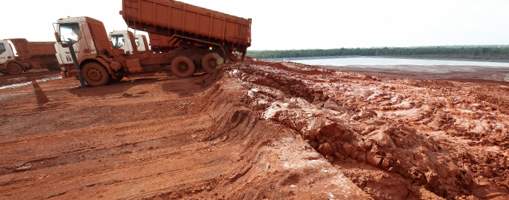
Red mud is the caustic material left over after aluminium is extracted from bauxite. Mishra said about four billion tons of the waste material is stored globally in ponds where aluminium production plants are based, primarily in Canada, Australia, Greece and the south-eastern United States.
About 120 million tons of new red mud waste is produced in a year. For every ton of aluminium produced, more than two tons of red mud is generated. In addition to constituting an economic loss, the waste poses significant environmental risks that include harmful chemicals leaching into groundwater.
{googleAdsense}
As per the release, the research team currently sources the red mud from three sources: a Canadian mining company, a firm in Greece and an alumina plant in Gramercy, La. The companies ship the red mud waste to WPI in 15-gallon drums.
Mishra said that a number of companies are interested in developing solutions to get rid of the red mud, while also producing saleable byproducts.
“We can’t afford to keep collecting red mud in ponds,” he said. “The value in recovering materials from red mud would have a tremendous impact for the aluminium industry and for the economy.”
Responses