Renewable energy is changing the ecological scenario of this desert in China
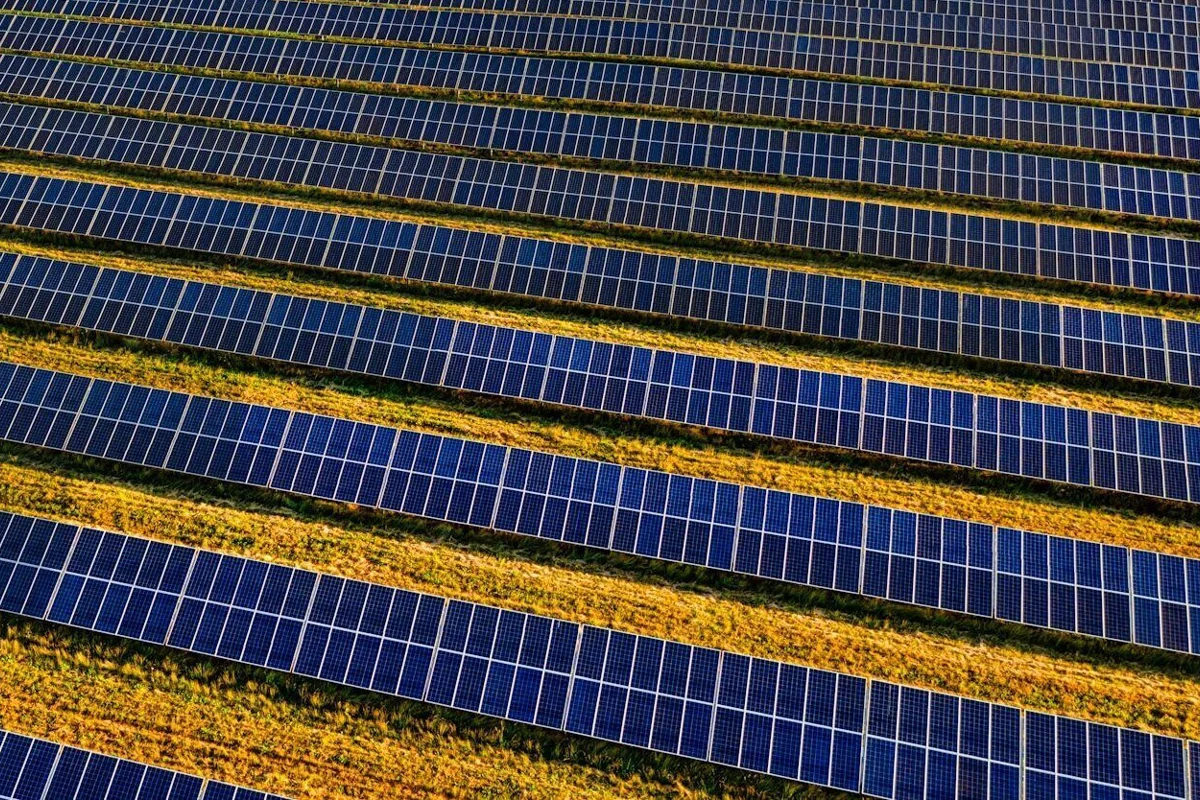
In 2012, engineers installed 1 gigawatt photovoltaic arrays (a complete power-generating unit of a solar energy system with multiple solar panels connected in a series) to produce electricity from the extremely scorched area in the upper Yellow River catchment in the Qinghai province of China.
For the global aluminium value-chain 2026 outlook, book our exclusive report “Global ALuminium Industry Outlook 2026"
Seven years after the project was completed, researchers from Xi’an University of Technology conducted a quantitative study about the environmental changes triggered by desert photovoltaic development.
The panels are facing the southern horizon because China lies in the Northern Hemisphere, where the sun moves across the southern portion of the sky. This positioning allows the panels to receive more direct solar radiation for a longer duration each day, maximising electricity generation efficiency.
The research team set up monitoring stations, collected soil samples, catalogued plant species, and recorded microclimate data at 30-minute intervals over the course of more than a year. Their results, published in Scientific Reports, indicate that solar farms in arid landscapes actively reshape the ecosystem, giving rise to new ecological dynamics.
In the Qinghai Gonghe Photovoltaic Industrial Park, the study area was divided into three parts; areas within the facility’s boundaries were designated as primary on-site study plots. Beyond the rows of panels, transitional zones were established at distances of 200, 600, and 1,500 metres from the installation’s perimeter. Farther away, the team selected off-site reference sites to represent the region’s baseline desert conditions (natural state of the desert environment before any major human intervention).
The researchers used the Driving-Pressure-State-Impact-Response framework, a comprehensive system thinking tool used to analyse the causal relationship between human society and the environment. They also evaluated 57 distinct indicators with the help of the entropy weight method (a statistical technique that gives greater weight to indicators showing less variability across measuring points). These parameters were across vegetation, soil chemistry, microbial communities and microclimate variables with real-time monitoring between June 2019 and July 2020.
The result came with standardised scores, with on-site areas (Within Photovoltaic Site) registered 0.439 under the “general” category. The transitional zones (Transitional Photovoltaic Site) and off-site (Outside Photovoltaic Site) areas recorded 0.286 and 0.28, respectively, falling into the “poor” category. The study was published, highlighting “The WPS had better ecological and environmental conditions than did the TPS and OPS.”
Each solar panel is 1.65 metres long and 1 metre wide with a 22-centimetre gap between adjacent units and is elevated 0.5 metres at the lower edge and 3.03 metres at the upper edge. The 39-degree tilt and 6.87 metre north-south spacing produce a structured layout that causes the ground beneath the panels to alternate between sunlight and shade.
This condition provides the soil surface with advantages like obstructing the insolation before hitting the ground, reducing wind speeds and decreasing evaporation rates. This is a significant benefit for an area which experiences a 10-inch average annual precipitation, whereas evaporation rates used to reach 67 inches, lifting the threshold for plant survival.
The study area in the Gonghe basin showcases alpine arid desert and semi-arid grassland characteristics with an average annual temperature of 39.38 degrees Fahrenheit. Although the panels use non-transparent mono- and polycrystalline silicon materials, the research did not compare alternative technologies. The authors also highlight that earlier studies largely relied on qualitative observations, leaving a gap in quantitative evaluation.
Don't miss out- Buyers are looking for your products on our B2B platform

Hydro maintains 16th percentile cost position with 2.1 Mt aluminium production capacity despite downstream retrenchment
Next articleGreen energy to the rescue: Ust-Chorna keeps the lights on amid Ukraine’s energy crisis
Grow with
AL Circle