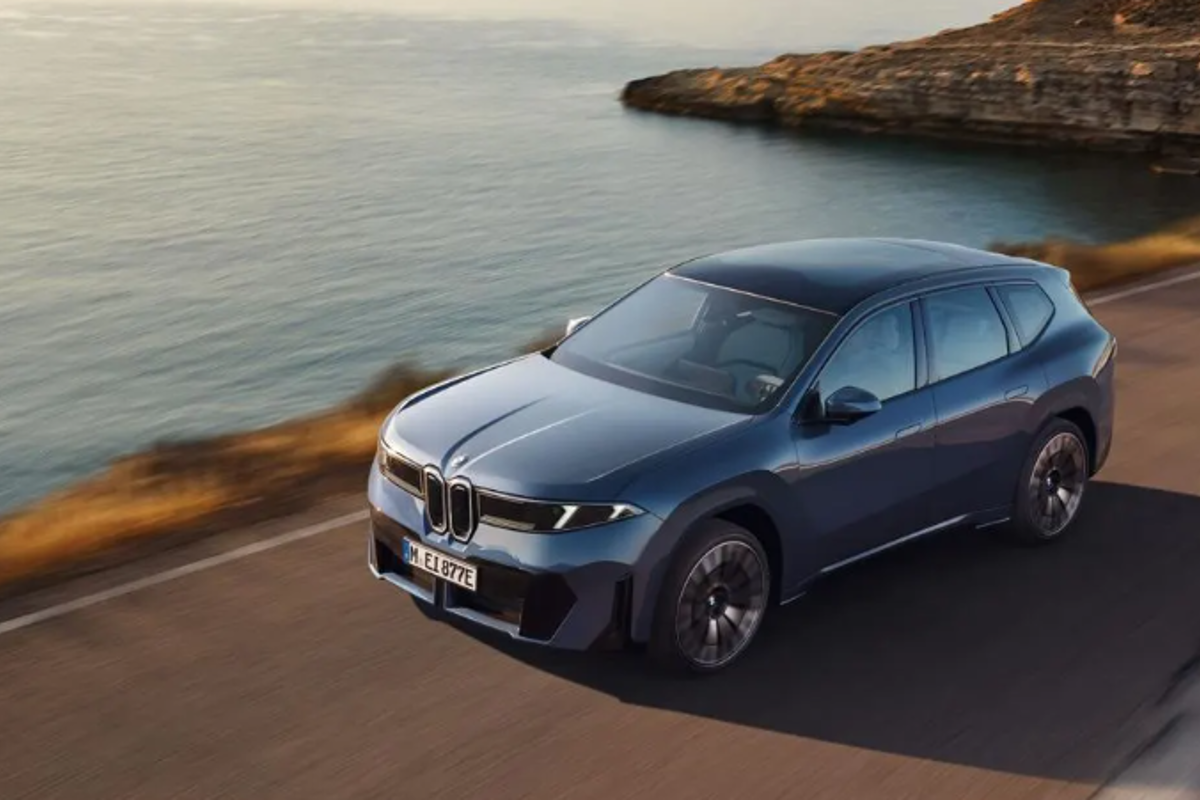
The German multinational manufacturer of luxury vehicles, BMW has officially taken the wraps off its much-anticipated 2026 BMW iX3 “Neue Klasse” all-electric SUV, delivering a blend of strong performance and a 20 per cent boost in driving range. And this time, the company has doubled down on renewable energy and recycled materials like aluminium to make the all-new iX3 not only faster but also cleaner than any BEV it has built before.
The automotive aluminium market is on the fast track to growth. Valued at USD 97.86 billion in 2024, AL Circle projects it will almost double to USD 205.24 billion by 2032, accelerating at a strong CAGR of 9.7 per cent from 2025 onward. What’s fuelling this rise? Automakers worldwide are racing to integrate lightweight, durable, and endlessly recyclable aluminium into their designs to boost performance and sustainability.
Featuring aluminium & other recycled sources
In fact, one-third of the iX3 50 xDrive’s total mass is made up of pre-used aluminium, thermoplastics, and other reclaimed resources. The SUV is 20 per cent more energy-efficient on the road compared to the current model, while incorporating an impressive 740 kg of recovered raw materials. Sales will begin in Germany next spring, starting at €68,900, followed by a North American launch next summer. All the units will be produced at BMW’s Debrecen plant in Hungary.
“The Neue Klasse is our biggest future project and marks a huge leap in terms of technologies, driving experience and design. The materials like lithium, cobalt, and nickel are all 50 per cent secondary raw materials, and we use renewable energy to make the anode and cathode, and we are working on making it even higher. It’s the biggest bet BMW has made on picking the future automotive sweet spot in, well, ever,” according to BMW Board of Management Chairman, Oliver Zipse.
Until now, automakers have mostly reserved secondary aluminium for non-critical parts, but that has changed. The momentum has been building for years. Between 2020 and 2023, the market consistently trended upward as the industry shifted gears toward fuel efficiency and lower emissions.
Starting at USD 58.6 billion in 2020, estimates swung between USD 40.6 billion and USD 70.1 billion over the next two years, before settling at USD 57.46 billion in 2023, proof of steady, long-term demand. Electric vehicles are set to turbocharge this trajectory. By 2035, EVs alone could drive aluminium demand to 16 million tonnes, powered by stricter regulations, the global march toward electrification, and consumer demand for lighter cars with longer ranges.
“If the quality of the secondary material is right, you can do it at much higher percentages than what we are doing now, but it’s limited by the availability of the secondary material. The aluminium rims are 80 per cent secondary material, and the wheel carriers are 70 per cent, so now we have parts with high stress made from secondary material, without changing our material or chemical specifications. The quality of the secondary material has changed, not how we make our parts. BMW has chased down emissions across the board, but the move to stressed aluminium parts has led to a huge chunk of change. With aluminium, we improved our competence with it. We had to know the maximum acceptable limit. We did not change the recycling process. We know a very great deal about what we have to mix between corrosion and fatigue,” said BMW’s Head of Sustainability Vehicle Projects Juergen Froeschl.
This approach makes the 2026 iX3 the most sustainable BMW EV to date, even before it leaves the factory floor. For the first time, reused secondary materials are being integrated into stressed structural components, underscoring BMW’s push to blend performance with genuine circularity.
Driving through the features
The new iX3 debuts BMW’s latest design language with sleek, fluid bodywork and marks the first of up to 40 upcoming models based on the all-electric Neue Klasse platform. Underneath, the fundamentals remain distinctly BMW—a refined strut front end paired with a five-link rear suspension. But it’s between those points where the real innovation lies.
The SUV integrates cylindrical lithium-ion cells into its floor, operating at 698.9 volts with a total capacity of 108.7 kWh. On the WLTP cycle, that translates to an impressive 805 km of range. Charging flexibility is another highlight. A standard 11 kW AC charger fills the pack in 11 hours, while an optional 22 kW setup cuts that to 5 hours 45 minutes. On an 800V DC fast charger, the iX3 supports up to 400 kW, taking the battery from 10% to 80% in just 21 minutes or adding 309–372 km of range in only 10 minutes.
BMW has also built in bidirectional capability, enabling Vehicle-to-Home (V2H) and Vehicle-to-Grid (V2G) discharging at up to 11 kW, plus Vehicle-to-Load (V2L) functionality at 3.7 kW for powering external devices. For China, BMW will introduce a “localised” iX3 variant, featuring a longer wheelbase and stand-alone design, built in Shenyang to cater specifically to the world’s largest EV market.
BMW iX3 50 eDrive – the first model to hit production
The first model to hit production is the BMW iX3 50 eDrive, an all-wheel-drive BEV generating 345 kW, capable of accelerating from 0–100 km/h (62 mph) in just 4.5 seconds. Performance-oriented trims, more affordable single-motor versions, and even a hydrogen fuel-cell variant are also planned to expand the lineup. The Neue Klasse project is such a cornerstone for BMW that it has already inspired five concept cars: the Vision Dee, Vision Neue Klasse, Vision Neue Klasse Next, and the BMW Panoramic Drive, all of which laid the groundwork for the iX3.
According to Juergen Froeschl, BMW’s Head of Sustainability Vehicle Projects, battery production alone can account for more than half of a BEV’s total CO₂ footprint. However, thanks to its advanced cell technology, the 2026 iX3 generates 42 per cent less carbon emissions per watt-hour than the outgoing model.
“We keep plastics and metals out of the seas and landfills, and they take less processing energy to create the raw material. And these days, the quality is comparable to a 100 per cent primary material, at a much lower CO2 cost. BMW insists 30 per cent of the material for the frunk is from maritime plastics, and at 58 litres, it’s a big single part,” added Froeschl.













_md.webp)
_md.webp)







