High coal dependence, low share of recycling major challenges in India's aluminium sector transition
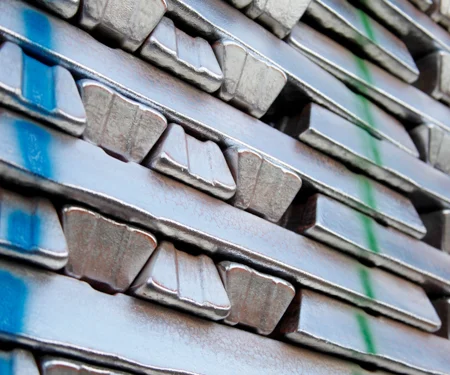
Stock image for referential purposes only
Aluminium's role in the energy transition is set to expand rapidly, but so is the challenge of reducing the carbon footprint of its production. The global aluminium industry emitted an estimated 848 million tonnes (million tonnes) of CO2e in 2024, according to cross-country research by Global Efficiency Intelligence (GEI). China alone accounted for around 69 per cent of these emissions, exceeding its share of global production because of the relatively high carbon intensity of its aluminium output.
The emissions gap across countries is substantial. The key reason is not simply the efficiency of aluminium smelters, but the carbon intensity of the electricity used to power them.
Electricity drives primary aluminium emissions gap
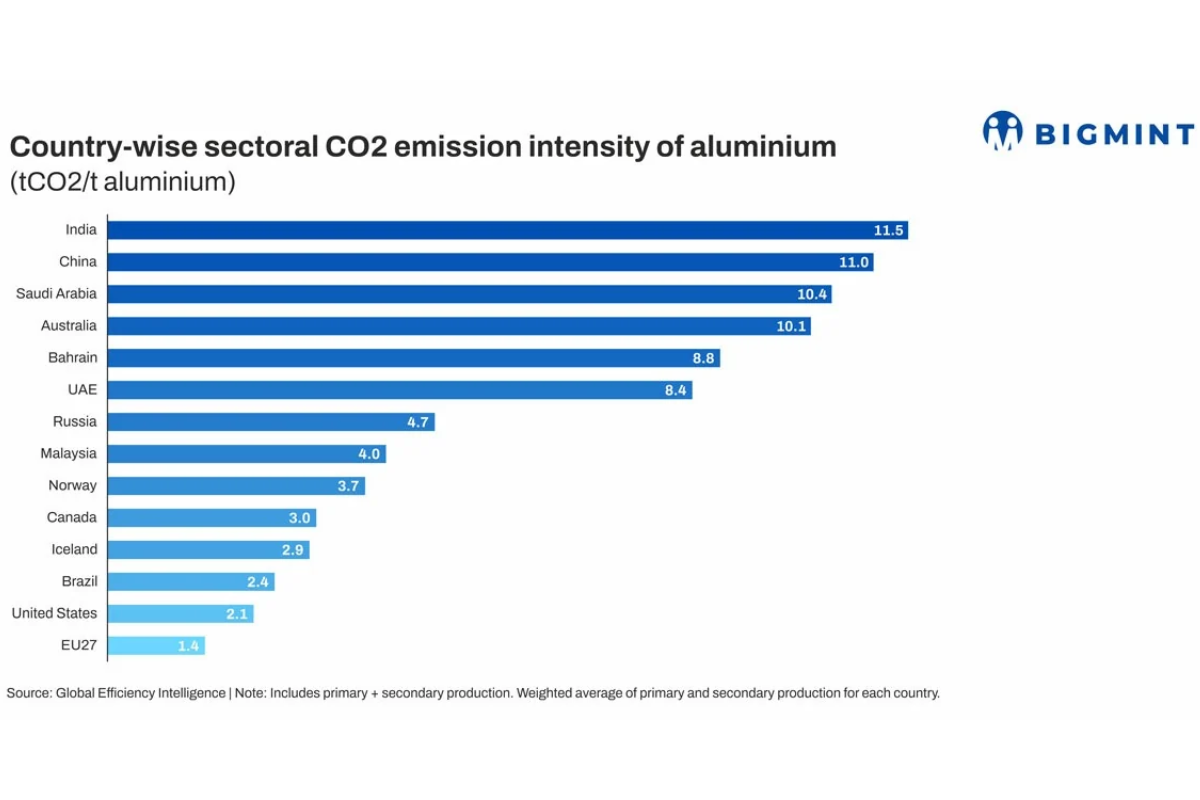
India's primary aluminium production has a carbon intensity of 16.3 tCO2 per tonne aluminium in 2023, the highest in the world. Note: the graphic on top represents country-wise emissions from both primary and secondary production. Emissions from secondary production are in the range 0.4-0.6 tCO2 per tonne globally -- around 95 per cent lower than primary production. The graphic represents the weighted average emissions intensity of both primary and secondary production and comes up with a gross average for each country based on the share of scrap in total production.
After India comes China, with primary emissions at 13.5 tCO2 per tonne. By contrast, carbon intensity is only 2.9 tCO2 per tonne in Iceland, 3.2 tCO2 per tonne in Canada, 3.7 tCO2 per tonne in Brazil and 3.8 tCO2 per tonne in Norway.
The difference is largely explained by electricity.
In India, electrolysis alone contributes around 12 tCO2 per tonne, reflecting the industry's heavy reliance on coal-fired captive power. China's electrolysis emissions were about 9.7 tCO2 per tonne, despite its smelters being among the more energy-efficient globally. In contrast, hydro-powered producers such as Canada and Iceland record near-zero emissions from electrolysis.
Join the fourth edition of the webinar "Hedging for recyclers - Become an expert in 6 hours" by Jorge Dyszel.
Energy efficiency and decarbonisation are not the same thing. A highly efficient smelter can still have a large carbon footprint if it is powered by carbon-intensive electricity. Conversely, a smelter using low-carbon electricity can have a much lower emissions intensity even if its energy efficiency is not the best globally.
Electricity therefore represents the most immediate lever for reducing primary aluminium emissions, although alumina refining, anode consumption and PFC emissions also contribute to the overall footprint. Electricity decarbonisation is the most critical near-term measure, alongside improvements in refining and process technologies.
Recycling changes the picture
Looking only at primary aluminium, however, does not provide the complete picture of a country's aluminium carbon footprint. The share of secondary aluminium is a major determinant of overall industry emissions.
The US and EU27 obtain around 84 per cent of their aluminium output from secondary sources. Their overall aluminium sector carbon intensities are consequently only 2.1 tCO2 per tonne and 1.4 tCO2 per tonne, respectively. Brazil has a secondary share of 43 per cent, while India and Malaysia are at around 31 per cent. China is at 20 per cent.
Canada and Iceland have some of the world's lowest-carbon primary aluminium production but their overall aluminium sector emissions intensity is higher than that of the US and EU27 because recycled aluminium accounts for only 7 per cent and 1 per cent of their respective output.
The implication is clear: the carbon footprint of an aluminium industry depends not only on how clean its primary metal is but also on how much primary metal it needs to produce.
Looking for UBC aluminium scrap? Browse through global suppliers on AL Biz.
India faces a dual challenge
India's primary aluminium intensity of 16.3 tCO2 per tonne is the highest, while its overall aluminium sector intensity is estimated at 11.5 tCO2 per tonne. The country's relatively low secondary share compounds the problem. Around 31 per cent of India's aluminium output comes from secondary sources.
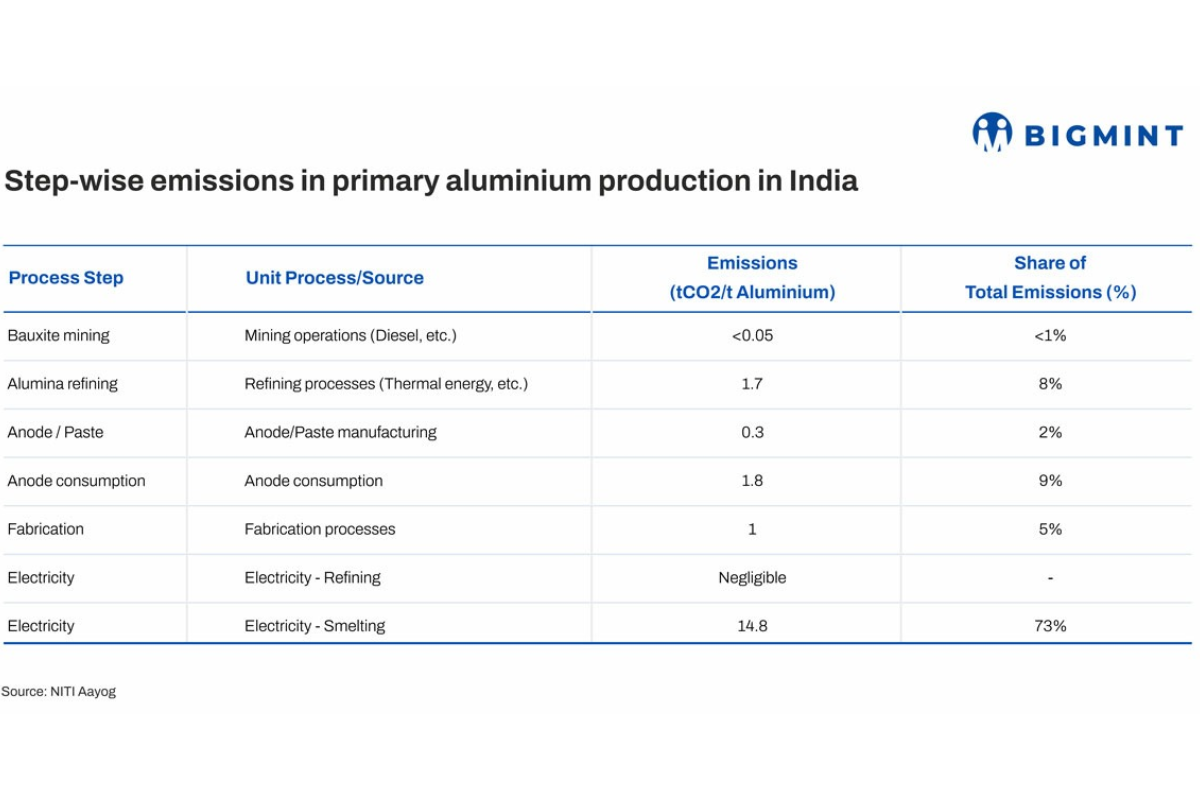
According to NITI Aayog, India's average primary aluminium emissions are around 20-21 tCO2 per tonne, with coal-based electricity accounting for more than 75 per cent of total emissions. Note that this is higher compared to the GEI data on India because NITI Aayog employs a methodology that calculates upstream emissions from mining, fuel use, refining, etc.
Scrap can cut emissions but primary aluminium will stay
Increasing recycling offers India a major opportunity to lower its average aluminium carbon intensity. Better scrap collection, sorting and processing could allow a larger share of domestic demand to be met through the much lower-emission secondary route. But recycling cannot be the country's only decarbonisation strategy.
India's aluminium demand is projected to rise from around 4 million tonnes in 2023 to 37 million tonnes by 2070, according to government data, while primary aluminium production is projected to increase from over 4 million tonnes currently to 18.6 million tonnes. At the same time, the secondary share is expected to rise substantially, reaching around 50 per cent of total supply by 2070.
More scrap and clean electricity
India will need both more recycling and cleaner primary production. The NITI Aayog has identified the power system as the principal area for intervention and proposed a phased approach centred on renewable round-the-clock power in the short term, nuclear power in the medium term and CCUS linked to captive coal generation in the longer term.
The global aluminium emissions landscape points to a two-track decarbonisation strategy for India. First, the country must reduce the carbon intensity of the electricity used by its primary aluminium industry. This is critical because primary production will remain indispensable as aluminium demand expands.
With a grid emission between 0.675 and 0.747 kg CO2/kWh (675 to 747g CO2/kWh), India's power sector is one of the highest-emitting globally. Moreover, the share of captive thermal power (CPPs) in India's aluminium production is over 90 per cent compared with China's 60-70 per cent and zero-carbon hydro power in Russia or far lower grid emission factors such as in the EU and the US.
Showcase your brand, aluminium recycling initiatives and sustainability vision in our upcoming magazine: Sustainability & Recycling: Aluminium’s Commitment 2026.
Besides investing in large-scale hybrid renewable energy projects, Indian aluminium majors are also exploring power purchase agreements for long-term sourcing of clean energy. NITI Aayog has proposed to integrate around 18-20 GW of renewable energy in the medium-term to drive decarbonisation efforts in the industry.
Second, India needs to strengthen its circular aluminium ecosystem. Higher scrap collection and recycling can reduce the amount of carbon-intensive primary metal required to meet growing demand. Proper organised collection and processing for removal of impurities and automation and greater digitalisation to boost processing efficiency are crucial.
The broader lesson from the global comparison is that there is no single route to low-carbon aluminium. Hydro-rich countries demonstrate the importance of clean electricity; the US and EU27 demonstrate the emissions advantage of high recycling rates; and India-s position illustrates the challenge of having both carbon-intensive primary production and a relatively modest secondary share.
For India, the decarbonisation challenge is therefore not simply to produce more aluminium with less energy. It is to change the carbon content of the energy used for primary production while simultaneously increasing the proportion of aluminium supplied through recycling.
Note: This article has been issued by BigMint and has been published by AL Circle with its original information without any modifications or edits to the core subject/data.
Aluminium and green energy: Chinese investors eye manufacturing project in Bintulu, Malaysia
Next articleOdisha ACS flags power and water bottlenecks at Angul Aluminium Park near NALCO
Grow with
AL Circle












_md.webp)