Odisha – A capital of Indian aluminium industry (Part 3)
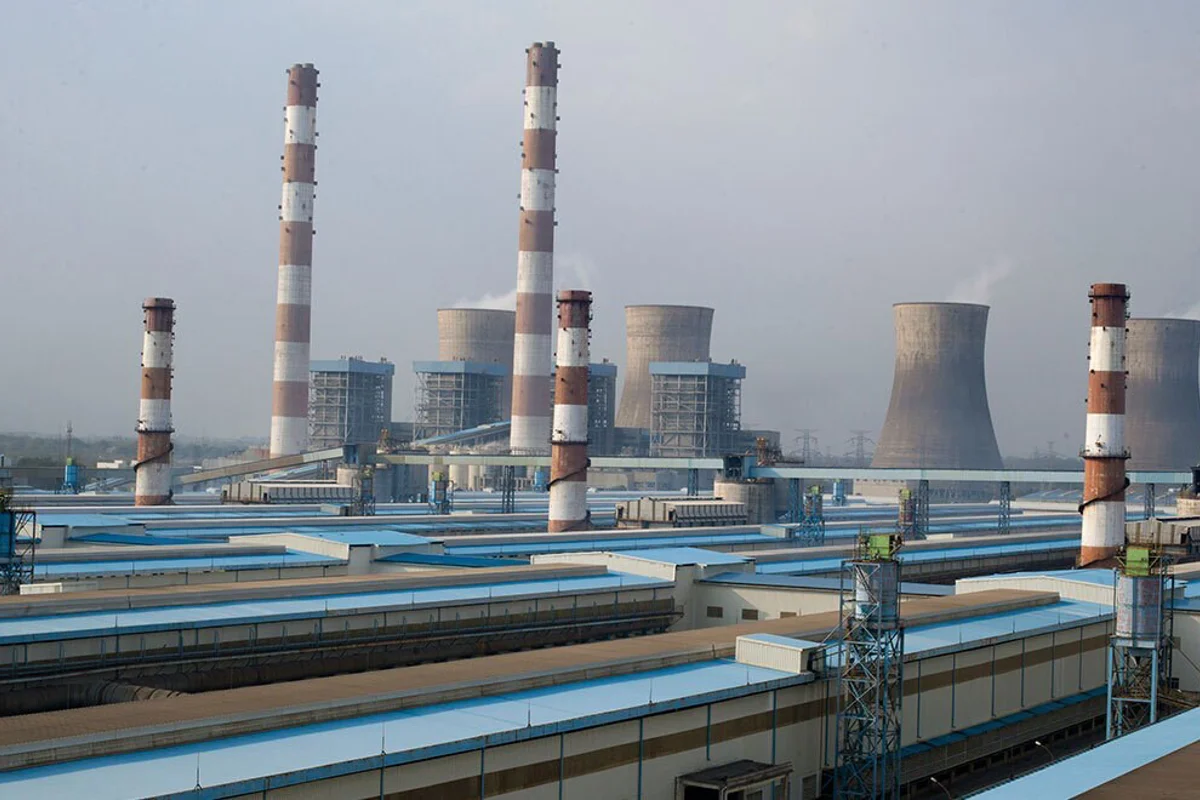
According to ‘Vision Document on Aluminium Metal for India’ published by Government, the country has reached a stage where it produces 4.16 Mtpa of Primary Aluminium and 1.8 Mtpa in the secondary sector. Here Odisha is the main contributor, currently 4 Aluminium Smelters, with a total Installed Capacity of 2.7 Mtpa. are operating in this state.
Image source: Vedanta Aluminium
NALCO Aluminium Smelter (0.46 Mtpa)
Located in Angul of Odisha, NALCO's Smelter is based on old Aluminium Pechiney technology (180KA prebake cell) of smelting & pollution control and comprises of four potlines with 240 electrolytic pot cells in each, along with integrated facilities for casting of ingots, sows, billets, strips and wire rods and chequered sheets. Smelter unit has a 50,000 tpa Rolled Products Unit (RPU) having facilities to produce sheets and coils for a variety of end uses. This unit has the advantage of direct molten metal transfer from the Smelter. The RPU is integrated with the Smelter Plant at Angul for production of aluminium cold rolled sheets and coils from continuous caster route based on the technology of FATA Hunter, Italy. The chequered Sheets are produced in the Rolled Product Unit of this smelter. NALCO Smelter potlines, although operating at 180Ka, have been provided with the latest versions of AP-18 technology in both the expansions that took place. The smelter plant is associated with captive thermal power plant having generation capacity of 1200MW provide entire electric power requirement of smelters.
Hirakud (HINDALCO) Aluminium Smelter (0.216 Mtpa)
The Hirakud aluminium smelter, located in Sambalpur district, is the oldest operating smelter in India built in 1959. The installed Capacity is 0.216 Mtpa. The power is sourced from the coal based captive power plant. Hirakud smelter has five potlines with 12 rooms comprising 785 pots which are connected in series. The plant was modernized by pre-baked GAMI Technology. All the five lines of smelter is connected to 5 number of cast houses.
HINDALCO Mahan Aluminium Smelter (0.371 Mtpa)
Mahan Aluminium is an integrated aluminium smelting complex which uses globally proven smelter technology AP36 from Pechiney, France, while its integrated carbon plant uses technology from Solios, and the captive power plant uses Bharat Heavy Electricals Ltd (BHEL) technology for each of its 6 x 150 MW units. Both, smelter and captive power plant commenced operation in April 2013 and reached full capacity in August 2015.
HINDALCO Lapanga Aditya Aluminium Smelter (0.38 Mtpa)
Aditya Aluminium Smelter is a agship unit of Hindalco located at Lapanga, Sambalpur, Odisha. The plant has a production capacity of 380,000 tonnes per annum (TPA) powered by a 900 MW captive plant. The smelter plant is based on AP-36S technology (RTA) from Aluminium Pechiney, France involving numerous processes, quality parameters, and safety aspects at different levels. The process is quite intricate in nature as it handles very high electric current levels to the tune of 368 kA and new-generation controls
VEDANTA Aluminium Smelter (1.8Mtpa)
VEDANTA Aluminium is a major player in the aluminum industry, operating two aluminum smelters in India, including its plant in Jharsuguda, Odisha, and its subsidiary unit Bharat Aluminium Company Limited (BALCO) located in Korba, Chhattisgarh.
Aluminium Downstream Industries – Odisha
Odisha is India’s leading aluminium-producing state and has developed a robust downstream aluminium ecosystem. This ecosystem transforms primary aluminium such as ingots, billets, and wire rods into high-value products like sheets, coils, foils, extrusions, alloy components, castings, conductors, and can stocks.
- The Hirakud FRP Unit of HINDALCO Industries Ltd. is a key flat-rolled products (FRP) facility in Odisha. It uses advanced cold rolling mills and continuous casting technology to produce aluminium sheets and coils, primarily catering to the automotive, packaging, and industrial sectors.
- Dhaatu Fabex Pvt. Ltd., located within the Angul Aluminium Park, is a prominent manufacturer of custom aluminium extrusions. It benefits from direct supply of molten aluminium from NALCO’s smelter, reducing energy use and enhancing production efficiency.
- Narayan Aluminium Alloy Pvt. Ltd. manufactures anodized and powder-coated aluminium profiles. It operates high-capacity extrusion presses (900-ton and 1650-ton) and supplies customized alloy-based extrusions for various industrial applications.
- The Alom Group, through Universal Machines Ltd. (UML) in Balasore, operates two extrusion plants and a fabrication facility. This unit manufactures solar panel frames, architectural hardware, and export-grade products. It has an installed extrusion capacity of 14,000 metric tonnes per year, with four PLC-controlled hydraulic presses.
- APAR Industries have well established aluminium cable plant near Jharsuguda in Odisha.
VEDANTA Aluminium Park, a landmark project near VEDANTA’s smelter in Jharsuguda, is being developed in collaboration with Odisha Industrial Infrastructure Development Corporation (IDCO). Spread over 253 acres, it enables MSMEs to use hot metal directly from the smelter for manufacturing, thus cutting down on energy and reheating costs. The park is equipped with shared logistics, utilities, and research infrastructure.
To learn about the extrusion market forecast, a key downstream aluminium product, read our report: The World of Aluminium Extrusions – Industry Forecast to 2032
As of 2025, VEDANTA has committed an investment of about US $15.5 billion in aluminium infrastructure in Odisha. The initiative is expected to generate nearly 200,000 direct jobs, significantly boosting the state's industrial and employment landscape. The VEDANTA SEZ smelter complex at Jharsuguda provides a strategic edge for export-oriented industries, reinforcing Odisha’s positioning as a downstream aluminium hub. A thriving industrial ecosystem, including raw material suppliers, service providers, and a large pool of skilled and semi-skilled manpower, supports rapid industrialization. The presence of premier educational and research institutions further contributes to the availability of specialized talent.
The NALCO Angul Aluminium Park represents a pioneering initiative in India's aluminium downstream sector. Developed as a joint venture between National Aluminium Company (NALCO) and the Odisha Industrial Infrastructure Development Corporation (IDCO), this park spans 450 acres adjacent to NALCO’s smelter plant. It is the first park of its kind in the Indian subcontinent equipped with infrastructure to supply molten and solid aluminium directly to downstream units. Dhaatu Fabex Private Ltd. in NALCO Angul Aluminium Park is being installed, however, this is yet to be commissioned. The park caters to a wide array of industries including conductors, extrusions, castings, foils, and ancillary aluminium-based products.
Odisha has rapidly emerged as a leading hub for aluminium downstream industries, thanks to its strategic geographic location, robust infrastructure, and sustainability-focused industrial policies. One of the park’s key innovations is the direct supply of high-quality molten aluminium, which eliminates the need for remelting. This significantly improves productivity, operational flexibility, and cost-efficiency for industries while also reducing energy consumption, transport time, and working capital requirements. Importantly, this innovation is estimated to cut carbon emissions by approximately 60,000–70,000 tonnes annually, making the initiative environmentally and economically viable. The region's infrastructure further strengthens its industrial appeal.
Snapshot of major aluminium downstream units in Odisha, highlighting key facilities producing value-added products and supporting industrial growth is shown in the below image.
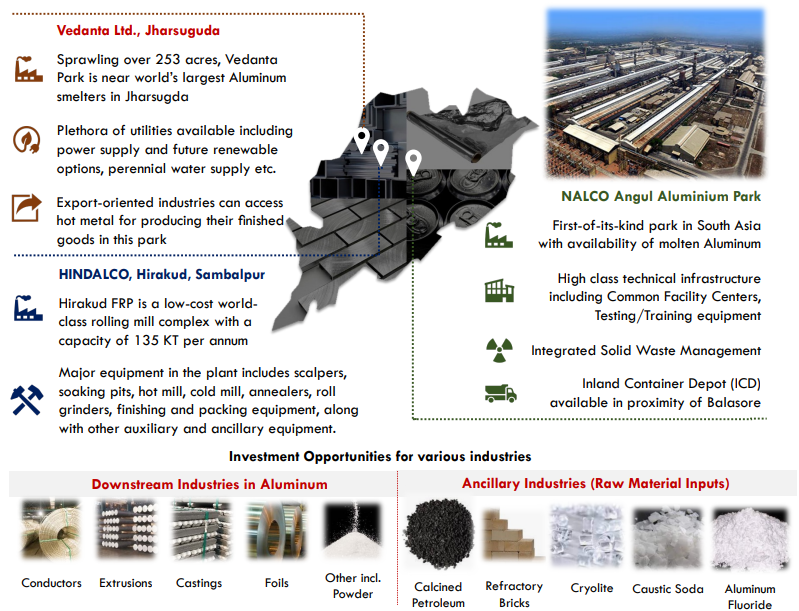
To accelerate growth and attract further investment, the Government of Odisha is formulating an exclusive downstream aluminium policy aimed at enabling diversification into critical sectors such as calcined petroleum coke (CPC), aluminium fluoride, and coal tar pitch. This policy is expected to catalyze innovation, sustainability, and value addition in the state’s aluminium ecosystem.
Future of Aluminium Industry in Odisha
By 2030, bauxite production in India is projected to double to 50 Mtpa, largely driven by increased demand from of alumina refineries of Odisha. Sijimali bauxite deposit (~300 Mt) has been awarded to VEDANTA, while the Kuturmali (~128 Mt) and Ballada (~22 Mt) deposits are given to the Adani Group. The virgin bauxite blocks such as Karlapat (Kalahandi) and Nunapaimali (Rayagada) are now up for auction, aligned with India’s vision for self-reliant India.
Odisha is embarking both brownfield and greenfield expansions of alumina refineries. Among brownfield expansion, NALCO is going to increase present alumina production at Damanjodi from 2.3 to 3.3 Mtpa; VEDANTA Lanjigarh from 3.5 to 5Mtpa and HINDALCO Utkal from 2 to 2.5 Mtpa.
There is a proposal to set up 4 more new alumina refineries and out of these, work has already started in proposed HINDALCO-OMC plant at Kansariguda Odisha. VEDANTA have announced to set up new alumina plant of 6 Mtpa near Sijimali, Odisha. ADANI, Kalinga Alumina Limited (KAL) have also announced new plant in Odisha.
Conclusions
- The state's vast, bauxite reserves (59% of India's total), concentrated in the Eastern Ghats ore belt, provide the foundational resource for a vertically integrated value chain. With the world-class alumina refineries (NALCO, VEDANTA and HINDALCO), smelters (2.7 Mtpa capacity), and thriving downstream ecosystems (e.g., Angul and Jharsuguda Aluminium Parks), Odisha has cemented its position as the nucleus of India’s aluminium sector.
- Robust infrastructure—dedicated SEZs, captive power plants, and port connectivity—further amplifies its global competitiveness.
- Future expansions like Sijimali mine development, refinery capacity hikes and new projects by HINDALCO, VEDANTA and ADANI will solidify Odisha’s role in meeting rising global alumina and aluminium demand, driving regional economic growth, and advancing India’s self-reliant vision.
- Odisha's dominance as India's aluminium hub stems from an unparalleled convergence of geological advantages, industrial integration, and strategic policy support.
- Alumina refineries and smelters are mandate to transition to renewable energy (solar/wind) for ≥30% of power needs by 2030.
Develop dedicated rail corridors connecting mines-refineries-ports to reduce costs and emissions. Expand conveyor belt networks for ease of ore transport and replacement of road transport.
Note: This article has been issued by IBAAS team, written and edited by Dr Ashok Nandi, Chudchandra Shende, and Priyanka Jad. AL Circle has published it in its original form without any modifications or edits to the core subject/data.
Unlock full access – sign up for FREE.
Key benefits
Century Aluminum shares surge to a 52-week high of USD 28.44
Next articleLME aluminium gains; 3-month offer at USD 2,688.5/t, alumina slips 3.5%
Grow with
AL Circle













_md.webp)
_md.webp)







