Nigeria’s aluminium foil importation market transforming to a multi-million dollar industry during 2017-20

Nigeria has overtaken South Africa as Africa’s largest economy and with over 200 million people, it is the largest market in the continent. The economy of Nigeria is a middle-income, mixed economy and emerging market, with expanding manufacturing, financial, service, communications, technology and entertainment sectors. It is ranked as the 27th-largest economy in the world in terms of nominal GDP, and the 24nd-largest in terms of purchasing power parity.
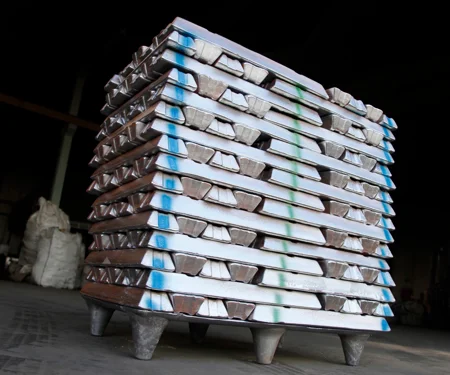
The West-African nation’s aluminium foil importation during 2017-19 has been showing a rapid growth as the import was recorded at 10,505 tonnes and the expenditure occurred stood at $42.57 million. The projection for 2020 import has been analysed at 11,711 tonnes and the expenditure might rise to $36.71 million. When the analysed import volume of 2020 and expenditure gets summed up with the previous three years, it reflects 22,216 tonnes and $79.28 million.
In 2017 the country aluminium foil importation stood at 1088 tonnes and the expenditure remained at $6.32 million, whereas in 2018 the demand surged up and the import showed growth by 65.34%, as the import volume stood at 1799 tonnes and the expenditure stood at $10.41 million.
Nigeria’s import for aluminium foil in 2019 also recorded growth by 323.34%, as the import volume stood at 7618 tonnes and the expenditure surged to $25.84 million, while in 2020 the estimated import volume reflects a rise by 53.72%, as the total importation might reach to 11,711 tonnes and the expenditure will be stretching to $36.71 million.

The Eco-was country has been importing aluminium foil from its trading partner nations like Belgium, China, Denmark, France, Germany, Greece, India, Indonesia, Netherlands, South Africa, Spain, UK, etc.
Nova Scotia ventilator project: A vital breakthrough attained for COVID-19 medication
Next articleSolar-mounting systems manufacturer Schletter Group moves to larger site in China
Grow with
AL Circle