New Valencia–Nestlé pact aims to recover thousands of small aluminium items long lost in sorting
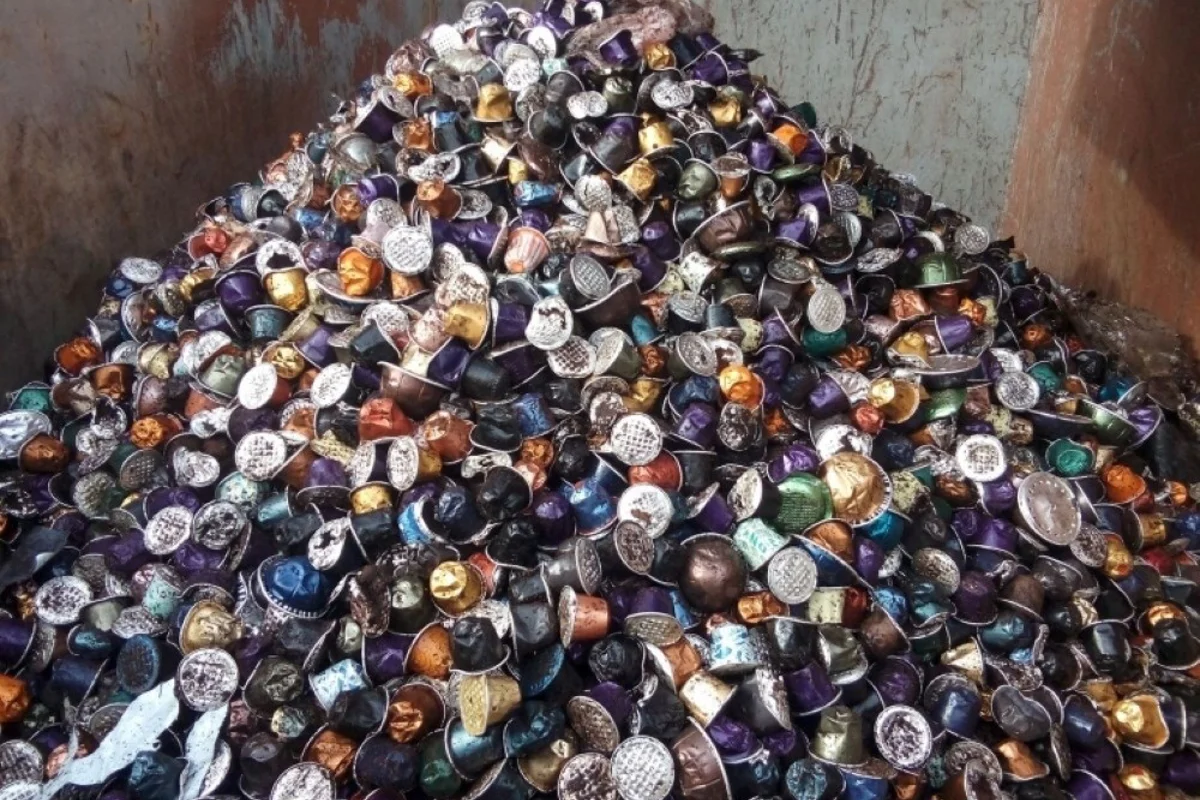
Instead of recycling, millions of worn-out coffee capsules and other minuscule aluminium items are deemed to pose crucial environmental challenges. Loss of these aluminium items mainly happens when they undergo the conventional sorting systems, which then ends up in the waste. For this, a new agreement between Nestlé-Nespresso and Generalitat Valenciana is drafted, which offers the long-awaited solutions, enabling the recovery of these problematic materials efficiently in Benidom.
Outlining the agreement
A signed agreement between the Generalitat Valenciana and Nestlé-Nespresso aims to identify and recover the small aluminium products, which previously went missing in the waste while sorting at the Light Packaging Sorting Plant in Benidorm, which is operated by Vaersa, a public company. At the European Week for Waste Reduction, this initiative was first pronounced, making the region’s strategy stand out in terms of the circular economy model as well as transforming waste into valuable materials.
This project, as explained by Raúl Mérida, the regional secretary for Environment and Territory, makes it possible to separate and then recycle small aluminium products like coffee capsules, yoghurt lids, bottle tops and so on, along with the plastic containers which are dumped in the yellow recycling bin after consumption. After completing the sorting phase, to ensure proper recycling, it will be sent to specialised facilities.
Aligning with the regional goal
The initiative directly aligns with the region’s Integrated Waste Plan of the Valencian Community (PIR-CVA 2019), which will soon be updated under a new regional framework, further adhering to the priorities which have already been outlined in Spain’s State Waste Management Plan 2024–2035 (PEMAR). Not only this, but it further reinforces the ongoing partnership between the two firms, following earlier work at the Picassent facility, which showcased strong outcomes recorded in recovering and separating small aluminium fractions.
Technology powering high recovery rate
The regional secretary for Environment and Territory, Raúl Mérida, concluded that at the Benidorm plant, the initial phase will include processing the material after collecting from yellow bins in Benidorm and Alicante. However, this is subject to the possibility of additional municipalities in the later phases.
In order to boost the recovery rates, the initiative will include the installation of an eddy current separator, a technology which is expected to reach the recycling rate above 75 per cent and purity level of the recycled aluminium close to 90 per cent.
The agreement will also hold a public awareness campaign, which will encourage proper disposal practices and minimise the loss of recoverable materials in the rejection stream. Additionally, it sets up a monitoring committee that will meet quarterly in the first year and then twice a year after that to assess the project’s technical performance and operational progress.
Explore- Most accurate data to drive business decisions with 50+ reports across the value chain
_0_0.png)
Samsung T7 Resurrected: Where 100% recycled aluminium meets high-speed reliability
Next articleAs the US and EU ring-fencing aluminium scrap through targeted measures, will Asia withstand the supply pressure?
Grow with
AL Circle