NALCO CMD concerned: Indian aluminium sector not prepared for a green shift
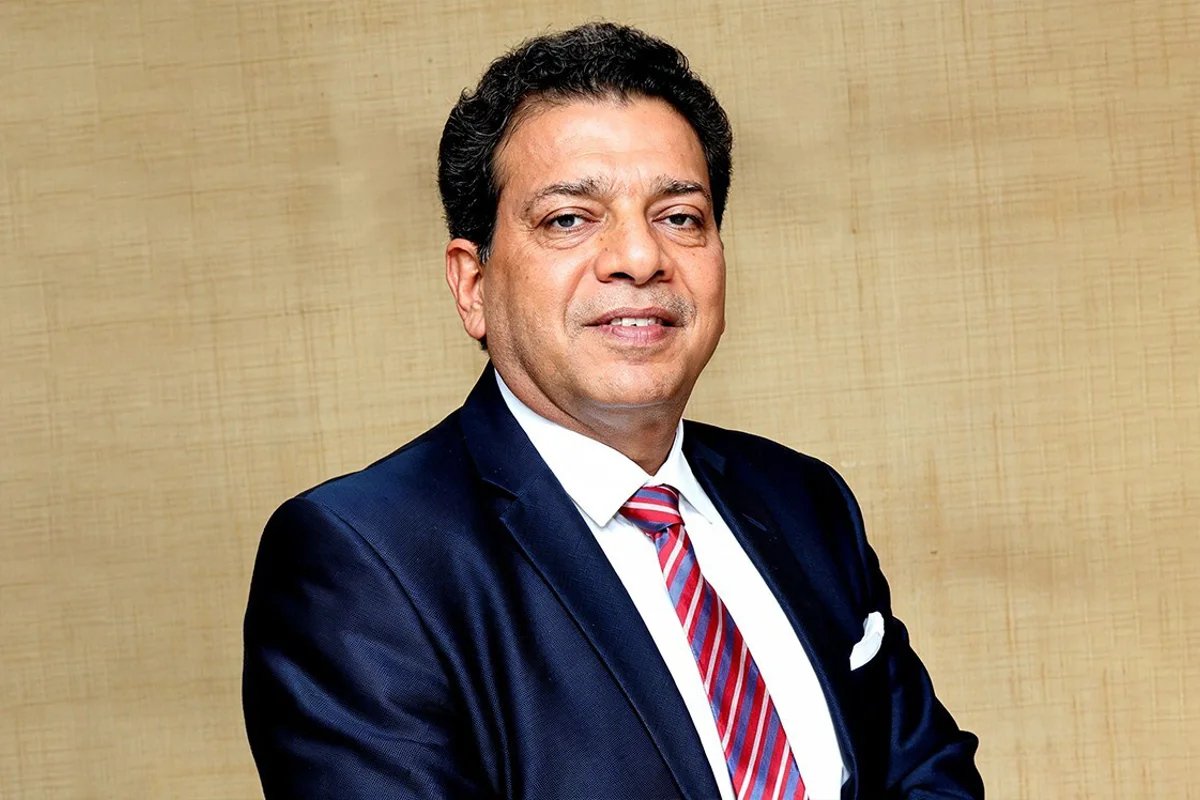
Brijendra Pratap Singh, Chairman and Managing Director (CMD) of National Aluminium Company Ltd (NALCO), observed that the Indian aluminium sector is not well-equipped for a full-fledged transition to green aluminium. It spikes concern, especially in the context of the Carbon Border Adjustment Mechanism (CBAM). While unlike Vedanta and Hindalco, it does not export directly to the US and therefore, was not impacted by US tariffs, CBAM poses a great challenge before NALCO. Nonetheless, aluminium demand in the domestic market is expected to remain strong.
Explore- Most accurate data to drive business decisions with Outlook 2026 insights across the value chain
CBAM’s threat to NALCO and the Indian aluminium industry
CBAM is designed to tax imports based on their carbon footprint to prevent “carbon leakage”. However, according to Singh, the Indian aluminium industry is still not prepared for a transition to green aluminium, for it largely depends on affordable and uninterrupted power. Aluminium production is a highly electricity-intensive industrial process, and any sharp rise in energy costs directly results in increased metal prices. As Singh noted, “The aluminium sector is not yet ready for green aluminium. Aluminium is a highly power-intensive sector. If power costs rise sharply, the overall cost of aluminium will also increase significantly. It will take some time.”
At NALCO, the dominant source of emissions is power generation from thermal power plants, accounting for about 80 per cent of its carbon footprint. Reducing emissions, therefore, depends on reducing reliance on fuel energy and increasing the share of renewables. The company is exploring this area for long-term plans, assessing various energy options like solar, wind, hybrid models, and combinations with battery storage.
Over the next 3-4 years, securing an estimated 200-300 MW of round-the-clock green power against a current consumption base of roughly 800-900 MW stands as the immediate target. It would lift the renewable energy share to around 20-30 per cent. However, Singh acknowledged that cost and availability remain major constraints. Underlining that aluminium smelting cannot tolerate power interruptions without serious consequences for operations and output, he commented, “Green power is not available round the clock. With battery storage, it can be, but the cost goes up.”
Owing to these limitations, round-the-clock renewable supply remains a priority, even though solutions combining green power with storage are still expensive. “If battery costs and transmission charges come down, then long-term green power PPAs will become viable,” Singh said, explaining why consultants have been asked to evaluate different energy mixes to identify commercially workable options.
Referring to nuclear power, Singh stated that it involves considerably higher capital costs, unlike thermal power and would push up electricity prices, making aluminium production less competitive. He further mentioned that nuclear power had not yet been proven at scale in India, while global competitors such as China and Canada benefit from low-cost hydropower in abundance, which is green and available round the clock. India’s limited access to large hydropower resources is a structural disadvantage.
Capacity expansion plans
Alongside its energy transition efforts, NALCO is moving ahead with a major capacity expansion. The company is in the process of appointing a consultant to prepare a detailed project report for its INR 300 billion (USD 3.6 billion) investment plan, which is expected to be ready for board approval by mid-year. Tendering and order placement are targeted for early next year, with commissioning expected by the end of 2030 or early 2031. The project includes a 0.5 million tonne smelter and a 1,080 MW captive power plant, reflecting the fact that aluminium smelting requires a dedicated and stable power supply. Once completed, the expansion will lift NALCO’s aluminium capacity to around one million tonnes from the current 0.46 million tonnes.
Meanwhile, the company is exploring critical minerals through Khanij Bidesh India Ltd (KABIL), where it occupies a 40 per cent stake. In Argentina, non-invasive exploration has already been completed across three blocks, while invasive exploration for lithium is now in progress, with results expected by mid-2027.
Strong financial performance
Despite all the regulatory hurdles, NALCO reported steady financial results. In FY25, it secured its best-ever first half performance, with revenues surging 18-19 per cent (approx.) and profits up by an estimated 47 per cent. Expectations remain high for Q3, bolstered by the robust London Metal Exchange (LME) prices, making up about 70 per cent of NALCO's total revenue.
Nevertheless, domestic demand for aluminium in India is strong. Singh regarded the growth of infrastructure funding and the power sector as the driving factors for aluminium demand in India. As they complement each other, their growth and expansion would lead to the rising need for aluminium. Around 40 per cent of aluminium consumption comes from the power sector, with infrastructure accounting for 10-12 per cent, and automobiles 6-7 per cent. Demand for solar power has also increased. Due to the growth of these sectors, they are finding worthwhile prices in India.
Aluminium scrap market situation
According to Singh, importing aluminium scrap requires a balanced approach. Presently, a duty of around 2.5 per cent is imposed on imported scrap, and roughly 7.5 per cent on primary aluminium. He stressed the need for mandatory quality standards for imported scrap, given its role in manufacturing finished aluminium products, and argued that duties on scrap should be raised to keep them parallel with those on primary metal.
More broadly, NALCO has deliberately shifted its focus towards the domestic market, where pricing has been more attractive than exports, while continuing to evaluate opportunities in domestic critical mineral auctions. Singh stated that the fundamental challenge facing the aluminium industry remains unchanged as “Power accounts for 35 to 40 per cent of aluminium production cost.” He added, “All captive power plants are thermal, and carbon emissions are high.”
Information credit: The Indian Express
Image source: https://nalcoindia.com/
Don't miss out- Buyers are looking for your products on our B2B platform

Rising risks of EU-US trade frictions, significant resistance to short-term aluminium price rise
Next articleGold and Silver set records amidst geopolitics - does Aluminium at a cash offer of $ 3,168.5/t on January 19 follow the same?
Grow with
AL Circle