Middle East conflict: Barring India’s crude oil import, fuelling food crisis and aluminium shortage?
The Middle East conflict involving the US-Israel and Iran is to disrupt global trade flows and hamper India’s energy security and supply chains, according to the government body of Associated Chambers of Commerce and Industry of India (ASSOCHAM). Closure of the maritime corridor of the Strait of Hormuz has significantly jeopardised trade, resulting in a crude oil crisis and raising a question mark on the Indian energy supply, while intensifying fertiliser and aluminium shortage. However, Union Minister Piyush Goyal’s affirmation of “absolutely no shortage of fuel” is likely to offer relief to the worried Indian consumers. Nonetheless, let us dive deeper into the tanker and analyse.
Explore- Most accurate data to drive business decisions with Global ALuminium Industry Outlook 2026 across the value chain
The Middle East is a key production and supply hub of both aluminium and crude oil. In 2024, the Middle East supplied 191,077 tonnes of aluminium to India. In 2025, India imported an estimated 15.7 per cent of its primary aluminium from the Middle East's main exporter, the United Arab Emirates (UAE). Asia’s primary aluminium import in 2025 accounted for approximately 19.48 per cent of the GCC’s global export of 5 to 5.5 million tonnes.
As of January 2026, India imported 2.74 million bpd (approx.) of crude oil from the GCC countries. 2025 data reports around 88-90 per cent of crude oil and almost 90 per cent of liquefied natural gas (LNG) passing through the Strait of Hormuz was supplied to the Asian market, viz., India, China, Japan and South Korea.

Crude oil crisis in India?
Disruptions to this critical route have driven up global fuel prices to over USD 100 per barrel, raising costs across manufacturing, transportation and logistics networks. Given India’s heavy dependence on imported crude oil, a sustained price surge could also widen the country’s current account deficit and intensify inflationary pressures. Prashant Vasisht, Senior Vice President of a ratings agency, ICRA, commented, “A little less than 30 per cent of natural gas use goes into making fertilisers, while power plants account for 13 per cent and CDG, 21 per cent.”
Minister of State for Petroleum and Natural Gas Suresh Gopi informed the Rajya Sabha in a written reply that India has established Strategic Petroleum Reserve (SPR) facilities with a total capacity of 5.33 million tonnes, sufficient to meet about 9.5 days of crude oil demand during supply disruptions. In addition, Oil Marketing Companies (OMCs) maintain storage for around 64.5 days of crude oil and petroleum products, taking the country’s total oil and fuel storage capacity to approximately 74 days.
Union Minister Piyush Goyal, while speaking at Tiruchinapalli, emphasised that "There is absolutely no shortage of fuel… In this situation, there will be concerns that will be made known to everybody from time to time by the relevant departments... They are monitoring the situation very closely," assuring the Indian industries and domestic.
In line with this statement, a government official reported potential Route B in the pipeline for sourcing oil and gas, stating, "We were getting Qatar gas at USD 6-8 per MMBtu (Metric Million British Thermal Unit), and now the price is USD 15 per MMBtu." He added, "But, the economics of it is that, once the price crosses even USD 10 per MMBtu, then gas from Norway and the US becomes viable even despite the long distance."
Another government source mentioned that LPG and LNG supplies are "already arriving". Addressing the impending shortage and timeliness of supply, he said, “There will, of course, be a lead time between placing orders and receiving deliveries” from the alternative exporting countries. “Gas will not be a long-term problem, but there will be some short-term pain,” he clarified.
Looming food inflation?
With the Middle East dominating the seaborne urea trade, it is a major supplier of fertilisers to the Indian agricultural market. Food inflation worry looms large with supply channels closing up and putting a halt to fertiliser imports.
Vasisht suggested naphtha and furnace oil as alternative fuels for industrial consumers. “In a stroke of luck for India, this crisis is occurring during the off-season of fertiliser use. Farmers don’t need fertilisers now,” he added.
However, the approaching kharif season, the longest agricultural phase in India, will bring about a requirement for fertilisers in huge amounts.
Addressing the impending fertiliser shortage and consequent threat to India’s food security, an industry executive of a top fertiliser company stated, “Any volatility in global fertiliser prices and supply can directly affect the next kharif season, which is crucial for India’s food security and keeping food inflation in control. Iran is the third largest producer of urea and an important supplier of ammonia.”
On a global basis, exports from the Middle East has been contributing significantly to a variety of industries across the world. Contributing over 8 per cent to global aluminium trade, the Middle East also accounts for 20 per cent of crude oil and LNG, 40-45 per cent of fertilisers, and 43 per cent of polyethylene and 42 per cent of polypropylene export to the global market. The majority of shipments to Asia is accounted for by the Middle East.
The GCC produces approximately 6 to 6.5 million tonnes of aluminium, out of which 5 to 5.5 million tonnes are exported. Moreover, it ships 20 million barrels per day (bpd) of crude oil and petroleum and 110 billion cubic metres (bcm) ofLNG, estimated 20 million tonnes of urea, around 18.7 million tonnes of polyethylene and 7 million tons of polypropylene to the global market.
With conflicts jamming supply channels and alternatives running through pipelines, what is the likely future of the Indian energy industry that drives food and aluminium supply as well as transportation sectors?
Don't miss out- Buyers are looking for your products on our B2B platform

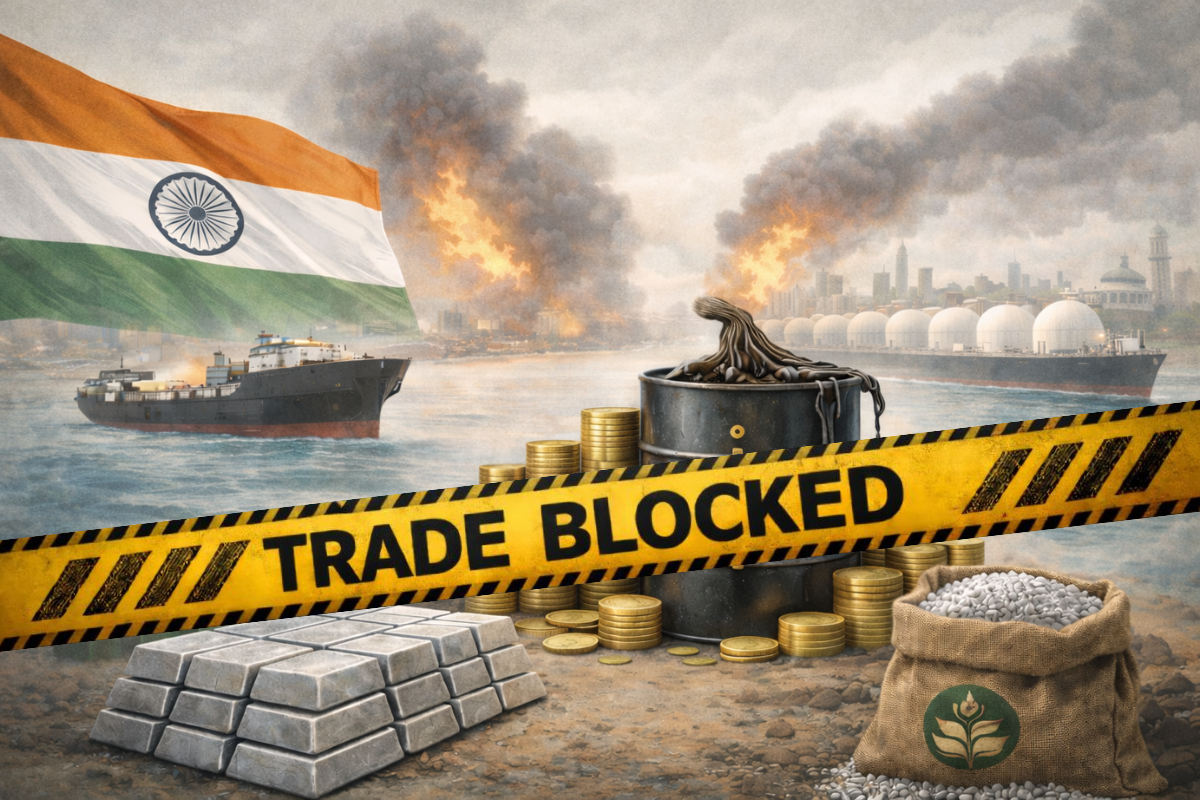
Image source: The images have been generated by AI for referential purposes only.
China Hongqiao Group shares surged by 585% amid rising aluminium prices and growing demand
Next article3-month raw material disruption in GCC may lead to a 1–1.25 MT shortage in primary aluminium production - here’s how
Grow with
AL Circle