Metro Mining reinforces bauxite position with robust reserves and operational clarity

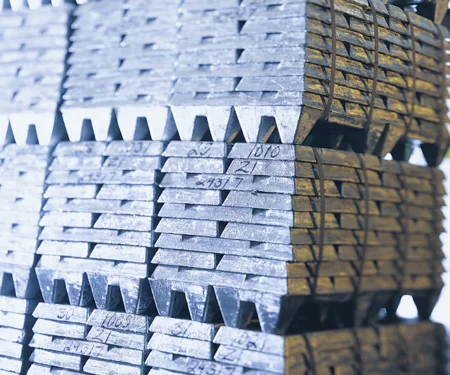
Stock image for referential purposes only
Australia-based bauxite mining and exploration company, Metro Mining, has been strengthening its position in the global bauxite market. It is backed by a dependable reserve base, practical operating model, and a commercial strategy aligned with current demand trends, as detailed in its latest technical and economic update.
Explore- Most accurate data to drive business decisions with Global ALuminium Industry Outlook 2026 across the value chain
At the Bauxite Hills Mine in Far North Queensland, Ore Reserves are estimated at 69.6 million tonnes (wet), considering depletion due to ongoing mining activity. Although compared to earlier estimates, this reflects a reduction, it indicates continued extraction, emphasising the operation’s role in actively generating revenue.
Updates for calendar year 2025: Ore reserves
In terms of Ore reserves, Metro Mining recorded total Direct Shipping Ore (DSO) reserves of 69.6 million tonnes, of which 42.1 million tonnes were proved reserves and 27.5 million tonnes of probable reserves, with around 49.7 per cent of Al₂O₃.
For BH1 reserves, Metro Mining reported a total of 2.4 million tonnes of Direct Shipping Ore (DSO), comprising 2.2 million tonnes of proved reserves and 300 thousand tonnes of probable reserves. The reserves have an average grade of 49.2 per cent of Al₂O₃, with proved reserves grading 49.3 per cent of Al₂O₃, and probable reserves grading 47.9 per cent of Al₂O₃.
For BH6 reserves, Metro Mining recorded 57.1 million tonnes of total Direct Shipping Ore (DSO), consisting of 39.9 million tonnes of proved reserves and 17.3 million tonnes of probable reserves, with an average grade of 49.6 per cent of Al₂O₃. Proved reserves grade 49.8 per cent of Al₂O₃, while probable reserves grade 49.1 per cent of Al₂O₃.
For BH2 reserves, the total stands at 10.0 million tonnes, entirely classified as probable reserves, with no proved reserves reported. These reserves have an average grade of 50.7 per cent of Al₂O₃.
Updates for calendar year 2025: Mineral resources
Under mineral resources, the company reported a total of 107.4 million tonnes, including 49.2 million tonnes measured, 39.1 million tonnes indicated, and 19.1 million tonnes inferred resources. The overall average grade stood at 48.6 per cent of Al₂O₃, with individual grades of 49.6 per cent of Al₂O₃ for measured, 49 per cent of Al₂O₃ for indicated, and 45.1 per cent of Al₂O₃ for inferred resources.
BH1 resources recorded a total of 7.2 million tonnes, including 4.5 million tonnes measured, 0.5 million tonnes indicated, and 2.2 million tonnes inferred resources, with around 49.4 per cent of Al₂O₃.
BH6 resources totalled 88.9 million tonnes, comprising 44.7 million tonnes measured, 27.3 million tonnes indicated, and 16.9 million tonnes inferred resources, with an average grade of 48.3 per cent of Al₂O₃.
For BH2 resources, the total stands at 11.3 million tonnes, entirely classified as indicated resources, with an average grade of 50.8 per cent of Al₂O₃.
Don't miss out- Buyers are looking for your products on our B2B platform
Ore reserves: classification and methodology
Criteria for reserve classification follow the JORC (2012) Code to meet industry standards. Proved reserves are based on Measured Resources with a high level of geological confidence, while Probable reserves are derived from Indicated Resources that provide sufficient assurance for mine planning. Inferred Resources are not included in reserve estimates, reflecting a cautious and disciplined approach.
Regarding processing, bauxite is extracted using front-end loaders and transported to port facilities, where it is screened to meet the size requirements of 100 millimetres. As a DSO operation, no washing or chemical treatment is required, which helps to maintain low capital and operational costs. The screened ore is then moved via barge along the Skardon River before it is transferred to ocean-going vessels for export.
Estimation methodology is based on detailed mine planning applied to the resource model, incorporating factors such as recovery rates and dilution. The company assumes a recovery rate of around 95 per cent, with limited Dilution of an estimated 5-10 per cent, depending on orebody characteristics. Vulcan or Micromine developed mine planning software is used to refine pit designs and align extraction with defined cut-off grades.
Mineral resources: sampling, drilling and classification
Under sampling practices, primary samples are collected at 0.25-metre intervals, with occasional 0.5-metre composites, directly from drill cyclones or vacuum systems to preserve representativeness. Sonic drilling is used to obtain continuous core samples, allowing for more accurate measurement of volume and moisture.
To retain data integrity, complete samples are directly sent to laboratories where they undergo splitting and fine preparation, with a small portion composited where appropriate to improve efficiency without compromising analytical quality.
Multiple drilling techniques are used per requirements. Reverse Circulation (RC) aircore drilling forms the backbone of resource evaluation, while sonic drilling with 65-millimetre internal bit reinforces density and moisture analysis by recovering intact core. Vacuum drilling rigs with 48-millimetre bits are used for more specialised programmes.
Resource classification is reinforced by close drill spacing. The BH1 zone is mapped on a grid of 80 metres by 80 metres, while BH2 and BH6 follow a wider 160-metre-by-160-metre pattern. In the Gulf Alumina areas, spacing varies due to local geology. Measured Resources are generally confined to zones with reliable density data, often near sonic drill coverage. Overall, the deposit’s consistent and layered structure supports a solid level of geological confidence.
Cut-off grades criteria for defining bauxite remain consistent, with a minimum alumina content of 45 per cent. Silica thresholds vary slightly by deposit, capped at 15 per cent for BH1 and BH2, and at 20 per cent for BH6 and Gulf areas, reflecting differences in ore characteristics.
Balancing resource reliability, cost efficiency and logistical simplicity, Metro Mining is operating with a clear, steady approach as it continues to supply into the seaborne bauxite market.
Must read: Key industry individuals share their thoughts on the trending topics

Behind Metro Mining’s strong financial results for 2025, showing a deeper strategic shift
Next articleAL Circle launches report on Global Bauxite & Alumina Markets Forecast to 2036
Grow with
AL Circle