LME aluminium stocks hit the lowest level this century amid Middle East supply constraints

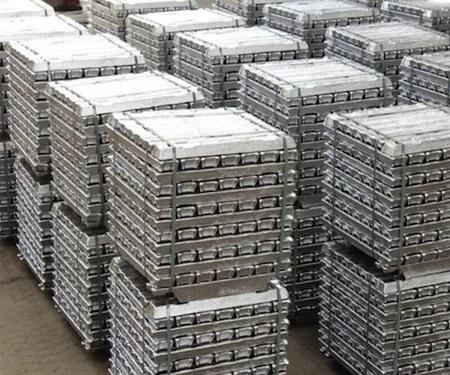
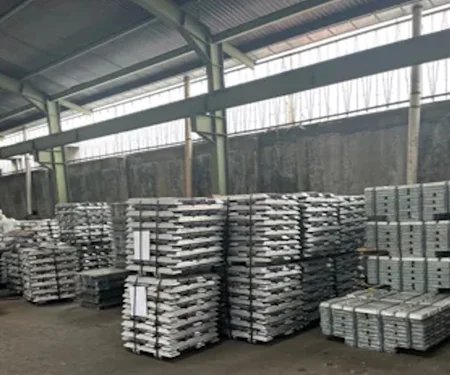
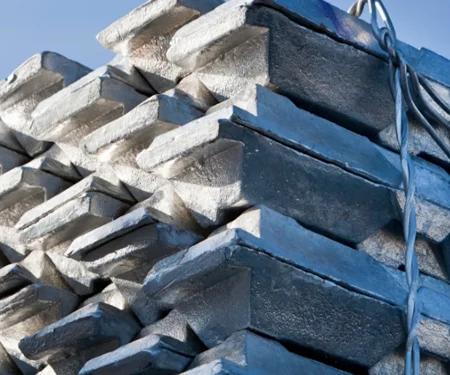
The image used in this article is generated with an AI tool and does not depict any real-time moment
Aluminium stocks on the London Metal Exchange (LME) have slumped to their lowest level this century as supply constraints stemming from the conflict in the Middle East continue to force consumers to draw down exchange inventories to secure physical metal. While the market is still forecasting aluminium surpluses in the coming years, the relentless decline in warehouse stocks points to tightening physical availability, underscoring the growing impact of geopolitical disruptions on the global aluminium supply chain.
According to LME data, total aluminium inventories stood at 271,275 tonnes on July 24, the lowest level since the exchange's records began in January 1998. The remaining stock is equivalent to less than one day's global aluminium consumption, highlighting how little exchange-tradable metal is immediately available to buyers.
The decline has also been reflected in on-warrant stocks-metal available for trading and physical delivery-which fell to 245,350 tonnes on July 24, their lowest level since April 2025.
Recent LME monthly stock origin reports show that most of the remaining inventory is Russian aluminium. Although metal produced before April 13, 2024, remains eligible for trading, some market participants have continued to avoid Russian-origin material.
Meanwhile, inventories on the Shanghai Futures Exchange (SHFE) have been declining since mid-June but remain comparatively healthy at 455,092 tonnes. Benchmark three-month aluminium on the LME was trading 0.3 per cent higher at USD 3,170 per tonne.
Why LME inventories matter to the global aluminium market
The London Metal Exchange operates a global network of licensed warehouses where primary aluminium can be deposited and delivered against exchange contracts. The metal held within this system represents the most transparent and independently verified measure of immediately available physical aluminium in the global market.
Within the warehouse network, on-warrant stocks represent metal that remains available for trading and physical delivery, while cancelled warrants refer to aluminium that has already been earmarked for withdrawal from LME warehouses and is therefore no longer available to other market participants.
The ratio of cancelled warrants to on-warrant inventories is widely regarded as one of the market's most reliable leading indicators of future inventory movements. A rise in cancelled warrants generally signals that physical buyers are removing metal from exchange warehouses in anticipation of tighter supply or firmer prices, increasing the likelihood of further inventory declines.
To know the production, demand and consumption forecasts on bauxite and alumina, explore the report "Global Bauxite & Alumina Market Forecast to 2036: Supply–Demand, Trade Flows & Price Outlook"
Supply disruption in the Gulf is accelerating inventory drawdowns
The current decline in LME inventories is being driven less by weak global production than by disruptions affecting one of the aluminium industry's most important supply regions.
The Gulf accounts for about 9 per cent of global primary aluminium production capacity, while its two largest smelters were targeted during Iranian attacks in late March. At the same time, continued disruption in the Strait of Hormuz has complicated shipping through the region, affecting both the import of alumina and the export of finished aluminium.
Gulf smelters depend on imported alumina to sustain production, making uninterrupted shipping through the Strait of Hormuz essential. The ongoing disruption has constrained the inflow of raw materials while also limiting the movement of finished aluminium to international markets.
Hobbs noted that the disruption is making it increasingly difficult for Gulf smelters to receive raw materials and export their metal, adding that despite projected aluminium surpluses in 2027 and 2028, the market may be "too complacent about supply risks."
As supply from the Gulf has become less reliable, consumers have increasingly turned to LME inventories to secure physical metal. The uninterrupted drawdown over the past five months indicates that physical demand is continuing to outpace exchange-deliverable supply, suggesting a structural imbalance that medium-term market forecasts may not yet fully capture. The trend has also heightened concerns over metals supply security across both public and private sector planning.
Explore primary aluminium suppliers, product listings and trade opportunities on AL Biz
Analysis: Four scenarios shaping the aluminium market outlook
How the aluminium market evolves over the coming months will largely depend on developments in the Middle East and the pace at which supply chains recover.
A rapid normalisation of shipping through the Strait of Hormuz, considered to have a low-to-moderate probability, could lift LME inventories to 400,000 tonnes or more, easing supply concerns and placing bearish pressure on aluminium prices in the near term.
A prolonged disruption lasting between six and twelve months, carrying a moderate probability, could push inventories below the critical 200,000-tonne threshold, significantly tightening physical availability and creating a strongly bullish outlook for prices.
A third scenario envisages a partial recovery alongside firm demand, also assigned a moderate probability. Under these conditions, inventories are likely to stabilise between 250,000 and 300,000 tonnes, supporting a neutral-to-bullish market environment.
The final scenario assumes a full restoration of supply together with surplus realisation. Although regarded as unlikely in the near term, this outcome could rebuild inventories to more than 500,000 tonnes, creating a bearish outlook for aluminium prices over the medium term.
Aluminium stocks slide: InCred sees up to 41% dip for Vedanta, NALCO, Hindalco
Next articleCentury Aluminum expansion lifts US primary aluminium output by 10% as top officials mark Mt Holly milestone
Grow with
AL Circle