LME aluminium plunged again on rising greenback; SHFE continues to trade weak on sluggish demand
The US dollar index increased on hopes the US and China might renegotiate a trade deal at the G-20 summit in Buenos Aires, and this grew safe-haven gains for the greenback. Base metals, expect for SHFE nickel fell across the board.
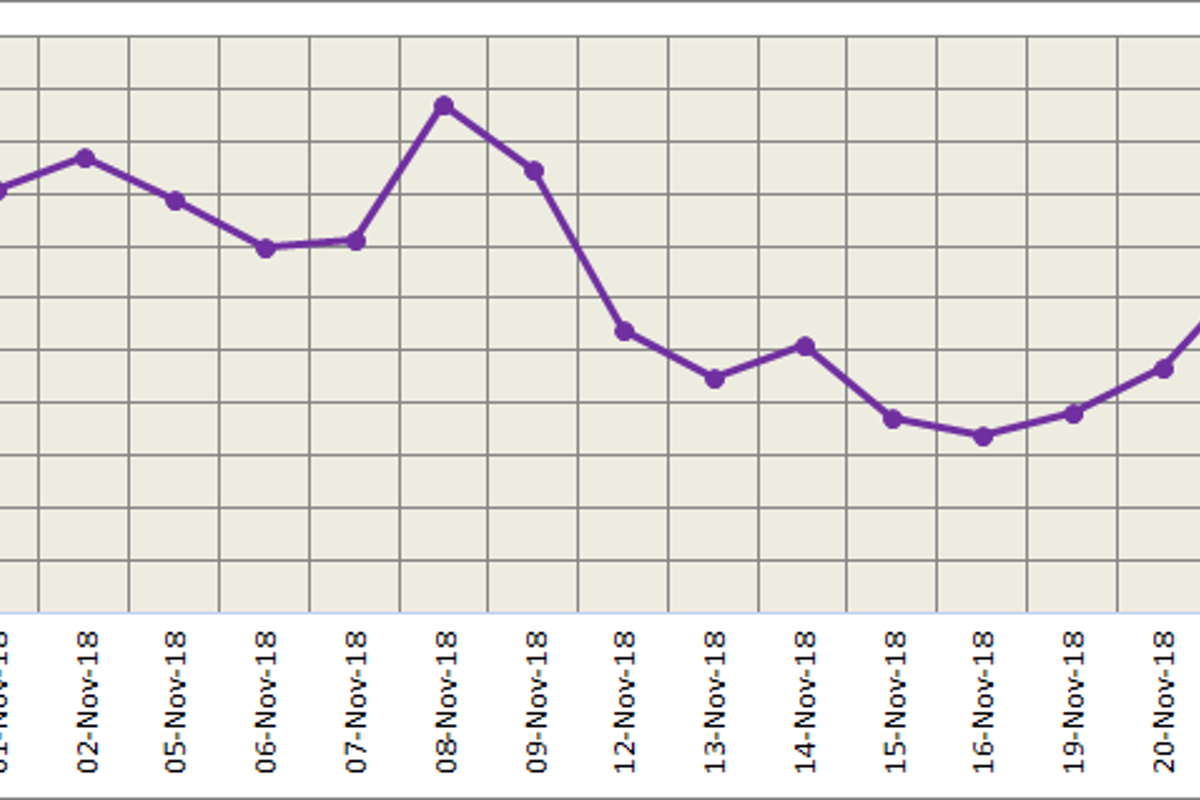
LME aluminium recovered some losses last week, but plunged heavily during Friday’s trading to close at US$ 1922.50per tonne on rising greenback. The contract traded upward at night. However, lower prices of oil and weaker macro sentiment pushed LME aluminium contract 0.33% to US$1,942 per tonne. It is likely to hover around the five- and 10-day moving averages, and test support at the 10-day moving average today.
As on November 23, Friday, LME aluminium cash (bid) price stood at US$ 1922 per tonne, LME official settlement price stands at US$ 1922.50per tonne; 3-months bid price stands at US$ 1934 per tonne, 3-months offer price is US$ 1934.50 per tonne; Dec 19 bid price stands at US$ 2000 per tonne, and Dec 19 offer price stands at US$ 2005 per tonne.
The LME aluminium opening stock dropped to 1067000 tonnes. Live Warrants totalled at 796900 tonnes, and Cancelled Warrants were 270100 tonnes.
LME aluminium 3-months Asian Reference Price is hovering at US$ 1946 per tonne.
SME and SHFE Aluminium Price Trend
The benchmark aluminium price on Shanghai Metal Exchange dropped slightly to US$ 1980 per tonne today from US$ 1994 per tonne on November 21.

The SHFE 1901 contract tumbled during the day and closed at RMB 13,775 per tonne. This prompted the contract to give up the gains made overnight and in early morning trade. Open interest for the contract shrank 14,464 lots to 242,646 lots. As longs left the market, the SHFE 1901 contract declined below the five-day moving average to a low of RMB13,735 per tonne last Friday night. Sluggish demand and weaker support from lower prices of alumina saw the contract face heavy pressure at the 20-day moving average. It is likely to trade at RMB 13,750-13,850 per tonne today with spot discounts at RMB 50-10 per tonne. We expect the contract to continue to trade weakly.
Spot aluminium discounts in Shanghai remain unchanged against the SHFE 1812 contract: SMM
Next articlePrebaked anode prices to drop in December on downstream production cuts and eased winter curbs
Grow with
AL Circle