Adv
LANGUAGES
English
Hindi
Spanish
French
German
Chinese_Simplified
Chinese_Traditional
Japanese
Russian
Arabic
Portuguese
Bengali
Italian
Dutch
Greek
Korean
Turkish
Vietnamese
Hebrew
Polish
Ukrainian
Indonesian
Thai
Swedish
Romanian
Hungarian
Czech
Finnish
Danish
Filipino
Malay
Swahili
Tamil
Telugu
Gujarati
Marathi
Kannada
Malayalam
Punjabi
Urdu
AL CIRCLE

India’s power pivot: 520 GW today, 900 GW ambition tomorrow. Here's where aluminium quietly fits in!
EDITED BY : 6MINS READ

renewable energy

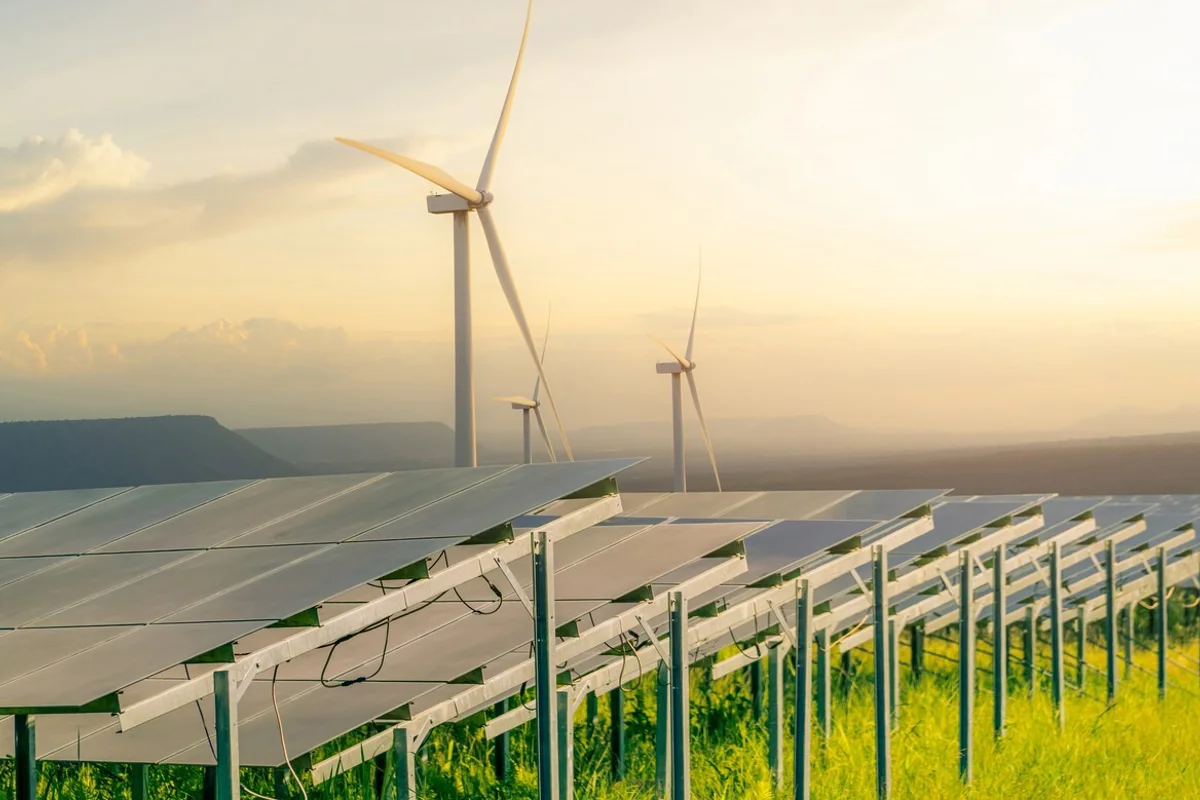
In India, electricity deficits are overcome by the engineering dominance — that is what has been the ethos at the Bharat Electricity Summit 2026. Here, what emerged wasn’t event rhetoric. It was a shift in how the country is thinking about power, industry, and global positioning. Beneath the presentation numbers lay a deeper industrial signal of India building an electricity system that could redraw cost curves for energy-intensive sectors like aluminium.

{alcircleadd}

Start with the baseline. India has crossed 520 GW of installed capacity, with over 40 per cent already coming from non-fossil sources. A decade ago, the country was running a power deficit of around 4-5 per cent. Today, it is operating close to surplus, with a grid sophisticated enough to handle 15-minute scheduling and increasingly layered with smart metering and digital controls.

For the global aluminium value-chain 2026 outlook, book our exclusive report “Global ALuminium Industry Outlook 2026"  

From megawatts to markets

The Indian power sector is moving beyond capacity addition into system management. Between April 2025 and January 2026 alone, India added a record 52.5 GW of new capacity, taking total installed capacity to 520 GW. Crucially, over 52 per cent of this capacity (272 GW) now comes from non-fossil sources, compared to just 32 per cent a decade ago.
At the same time, renewable additions are accelerating faster than conventional infrastructure as India added 44.5 GW of renewable capacity in 2025, nearly double the previous year’s pace.
This scale has forced a shift in policy focus. With generation no longer the primary bottleneck, the emphasis is now on integrating variable renewable energy into the grid through storage, market-based dispatch, and digital load management, rather than simply adding more plants.

This shift is underpinned by a structural balancing act. India has already met 50 per cent non-fossil installed capacity — 5 years ahead of its 2030 target, while continuing to serve the world’s third-largest electricity demand base.
At the same time, electricity demand continues to rise alongside industrialisation and electrification, with coal still accounting for over 70 per cent of actual generation, highlighting the gap between clean capacity and reliable supply.
This creates a measurable tension: India must expand clean energy without disrupting affordability or reliability across a grid serving over a billion people.

For aluminium producers, this shift is critical as power accounts for roughly 35-40 per cent of smelting costs. The promise of sub-INR 4 per unit renewable tariffs, now increasingly paired with storage, signals an easing of input costs over the medium term.

The storage and grid equation

Of the four-day-long international conference and exhibition, Day 1 laid out ambition, Day 2 exposed the constraints, and the solutions.

Energy storage emerged as the linchpin of India’s next phase. With a roadmap targeting integration of over 900 GW of non-fossil capacity by 2035-36, storage has become foundational for the sustainable and stable power supply.

Sessions on battery ecosystems, grid flexibility, and decentralised generation underscored a hard truth: renewable expansion without storage simply shifts volatility across the system.


Adv
Adv
Adv
Adv
Adv
Adv
Adv
EDITED BY : 6MINS READ

Responses

Adv
Adv
Adv
Loading...
Adv
Adv
Adv
Loading...
Reports VIEW ALL
Loading...
Loading...
Business Leads VIEW ON AL BIZ
Loading...
Adv
Adv
Would you like to be
featured with us?
Loading...

AL Circle News App

AL Biz App

A proud
ASI member
© 2026 AL Circle. All rights reserved. AL Circle is not responsible for content from external sources.