US aluminium imports from India rose 17.2% in 2025 despite tariffs - with 90% of costs borne domestically, is the US reassessing the tariff?
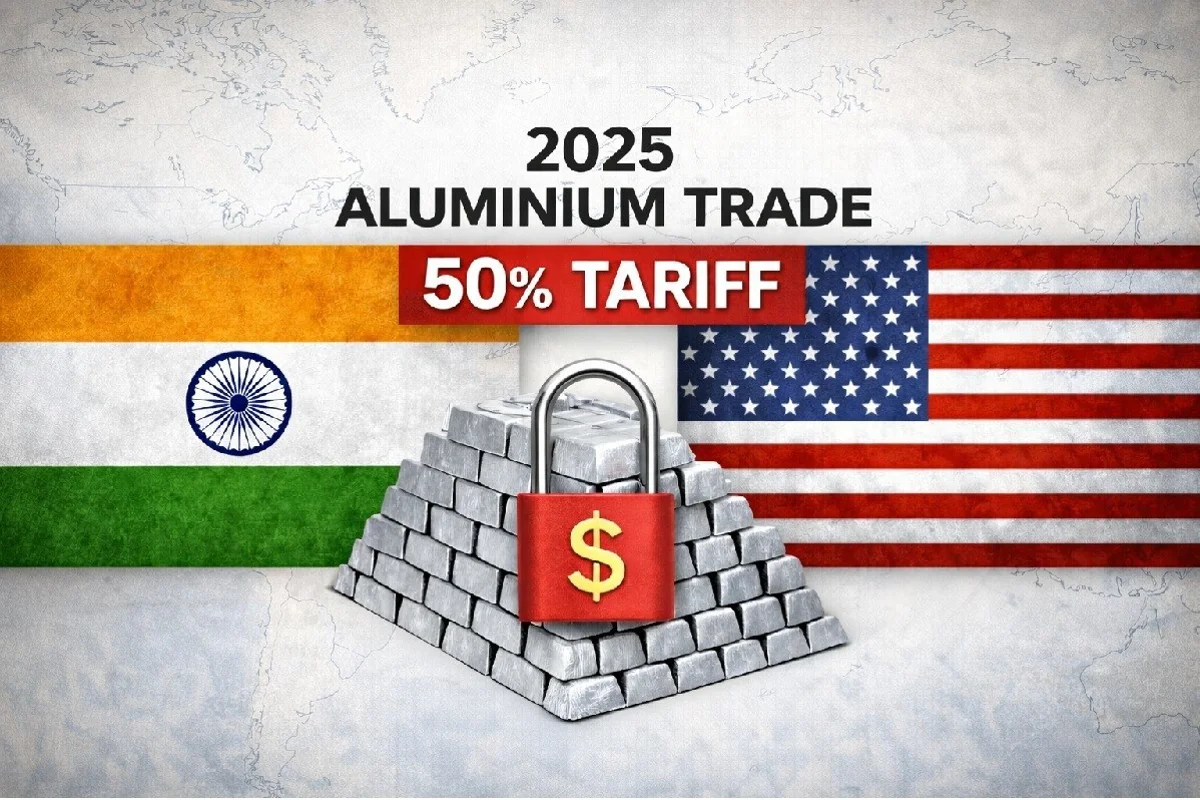
In 2025, India-US aluminium trade did not simply slow - it changed direction. What began as a policy intervention quickly evolved into a broader supply-chain shift. In March, Washington imposed a 25 per cent tariff on aluminium products under Section 232, citing the need to protect domestic industry. Before businesses had time to adjust, another decision followed on June 4, 2025, the White House raised tariffs on aluminium and steel imports - including derivative products to 50 per cent. The message to exporters was clear: the cost of accessing the US market had just climbed sharply.
Tariffs are not new, but the scale of the increase this time is striking. In 2018, India faced a 10 per cent duty, but negotiations resulted in temporary quota arrangements. Aluminium exports were capped at 72,000 tonnes annually and steel at 1.1 million tonnes. As long as shipments stayed within these limits, exporters could avoid the full tariff impact, although selective anti-dumping duties continued. It was a period of restriction, but also of managed flexibility.
The 2025 tariffs offered no such relief. India received neither exemptions nor negotiated ceilings. The higher duties applied uniformly, and trade flows responded almost immediately. What followed was not just a tariff story - it became a test of how industries on both sides would respond under pressure.
The trade outcome turned out differently than expected. Tariffs are generally imposed to make imports costlier and curb volumes. However, in 2025, total aluminium imports from India climbed to 146 thousand tonnes from 124.6 thousand tonnes in 2024 - an increase of 21.4 thousand tonnes, or roughly 17.2 per cent, largely driven by higher primary aluminium imports.
To know more about the global primary aluminium industry 2026 outlook, book the report “Global ALuminium Industry Outlook 2026".
The nine-month trade picture
From January to September 2025, the United States imported 134 thousand tonnes of crude metals and alloys from India, along with 12 thousand tonnes of semi-fabricated aluminium products. This marked a sharp contrast to the same period in 2024, when imports totalled 50,400 tonnes of primary aluminium and 23,900 tonnes of aluminium products. On a year-on-year basis, primary aluminium shipments surged 165 per cent, while aluminium product imports declined by roughly 84 per cent as per USGS data.
These volumes were unevenly spread across the year. March and June - the months when tariff changes took effect - recorded the most pronounced spikes. In January 2025, the US imported 6,280 tonnes of primary aluminium and 1,380 tonnes of aluminium products from India. February saw 4,800 tonnes of primary aluminium and 1,960 tonnes of products.
March, when the 25 per cent tariff came into force, witnessed a dramatic jump: 27,400 tonnes of crude metals and alloys and 1,500 tonnes of plates, sheets and bars. US buyers accelerated shipments to clear customs before higher duties applied, locking in the earlier 10 per cent rate or quota terms. This advance stockpiling lifted month-on-month volumes by 40–50 per cent.
April remained robust, with 11,800 tonnes of primary aluminium and 2,090 tonnes of semi-fabricated products imported. In May, volumes eased to 4,380 tonnes of primary aluminium and 1,100 tonnes of products.
Then came the second escalation. On June 3, President Donald Trump announced that Section 232 tariffs would double to 50 per cent, effective June 4. The increase applied to all countries except the United Kingdom, which retained a 25 per cent rate under separate arrangements.
Once again, importers rushed to beat the deadline. In June, the US brought in 45,500 tonnes of primary aluminium and 884 tonnes of aluminium products from India. As in March, the spike reflected efforts to secure material before costs rose further.
After June, the momentum weakened. July imports fell to 3,400 tonnes of primary aluminium and 1,040 tonnes of products. August showed 29,400 tonnes of primary aluminium and 948 tonnes of fabricated products. By September, volumes had dropped further to 1000 tonnes of primary aluminium and 659 tonnes of aluminium products.
Why primary aluminium kept flowing?
Even with steeper duties, US imports of primary aluminium increased. Demand remained strong, while supplies from Canada - traditionally the largest source - declined.
The structural gap in US production explains part of this resilience. The country currently operates only four primary aluminium smelters - two run by Alcoa and two by Century Aluminum - with a combined annual capacity of about 650 thousand tonnes. Yet in 2024, US consumption of primary aluminium stood at roughly 4.9 million tonnes. The shortfall highlights the country’s heavy dependence on imported metal.
To avoid supply disruptions and manufacturing slowdowns, buyers diversified sourcing. India, along with the United Arab Emirates, continued to supply competitively priced metal, even after duties rose to 25–50 per cent. In effect, tariffs did not reduce the need for primary aluminium; they redirected procurement flows.
Don’t miss out- Buyers are looking for your products on our B2B platform
Semi-fabricated products tell a different story
The semi-fabricated segment followed a contrasting path. Imports of semi-fabricated aluminium products dropped sharply in 2025, reflecting a broader cooling in US manufacturing activity. The Manufacturing PMI® stood at 49 per cent in June - below the 50 threshold that separates expansion from contraction - though slightly improved from May’s 48.5 per cent reading.
The New Orders Index fell to 46.4 per cent, marking its fifth consecutive monthly decline and signalling softer demand for industrial inputs such as aluminium. While production edged up to 50.3 per cent in June from 45.4 per cent in May, employment and order backlogs continued to shrink. At the same time, the Prices Index remained elevated at 69.7 per cent, underscoring ongoing cost pressures.
Demand was also weaker in the first nine months of the year, largely due to inflationary pressures. China played another major part, previously it was a major supplier of semi-fabricated aluminium to the US, but tariffs sharply altered the trade flow. Between January and September 2025, US imports from China fell to 42.9 thousand tonnes - a decline of about 64 per cent from 120 thousand tonnes in the same period of 2024
Also, some new initiatives are taking shape across the US aluminium semi-fabricated sector. In Alabama, Novelis is developing its 3,000-acre Bay Minette site - the first fully integrated aluminium mill (combining recycling and rolling) built in the country in 40 years - with a planned annual capacity of 600 kilotonnes of finished products and operations expected to begin in 2026.
In Mississippi, Aluminum Dynamics is establishing a facility in Columbus designed to produce 650,000 tonnes of aluminium sheet annually for the automotive and beverage can industries. Meanwhile, Emirates Global Aluminium has proposed a USD 4 billion smelter in Oklahoma, which, if constructed, would be the first new primary aluminium smelter built in the US in 45 years. They are focusing on building domestic production capacity instead of relying on imports.
Who paid the price?
As trade patterns adjusted to evolving policy signals, the question of who ultimately bore the tariff burden gained prominence. Various media reports indicate that President Donald Trump is considering scaling back certain steel and aluminium duties. The administration is reviewing product lists, exploring selective exemptions, pausing further expansions and initiating more focused national security investigations.
This reassessment follows findings from a New York Fed study showing that American businesses and consumers absorbed nearly 90 per cent of the tariff costs. During the first eight months of 2025, 94 per cent of the costs were passed on domestically. The share eased slightly to 92 per cent in September–October and 86 per cent in November.
The evidence suggests that although tariffs were introduced to protect domestic industry, they also reshaped supply chains, redirected sourcing strategies and increased costs within the US economy. For India–US aluminium trade, 2025 has not been defined by contraction alone, but by realignment - driven by urgency, adaptation and the enduring pull of industrial demand.

LME aluminium cash prices make a fast recovery with 1.39% rise, while stocks follow a declining graph
Next articleLME aluminium cash offer eases to $3,014/t as opening stocks drop 0.42% to 477,550t on February 17
Grow with
AL Circle