Implications of UK's carbon policy shift on exporters facing EU carbon border taxes
The Rishi Sunak Government's decision to delay or weaken UK climate targets has stirred concerns among environmentalists and industry players alike. This shift has not only impacted the UK's carbon market but also raised potential challenges for exporters facing EU carbon border taxes. Let's delve into the details of this evolving scenario.
The UK's carbon market has witnessed a significant downturn, with prices plummeting to less than half of the equivalent EU carbon cost. This decline, exemplified by UK carbon prices hitting a low of £33 per tonne while the EU price stands at €82 (£71), indicates a substantial gap in carbon pricing dynamics.
EU Carbon Border Tax Implementation
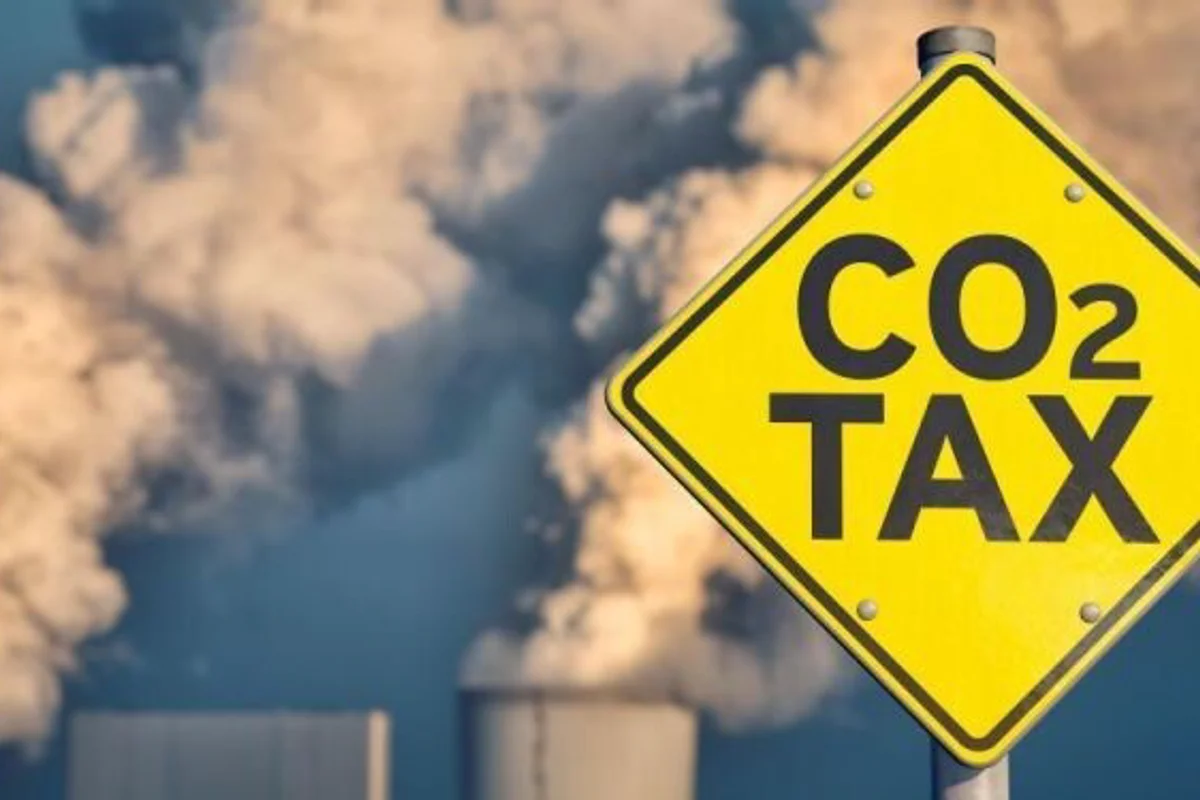
The EU has introduced carbon border tax rules aimed at imposing CO2 emissions tariffs on imported goods like steel, cement, and others to safeguard its green transition. These regulations, set to be fully enforced by 2026, are designed to discourage more polluting foreign products and encourage global adherence to greener production standards.
Implications for UK Exporters
UK exporters to Europe may face significant financial burdens as a result of this policy misalignment. With the potential for EU carbon border taxes to amount to "hundreds of millions of pounds" by the early next decade, exporters must brace themselves for impending challenges.
Marcus Ferdinand of carbon consultancy Veyt confined to sources: "The total UK exporters would pay to the EU could easily rise into the hundreds of millions of pounds by early next decade if the gap in carbon prices remains."
Compliance Challenges and Risks
Businesses on both ends of the spectrum, exporters and importers, must navigate compliance complexities to avoid penalties and supply chain disruptions. Collecting carbon data, ensuring product competitiveness, and aligning with EU standards is paramount to safeguarding trade relationships and avoiding financial penalties.
The divergence in carbon pricing policies between the UK and the EU underscores the challenges exporters face in an increasingly interconnected global economy. As regulatory landscapes evolve, businesses must adapt swiftly to ensure compliance and mitigate financial risks.
To learn about the international aluminium sector in greater details, please have a look at AL Circle's specially curated report, Global Aluminium Industry Key Trends to 2030.
RUSAL proactively submits reports on biodiversity conservation and water resources management
Next articleAdani ventures into polysilicon production to boost solar module manufacturing; Aluminium sector set to thrive with surge in solar projects
Grow with
AL Circle