Iochpe-Maxion, a global manufacturer of automotive wheels and structural components, through its subsidiary Maxion Wheels, announced that it was taking strategic measures to strengthen its light vehicle aluminium wheel business in South America. It had redeployed existing global production assets to Brazil and has acquired a 50.1 per cent stake in Polimetal, a major aluminium wheel manufacturer in Argentina, which has been successfully completed. Now, the question arises: when the firm was focusing on Brazil, why did it acquire an Argentina-based company?
The acquisition of Polimetal by Iochpe-Maxion has been completed by Marval, who acted as the legal counsel for the Group, aiding in structuring and implementing the agreement of the acquisition at 50.1 per cent stake.
Glance at Argentina’s alloy wheel market
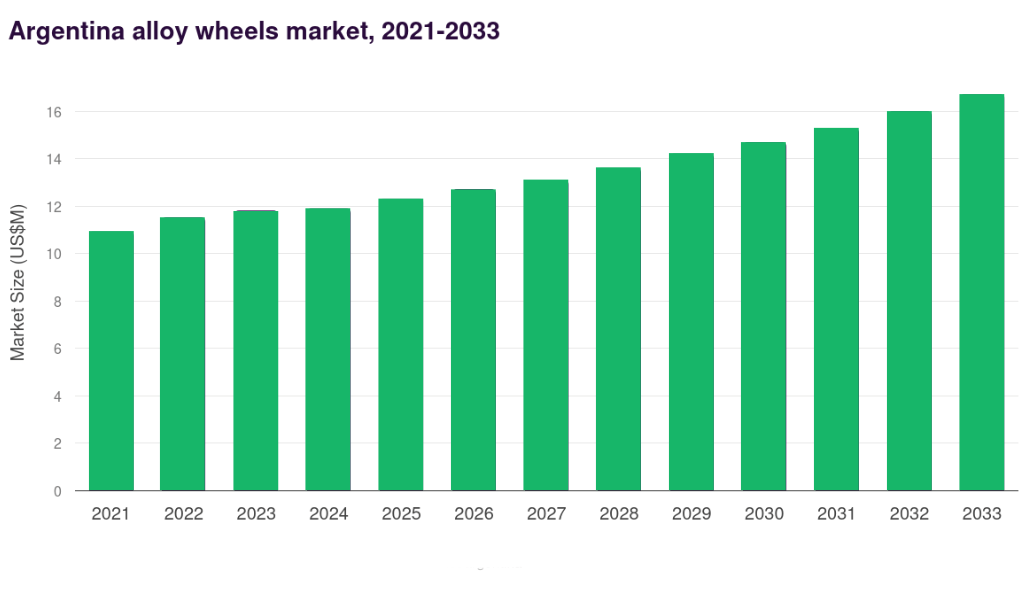
As per Grand View Horizon data, Argentina’s alloy wheels market gained a revenue of USD 11.9 million in 2024 and by 2033, it is expected to grow to USD 16.7 million. The hike will be seen due to the steady CAGR rate of 3.9 per cent in the same time frame. In 2024, passenger vehicles were measured to be the highest in the market, becoming the top revenue-generating segment for the region. The passenger vehicle is further set to stay appealing and the fastest-growing type of vehicle throughout the forecast period.
(Source: Grand View Horizon)
When compared with Brazil’s alloy wheel market
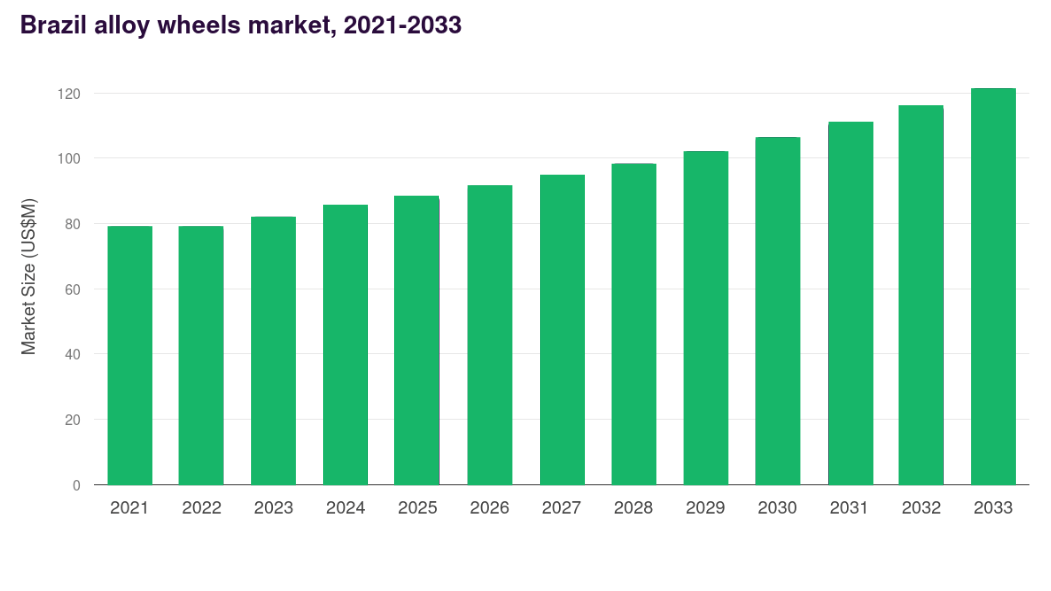
As per Grand View Horizon data, The alloy market in Brazil created a total revenue of USD 85.5 million in 2024 and is expected that by 2033, the revenue will increase to USD 121.3 million, with a CAGR rate of 4 per cent. Like Argentina, Brazil’s MVP as the top revenue-generating segment was the passenger vehicles. It is expected that the passenger vehicles will be the most appealing and fastest-growing vehicle type throughout the forecast period.
Now the question lies, if Brazil’s alloy wheel market is much more appealing than Argentina’s, what made Iochpe-Maxion acquire an Argentina-based company?
(Source: Grand View Horizon)
Don’t miss out- Buyers are looking for your products on our B2B platform
Effect of the US tariff on Brazil and Argentina
As per the report of Fastmarkets, the US import tariffs on steel and aluminium affected Brazil negatively since all the major producers are now redirecting the materials here, which were primarily supposed to go to the US. This has led to increased competition as well as a significant spike in imports. While domestic producers such as CBA, Alumar, and Albras have reported minimal direct effects due to robust internal demand, the overall market is still grappling with pricing pressures and heightened competition stemming from the shift in supply caused by the tariffs.
After the US tariffs, Argentina’s government, back in October, had decided to temporarily lift export taxes on aluminium, steel and related products. This temporarily suspends the duties for shipments which are going to countries that impose import tariffs of at least 45 per cent.
This is why Argentina is looking to boost its exporters’ competitiveness and support its domestic metals industry during these turbulent global market times. While this concession is temporary as of now, it can be expected that the upliftment will last till the end of 2025. This provides Argentine producers with a crucial opportunity to ramp up exports and bring in foreign currency, helping them navigate the broader challenges posed by the US tariff shifts in supply chains.
Why choose Argentina over Brazil?
Given the ongoing US tariff situation, Argentina is proving to be a more appealing place for the aluminium alloy wheel business than Brazil. This is more because while Brazil is encountering tougher competition and pricing pressures due to a shift in global supply, Argentina has taken proactive steps by suspending export taxes on aluminium and related products for countries with high tariffs.
Must read: Key industry individuals share their thoughts on the trending topics
This move by the government has enhanced the country’s competitiveness in exports as well as provided the manufacturers with the ability to ramp up production, improve profit margins, and tap into global markets with lower costs. Meanwhile, as Brazil struggles with oversupply and shrinking premiums, Argentina’s supportive fiscal policies make it a more stable and attractive market for those in the alloy wheel industry.
How is the acquisition beneficial for both countries?
The firm’s decision to acquire a 50.1 per cent stake in Polimetal proves to be a win-win situation for both countries. This acquisition provides the opportunity to boost aluminium wheel production capacity in order to meet the rising regional demand, streamlining supply chains and fostering automotive growth within Mercosur.
With this acquisition, Polimetal becomes a vital supplier for Australian automakers by improving its overall production as well as enhancing the customer service, mainly because of Maxion’s technology. It further strengthens the automotive industry of Argentina at a time when passenger car sales are on an upward trend. This enables the country to witness long-term growth within the sector.
Redeployment of Maxion’s global assets to its Limeira and Santo André plants will help leverage local expertise for boosting the overall output, as well as address the rising demand for light vehicle aluminium wheels. With this, Brazil can ramp up its regional production hub, improve service to Mercosur OEMs and support short-term market needs.
Explore- Most accurate data to drive business decisions with 50+ reports across the value chain














_md.webp)
_md.webp)