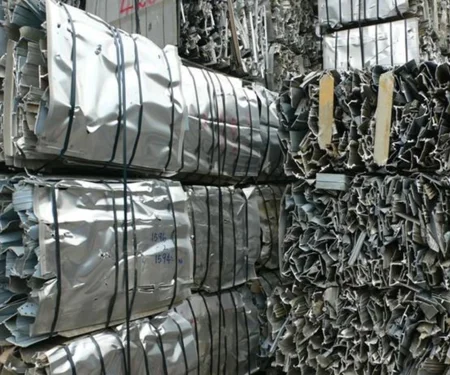
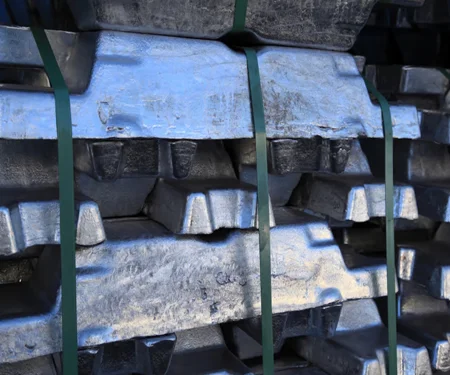
Anuj Bareja, Founder and Managing Director of Asier Metals Private Ltd, stated at the LME Mumbai Forum on January 27, 2025, that establishing London Metal Exchange (LME) warehouses in India could help mitigate the carbon footprint associated with transporting aluminium. With sustainability measures concerning aluminium and the future implementation of the EU Carbon Border Adjustment Mechanism (CBAM) levies, having these warehouses locally would eliminate the need to transport aluminium to LME-registered facilities in Southeast Asia for storage and delivery.
“Why does India need to ship out 1.5 million tonnes of aluminium to Southeast Asia? Are we not burning fuel?” Bareja said, emphasising the need for LME warehouses in India where the metal can be stored and drawn out domestically.
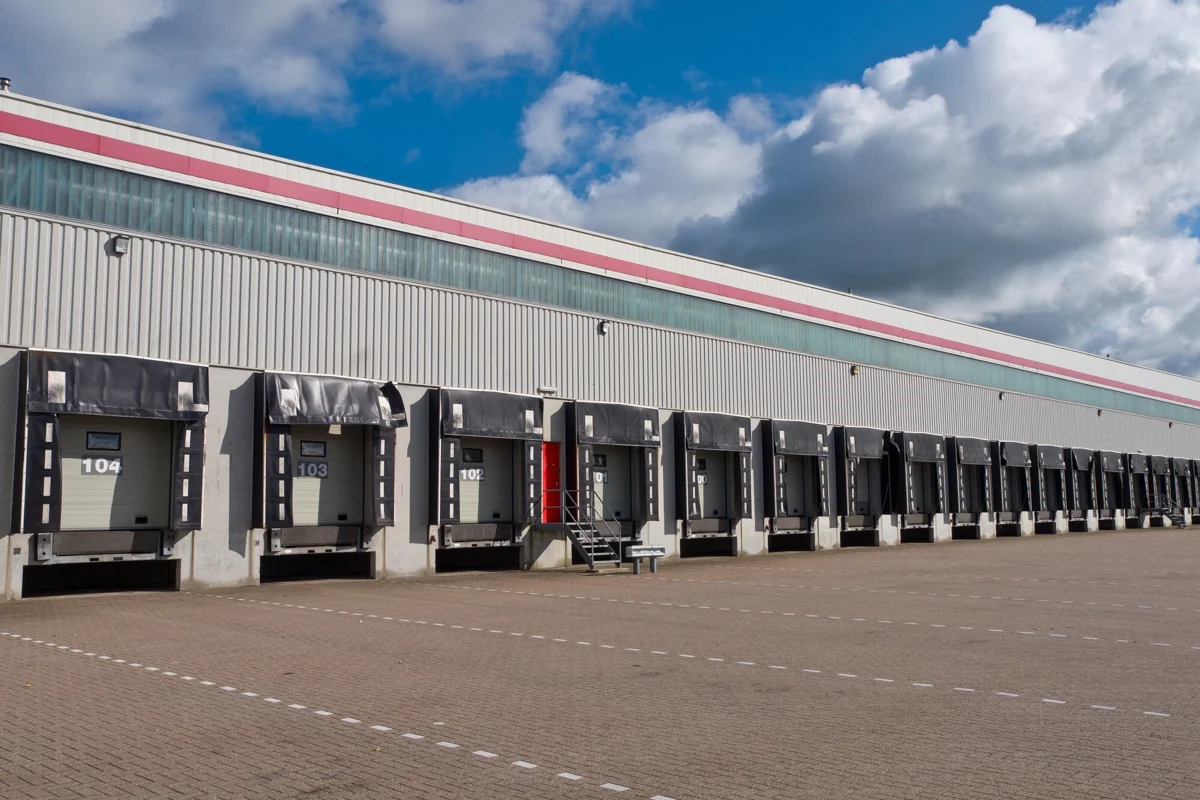
There are over 465 LME-approved storage facilities in 33 locations across the USA, Europe and Asia, including 14 in Belgium and over 60 in South Korea, among others. But there is none in India till date.
Benefits of having an Indian warehouse
Close to 41.5 per cent of the total aluminium in LME-listed warehouses was of Indian origin at the end of 2024, suggests S&P Global. London Metal Exchange, the market of last resort, ought to take into account listing warehouses in India, as suggested by market participants in the meantime. Let us find out why:
- Improved supply chain efficiency
An LME warehouse situated in India would also bring significant improvements to the country’s aluminium supply chain. At present, many businesses in India need to move aluminium to international warehouses to meet LME certification requirements, which adds time and costs. The waiting time to take delivery of aluminium from ISTIM’s warehouse in Port Klang, Malaysia, was 163 days at the end of 2024. By having an LME-approved storage facility in India, the need to export aluminium to foreign warehouses would be eliminated. This streamlining of the supply chain would reduce transportation costs, shorten lead times, and ultimately enhance overall operational efficiency for both producers and consumers in India.
- Market liquidity and inventory management
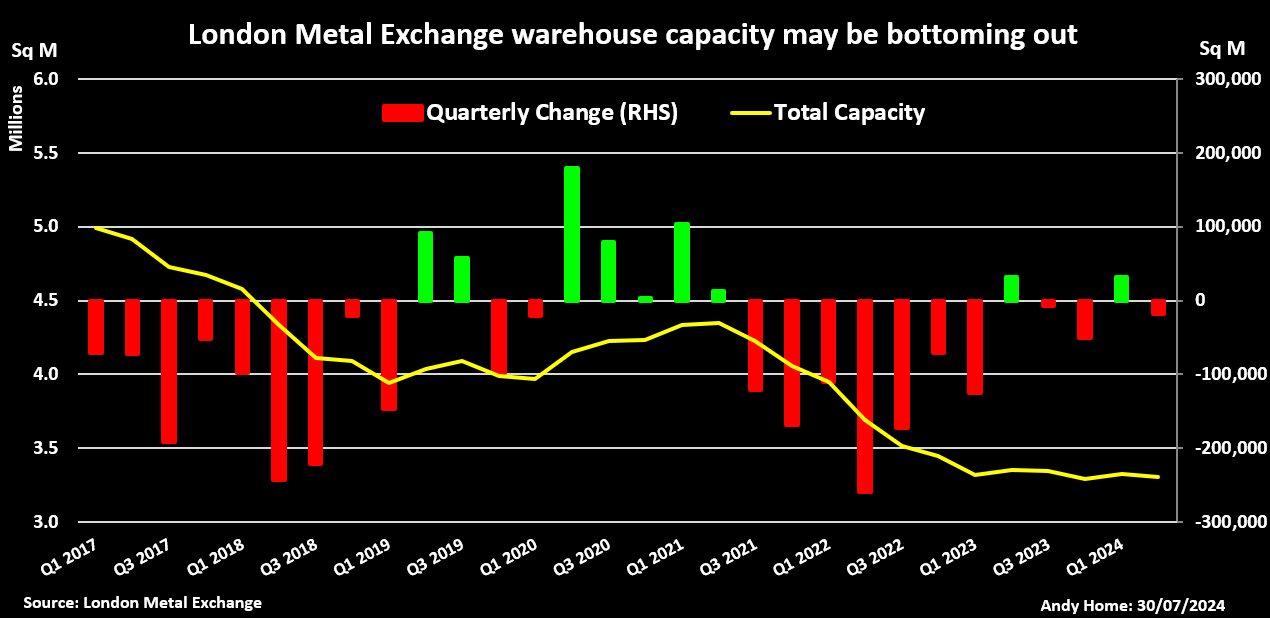
One of the key advantages would be the boost to market liquidity. Local access to LME-approved aluminium stocks means producers and traders can buy or sell aluminium more easily and quickly, allowing for a more dynamic market. Additionally, as the present warehouses are tight on capacity, regional businesses can better manage their inventories, reducing the likelihood of overstocking or stockouts.
- Quality assurance and standardisation
The LME maintains strict standards for aluminium quality in its warehouses, which would offer significant benefits to businesses operating in India. By having an LME-approved warehouse, Indian aluminium producers and consumers would gain confidence in the quality and consistency of aluminium stocks. The LME’s quality control protocols would ensure that all aluminium stored in the warehouse meets internationally recognised standards, leading to higher levels of trust among global buyers.
- Boost to domestic and export markets
There is also a positive change that will boost both domestic and export markets. For Indian aluminium producers, the ability to store aluminium locally in an LME-approved facility would eliminate the need for complex logistics to transport products to international markets for LME certification. Furthermore, the presence of a local LME warehouse could encourage more international buyers to consider sourcing aluminium from India, thereby expanding export opportunities further and driving growth in the country’s aluminium sector.
- Support for Downstream Industries
Downstream industries that rely on aluminium, such as automotive, packaging, and construction, would benefit from the local availability of LME-certified aluminium stocks. These industries require a reliable supply of high-quality aluminium at transparent prices, and an LME warehouse in India would meet these needs. With easier access to LME-certified aluminium, businesses in downstream sectors would be able to plan and execute their operations more efficiently, which would have a positive impact on the broader economy.
Lastly, India could open up new arbitrage opportunities for traders. Arbitrage involves taking advantage of price differences between markets, and local access to LME-certified aluminium would enable traders to exploit discrepancies in prices between the Indian market and global markets. This could lead to more dynamic trading activities and attract international traders to the Indian aluminium market.
Aluminium trade dynamics of India
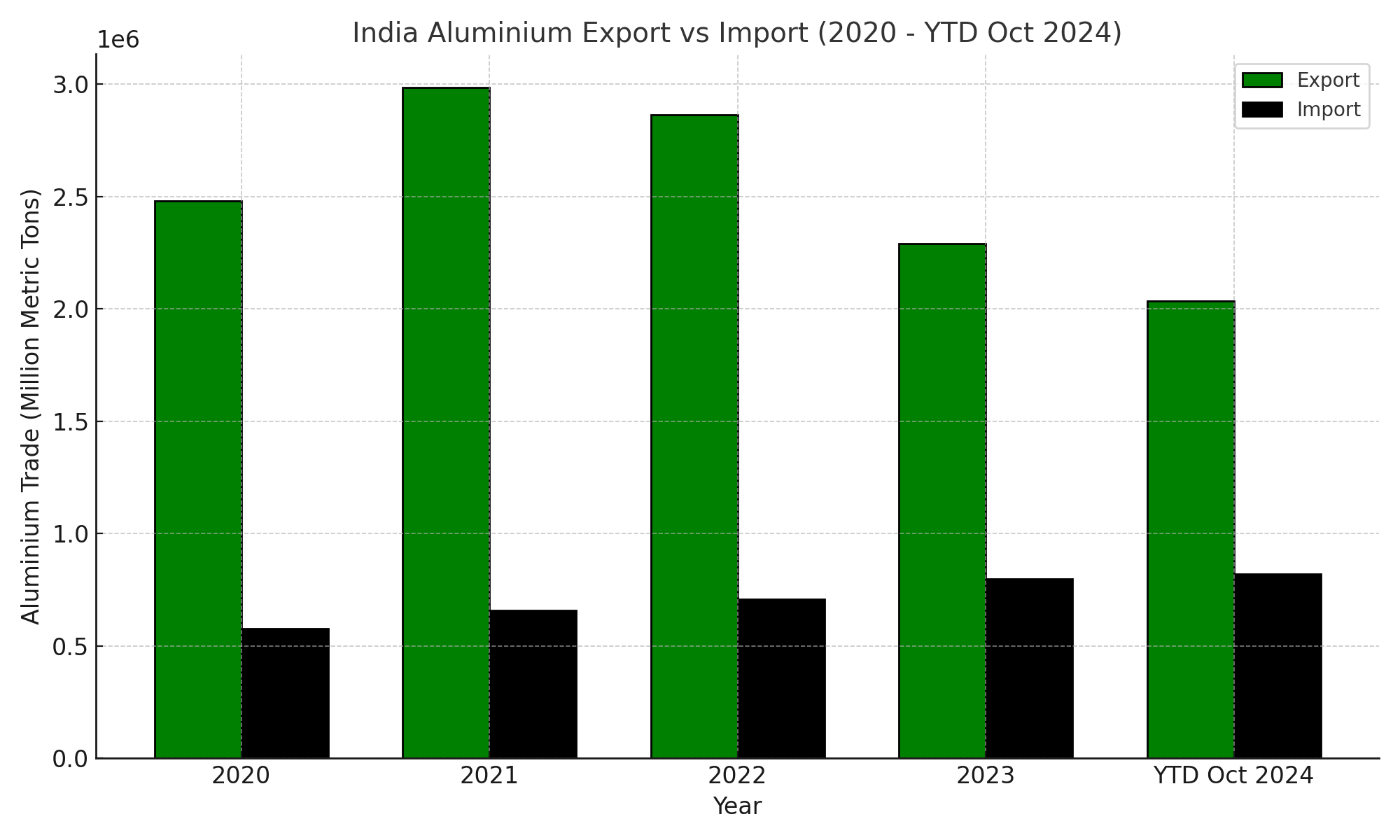
The trade data available from the International Trade Administration suggests that the export volume from India precedes at a much higher rate when compared to import volumes for the past five years.
The aluminium trade between India and the global market is reflected through fluctuating trends in both exports and imports from 2020 to October 2024. While India has generally maintained a much higher export volume compared to imports, the data shows a gradual shift with rising import levels over the years.
India’s aluminium exports experienced a peak in 2021, with 2,986,482 tonnes shipped, marking the highest level during the observed period. Exports slightly decreased in 2022 to 2,862,770 tonnes. A significant decline was recorded in 2023 when exports dropped to 2,289,048 tonnes. The year-to-date (YTD) October 2024 export volume stands at 2,033,494 tonnes, suggesting a recovery trajectory if the current pace continues for the remaining months of the year.
India’s aluminium imports have steadily increased from 2020 to 2024. In 2020, the import volume was 576,303 tonnes, which gradually rose to 656,871 tonnes in 2021 and 706,424 tonnes in 2022. The sharpest rise occurred in 2023 when imports reached 796,700 tonnes. As of October 2024, imports have already hit 819,843 tonnes, calculated to an above average year-on-year growth and surpassing the previous full-year figures.
Throughout the analysed period, exports consistently exceeded imports, reinforcing India’s position as a net exporter of aluminium. However, the gap between exports and imports has been narrowing over the years. For instance, in 2020, exports were approximately four times higher than imports. By 2023 and YTD October 2024, the gap had significantly diminished as imports approached nearly half of the export levels. This shift could be attributed to increased domestic demand, changes in global market dynamics, or trade policies.
Considering the trade traits and the benefits of boosting the nation’s aluminium business, the speculations about warehouse construction in India do not seem outlandish at all.
Meanwhile, when asked about the potential for LME warehouses in India, the exchange’s Head of Corporate Communications, Miriam Heywood, said in emailed comments to S&P Global, “The LME is committed to expanding the LME warehouse network in important areas of net consumption to ensure we provide maximum global connectivity for the metals community.”
“We have recently added Jeddah and Hong Kong as LME warehouse locations and will continue to evolve our network in line with global trade flows,” Heywood told Commodity Insights.