Gulf disruptions are reshaping global aluminium supply chains faster than expected

The global aluminium market is witnessing a great ordeal as it shifts into a new era, where disruption is becoming a constant rather than just an occasional bump. AZ Global’s report “Gulf Disruptions Roadmap: Decoding Aluminium Market Volatility, Supply Risks & Trade Flow Shifts” provides core insights on the current constraints reshaping the global aluminium supply, demand, trade flows, production inputs and procurement behaviours as it becomes more intertwined.
Given the current trend in the market, it indicates that the people who are involved in navigating the industry are finding that traditional indicators are losing their reliability. Why so? This is because high prices do not point clearly to a shortage, and weaker demand is not reducing the market pressure.
Also read: Aluminium market on edge: Gulf supply crisis fuels fears of $4,000 prices amid global shortage
Irrespective of adequate supply in the market, factors like continuity, accessibility and timeliness are making it crucial to have a more focused look at them. This change within the market dynamics reflects that there is a larger shift in the constraints impacting the aluminium industry.
The report by AZ Global, "Gulf Disruptions Roadmap: Decoding Aluminium Market Volatility, Supply Risks & Trade Flow Shifts" states that is changing from issues like logistics disruptions to production inputs, carbon exposure and the resilience of supply chains. Among all this, for the industry, logistics is deemed to be the major challenge. This is because its evolving role is shifting from being a single problem to a factor that is swaying how different regional supply and demand are fulfilled with proper supply.
Check out the forecast of the global bauxite and alumina market till 2036, book the report “Global Bauxite & Alumina Market Forecast to 2036: Supply–Demand, Trade Flows & Price Outlook”
Concurrently, the global aluminium industry is deemed to be becoming more fragmented. What makes this assumption? Multiple industrial areas are seeing softer demand and increasing inventories, while others are trying to adapt with tighter availability and varying price trends. Due to this, the aluminium market is not moving as it should, making regional access and supply security more critical than ever for downstream industries.
Another key player, according to the AZ Global, "Gulf Disruptions Roadmap: Decoding Aluminium Market Volatility, Supply Risks & Trade Flow Shifts" report, which is shaping the next chapter of the global aluminium market pressure is carbon. Unlike the exchange of raw materials or making short-term logistical tweaks, challenges which are carbon-related are proving to be more difficult to navigate. What makes this? The inclusion of stricter compliance requirements, fragile supply chains and limited inventory increases concerns about future disruptions that may arise even before a recovery in demand is seen.
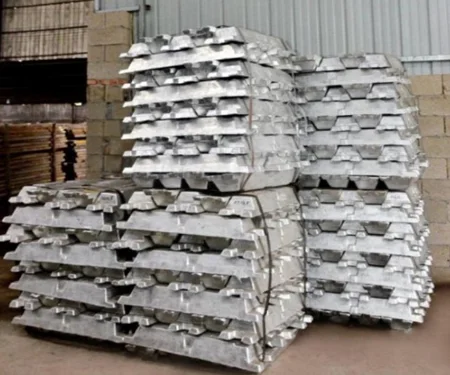
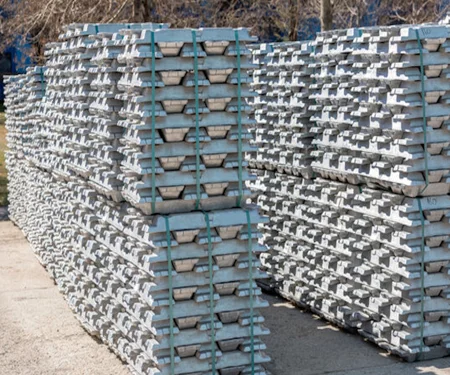
To look for buying or selling leads of primary aluminium ingots, visit our B2B marketplace.
Region-wise, China still holds the lion's share as the key player in the global landscape. Weakening domestic demand, rising inventories and export trends are the major factors that are deemed to shape international trade flows and cause delays in how the broader market reacts.
Although the demand from China is not easing, it does not indicate that the global market is in the clear. Moreover, given the pressure, it is being distributed unevenly across various regions, making the existing gaps in pricing and supply conditions even more pronounced.
Read our latest e-magazine, ALuminium LeaderSpeak 2026 for current market insights from industry's leading voices.
Currently, the according to the AZ Global, "Gulf Disruptions Roadmap: Decoding Aluminium Market Volatility, Supply Risks & Trade Flow Shifts" report, the market is slowly shifting away from a wait-and-see mentality towards a more lean early positioning, marking it as another important shift taking place in the market. As of now, the market is focused on continuity, reliability and protecting their inventory, rather than just chasing the best prices. This shift reflects a growing recognition that future disruptions could hit suddenly and upstream, especially in areas related to production inputs and carbon exposure.
For aluminium producers, traders and downstream consumers, these changes carry significant implications. Market conditions are becoming less predictable, supply chains are less synchronised and interpreting pricing signals is getting trickier. In this kind of environment, having access to a reliable supply could increasingly become a competitive edge, especially as the industry faces a tightening rather than stabilising system.
Trading aluminium across borders? Find out the exact cost you need to bear for the embedded carbon in the product by using this CBAM calculator.
_0_0.png)
Geopolitical risks in the Middle East cool down, aluminium prices under pressure in the short term
Next articleChina's primary aluminium output rises 3% Y-o-Y in April
Grow with
AL Circle