Germany’s aluminium wire import estimated to drop in 2019 after a YoY rise last year
Many automobile and power companies across the world are reportedly abandoning copper wires for its lighter and cheaper rival aluminium after a decade of technological innovation. European countries, like Germany, are also increasingly relying on aluminium wires for the past few years for automobile manufacturing, building construction, and electric circuitry. So to say, aluminium is emerging more and more as a particularly important engineering material, especially in lightweight automotive construction.
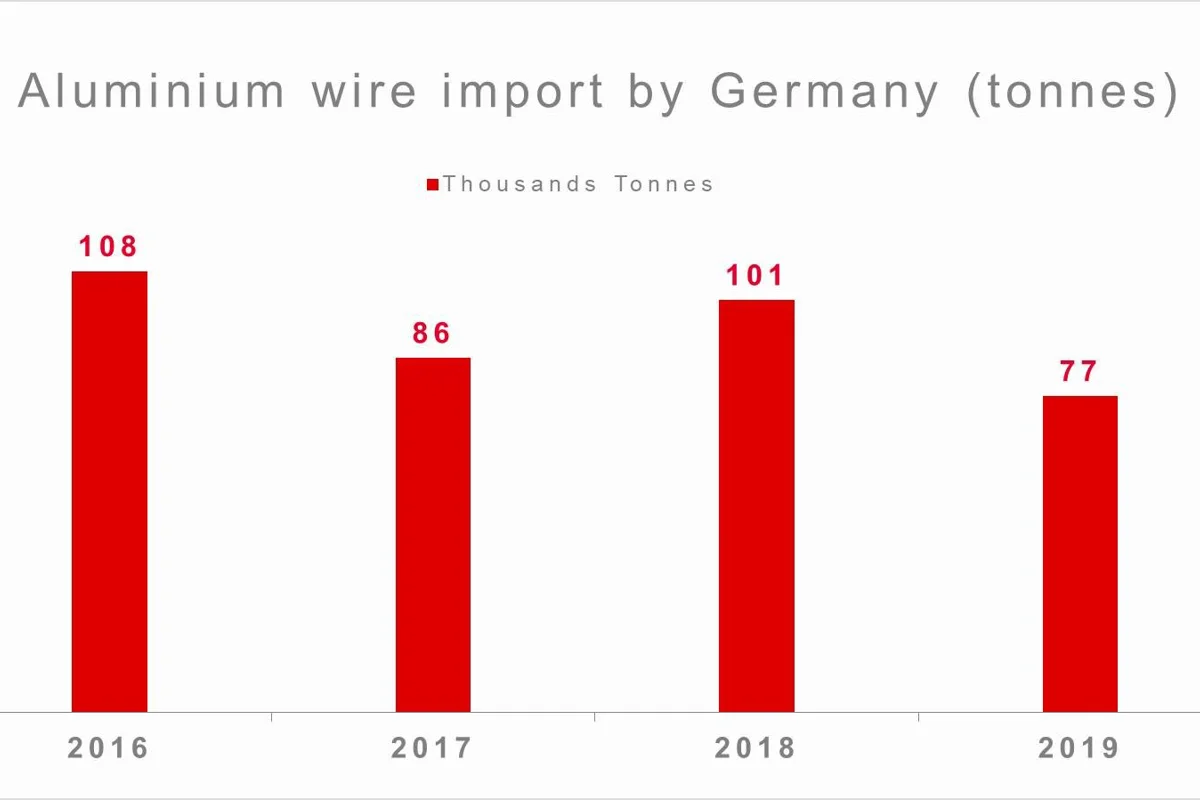
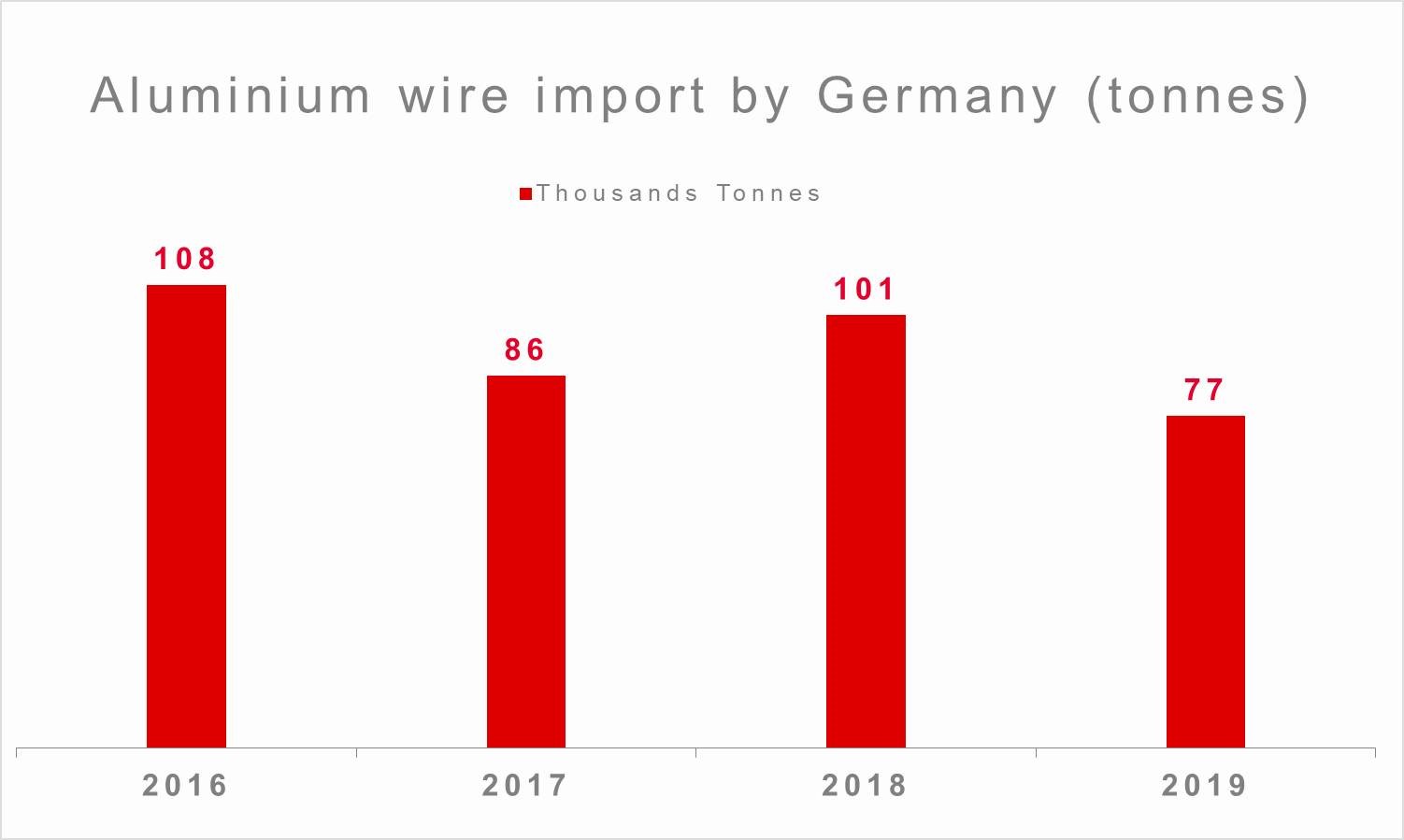
According to global export-import data, Germany in 2018 had imported approximately 101,146 tonnes of aluminium, up 16 per cent year on year from 86,991 tonnes. In 2016, the import volume was even higher at 108,242 tonnes, up 24 per cent from 2017 and 7 per cent from 2018. In 2019, however, Germany is estimated to import the lowest amount in last four years. Per the data, the volume is estimated to be at 77,618 tonnes, down 28 per cent from 2016, 10 per cent from 2017, and 23 per cent from 2018.
The data also shows that this year Germany is likely to import a maximum amount of aluminium wires from France and Spain. France is expected to supply 16,159 tonnes in total, while Spain 13,606 tonnes.
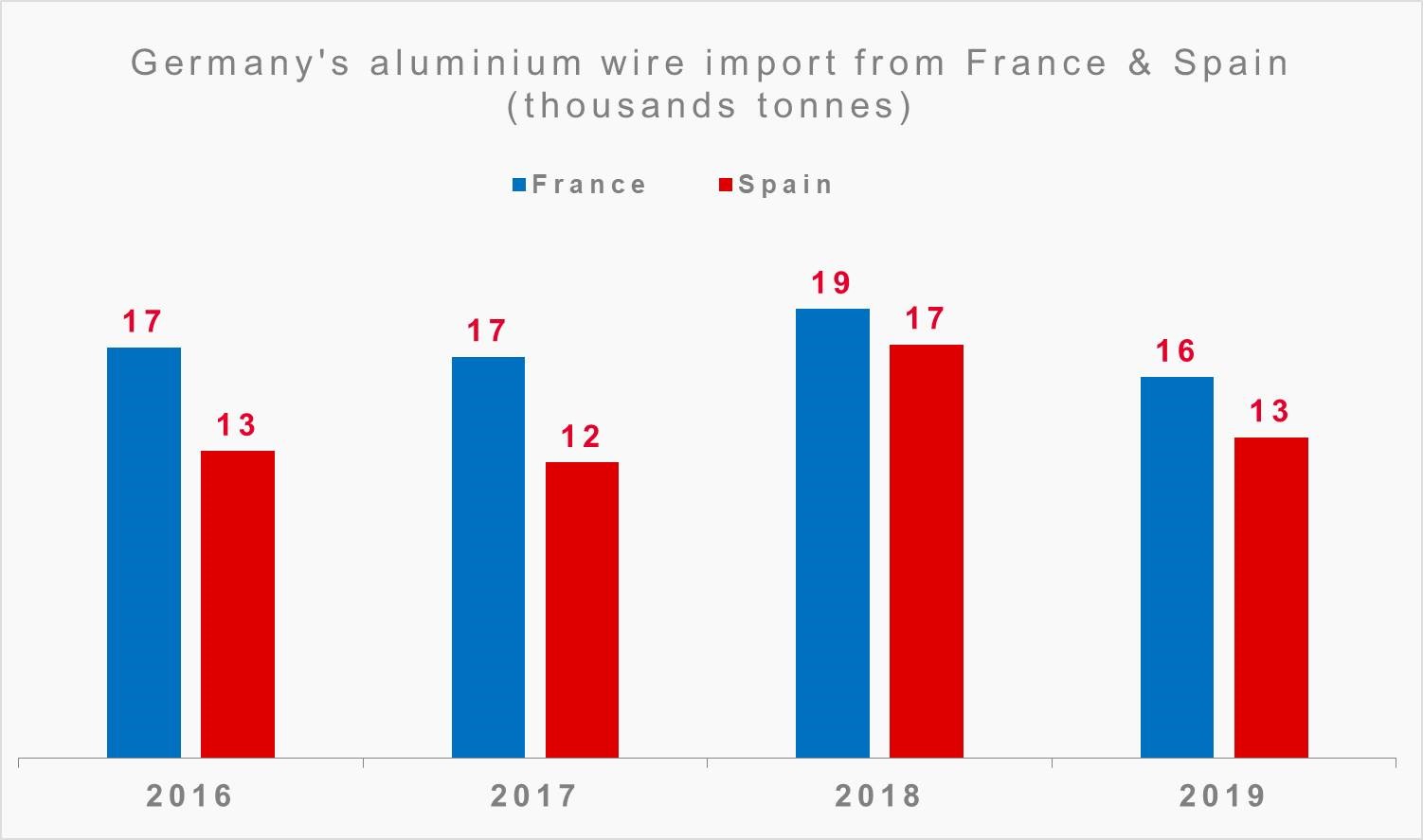
The above data represents that in tandem with the year-on-year fall in Germany's total import volume of aluminium wires in 2019, the import from France and Spain is estimated to dip as well by 15 per cent and 22 per cent from 19,048 tonnes and 17,539 tonnes in 2018. In 2017, Germany had imported 17,018 tonnes of aluminium wires from France and 12,527 tonnes from Spain. This represents that Germany’s import volume from these two countries was 12 per cent and 29 per cent up in 2018 than in 2017. In 2016, Germany's aluminium wire import from France was at 17,408 tonnes and from Spain at 13,018 tonnes.

India’s aluminium imports including scrap from US soars 174% in 2018’s first eleven months
Next articleMaxion Wheels forms JV with Dongfeng for aluminium wheels
Grow with
AL Circle


