From CBAM to tariffs: How industry leaders are preparing for aluminium's changing policy landscape
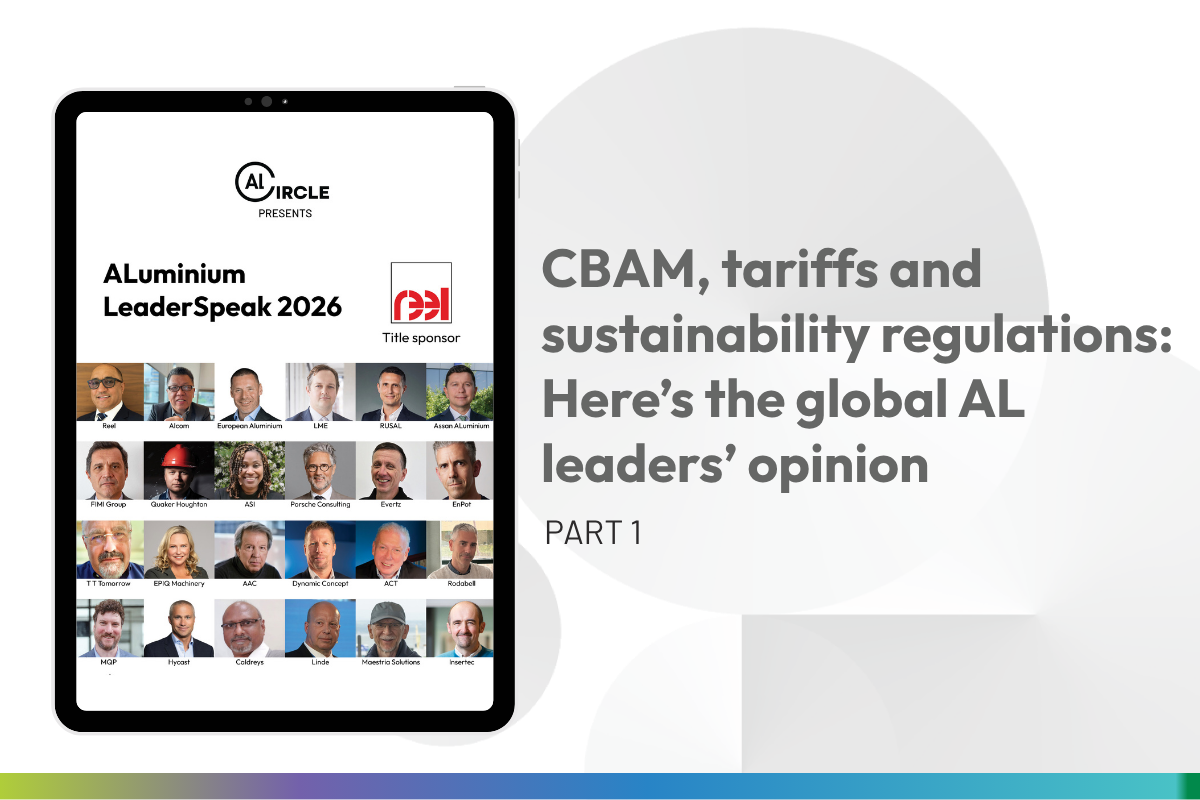
It has been over a month since we released our flagship magazine "ALuminium LeaderSpeak 2026", bringing together industry leaders, executives and decision-makers from across the global aluminium value chain. Through interviews and articles, the magazine explores the opportunities, challenges and market developments shaping the industry’s future.
The aluminium industry has always adapted to changing market conditions. Today, however, policy developments are becoming just as influential as supply, demand and production costs. In this magazine, the industry leaders from across the value chain shared their views on the growing impact of measures such as CBAM, tariffs, trade restrictions and the evolving sustainability regulations.
While these policies differ across regions, one message appears consistently throughout the discussions: Businesses can no longer afford to treat policy changes as external events.
One of the major themes explored is the impact of the current policies, be it CBAM, trade or sustainability regulations & how they’re reshaping competitiveness
While some participants view the regulation as an important step towards creating a more transparent and accountable aluminium value chain, others point to the practical challenges surrounding implementation, reporting requirements and market readiness. Together, their perspectives reveal a policy that is influencing business conversations far beyond compliance.
For several leaders, CBAM represents an opportunity to recognise and reward investments in lower-carbon production. As sustainability expectations continue to evolve, they believe transparency and verified emissions data will play an increasingly important role in shaping commercial relationships and market access.
Paul Voss, the Director General at European Aluminium, stated, “Our priority must be to ensure that carbon leakage protection remains effective during the transition and that free allocation is not phased out for aluminium until CBAM has been fully fixed and demonstrably proven to provide equivalent protection.”
Other contributors view CBAM as a catalyst for greater transparency across the aluminium value chain. They believe the regulation is accelerating conversations around emissions measurement, traceability and accountability, areas that are becoming increasingly important for both regulators and customers.
Roman Borisov, the Regional Sales Director of RUSAL, said, “Mechanisms such as the Carbon Border Adjustment Mechanism (CBAM) are fundamentally reshaping the competitive landscape. The focus is shifting away from cost optimisation towards verified carbon performance, traceability, and compliance readiness"
They have also highlighted the operational realities associated with adapting to new reporting frameworks, particularly for businesses managing complex international supply chains.
Several leaders noted that as reporting expectations evolve, companies are being required to collect more detailed data, strengthen traceability and ensure greater consistency across their operations.
Josef Nierling, the CEO of Porsche Consulting Italy, said, "Most players are capable of estimating Scope 1 and Scope 2 emissions, but typically at an aggregate level. However, this regulation requires much deeper granularity, including plant-level and product-specific data that must be verifiable under EU monitoring and reporting rules."
Their perspectives suggest that while the transition may require additional effort and resources, robust reporting frameworks could ultimately help improve transparency, build stakeholder confidence and support more informed decision-making across the industry.
Trade policies and tariffs have been another prominent discussion in the magazine, especially after the current geopolitical developments, which continue to influence the aluminium industry across the globe.
While some leaders view tariffs as a mechanism to strengthen domestic industries and encourage local manufacturing, others point to their wider implications for supply chains, pricing structures and market competitiveness.
Their perspectives highlight how businesses are increasingly being required to balance resilience with flexibility, adapting sourcing strategies and investment plans in response to an evolving trade landscape.
Göksal Güngör, the General Manager of Assan Alüminyum, said, "Evolving tariff structures and trade measures are increasingly shaping global trade dynamics, reinforcing the importance of regionalisation and global operational flexibility"
The conversations further reveal that the impact of trade restrictions extends beyond immediate market disruptions. Several contributors noted that prolonged uncertainty can influence long-term business decisions, encouraging companies to reassess supply chains, diversify sourcing networks and strengthen regional partnerships.
Giovanni Magarotto, the CEO and managing partner of T.T. Tomorrow Technology, stated, "Tariffs on aluminium and related materials are indeed increasing costs across the value chain, affecting raw material prices, production expenses, and end-product competitiveness."
Sustainability regulations emerged as another recurring theme throughout the magazine. As governments and regulatory bodies continue to introduce new environmental requirements, industry leaders acknowledge that sustainability is becoming an increasingly important factor in shaping business strategies and customer expectations.
For many industry leaders, these regulations are accelerating the industry’s transition towards greater transparency, improved resource efficiency and lower-carbon production practices. At the same time, they emphasise the importance of ensuring that regulatory ambitions remain aligned with practical implementation realities.
Daniel Lim, the Sales & Marketing Director of ALCOM, commented, "Sustainability and compliance are becoming central to customer procurement decisions, particularly among OEMs serving Europe, North America, and developed Asian markets."
Several leaders also highlighted the growing connection between sustainability performance and business competitiveness. As customers, investors and policymakers place greater emphasis on environmental credentials, companies are finding new opportunities to differentiate themselves through responsible production practices and measurable sustainability outcomes.
All the different perspectives shared in the flagship magazine, "ALuminium LeaderSpeak 2026", show that policy developments are no longer operating on the sidelines of the aluminium industry. From CBAM and trade measures to sustainability regulations, these discussions reveal how businesses are responding to changing expectations while navigating an increasingly complex global landscape. These insights are not only about compliance and market access but also about preparing for the industry's next phase of growth and transformation.
Stay tuned for the next part of the series, where we will explore what industry leaders have to say about recycling, low-carbon aluminium and the opportunities emerging from the transition towards a more sustainable future.
_0_0.png)
Novelis publishes EPDs for key architectural aluminium products
Next articleEurope’s aluminium sector hit by rising costs, lower output and weak demand
Grow with
AL Circle