28 NOVEMBER 2013www.infolink.com.au
FLIR thermal cameras help Indian aluminium industry optimize production
Edited by : AL CIRCLE
3 min read

The Jawaharlal Nehru Aluminium Research Development and Design Centre (JNARDDC) is employing FLIR thermal cameras to help the Indian aluminium industry save energy and optimize the production process.
Welcomed by the Indian aluminium production industry, the established JNARDDC institute is also using thermal imagers to help aluminium production companies detect faults at a very early stage.
Monitoring aluminium production
Aluminium production is an energy intensive process, requiring process engineers and designers to constantly seek ways to save energy at each step of the production process. Infrared thermography has played an important role in predictive maintenance of these processes, performing timely interventions for fault detection and scheduling equipment maintenance.
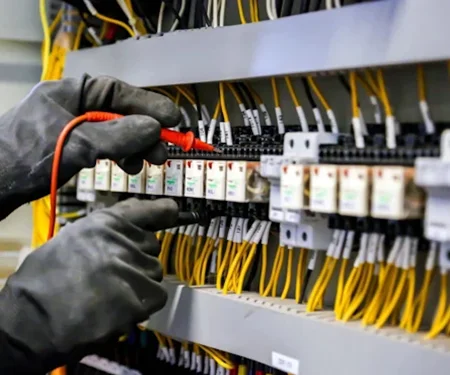
The production process is best monitored when the processes are running. Thermal imaging facilitates online monitoring of processes where even slight temperature variations across a surface will indicate failing components, such as degrading electrical contacts. Thermography can also successfully be used to inspect furnace ducts, bus isolator jumpers, casings, heating chambers or tanks.
Early fault detection
Infrared thermography has proven to be an effective and beneficial tool to the industry, allowing production managers to schedule their maintenance routines well before anything critical happens. This saves valuable time and significantly reduces production downtime.
Predictive maintenance schedules help the industry arrange for tools and spares in time. Thermal imaging cameras are ideal for surveying switch yard joints, current transformers, insulation of turbines, pumps, motors, or hot patches in kiln and furnaces among many other applications, for early detection of faults.
Thermal cameras and other heat measuring devices such as heat flux meters can also be employed to discover scaling in pipelines, or storage and processing units, and take corrective action.
Indian aluminium production companies typically carry out thermography inspections only when needed. Many perform inspections on a yearly or half-yearly basis. The advent of thermal imaging in predictive maintenance programs has resulted in willingness to perform these maintenance routines more frequently, because inspections with thermal cameras no longer require shutting down production.
One of the highest performing infrared inspection systems available in the market, the FLIR P660 thermal camera features state-of-the-art techno¬logy, including 640x480 detector resolution and a unique ergonomic design.
The P660 includes an integrated 3.2 megapixel camera for reporting. Infrared and visual images taken with the P660 can be stored in standard JPEG formats. The P660 visual camera includes matching Field of View lenses that allow IR and visual images to be shown at similar long distances using the same Field of View.
Welcomed by the Indian aluminium production industry, the established JNARDDC institute is also using thermal imagers to help aluminium production companies detect faults at a very early stage.
Monitoring aluminium production
Aluminium production is an energy intensive process, requiring process engineers and designers to constantly seek ways to save energy at each step of the production process. Infrared thermography has played an important role in predictive maintenance of these processes, performing timely interventions for fault detection and scheduling equipment maintenance.
The production process is best monitored when the processes are running. Thermal imaging facilitates online monitoring of processes where even slight temperature variations across a surface will indicate failing components, such as degrading electrical contacts. Thermography can also successfully be used to inspect furnace ducts, bus isolator jumpers, casings, heating chambers or tanks.
Early fault detection
Infrared thermography has proven to be an effective and beneficial tool to the industry, allowing production managers to schedule their maintenance routines well before anything critical happens. This saves valuable time and significantly reduces production downtime.
Predictive maintenance schedules help the industry arrange for tools and spares in time. Thermal imaging cameras are ideal for surveying switch yard joints, current transformers, insulation of turbines, pumps, motors, or hot patches in kiln and furnaces among many other applications, for early detection of faults.
Thermal cameras and other heat measuring devices such as heat flux meters can also be employed to discover scaling in pipelines, or storage and processing units, and take corrective action.
Indian aluminium production companies typically carry out thermography inspections only when needed. Many perform inspections on a yearly or half-yearly basis. The advent of thermal imaging in predictive maintenance programs has resulted in willingness to perform these maintenance routines more frequently, because inspections with thermal cameras no longer require shutting down production.
One of the highest performing infrared inspection systems available in the market, the FLIR P660 thermal camera features state-of-the-art techno¬logy, including 640x480 detector resolution and a unique ergonomic design.
The P660 includes an integrated 3.2 megapixel camera for reporting. Infrared and visual images taken with the P660 can be stored in standard JPEG formats. The P660 visual camera includes matching Field of View lenses that allow IR and visual images to be shown at similar long distances using the same Field of View.
Previous article
Aluminium industry urges EU to close competitiveness gap to retain sustainability leadership
Next articleAluminium slides to lowest price in more than four years
Grow with
AL Circle