EXCLUSIVE: A snippet of Australia-India critical minerals relations, right from His Excellency Kevin Goh, Australian High Commission
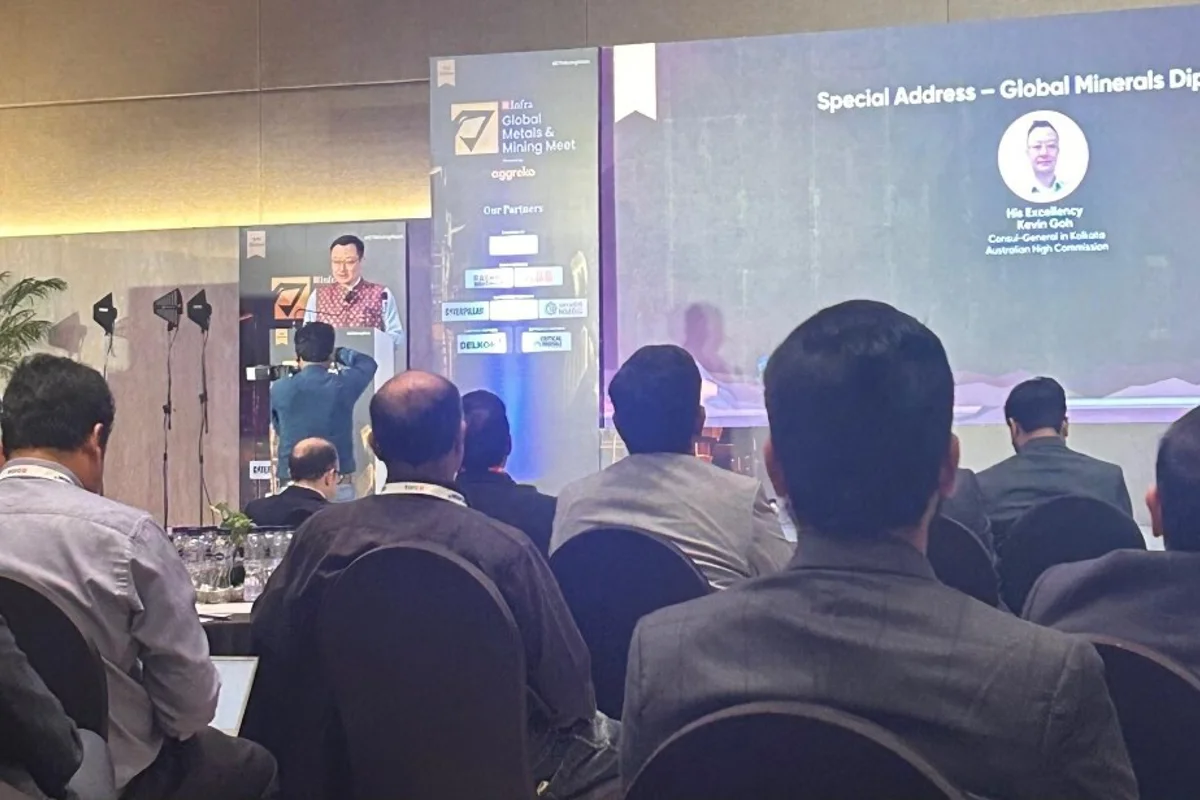
Economic Times (ET) Infra recently hosted the 4th edition of Global Metals and Mining Meet, held at Kolkata, India, on February 18, which revealed the Indian mining industry with ample insights and information, including on the current mining relations between India and Australia. The discussion shed light on Australia’s high capacity for exploration, aligning with that of India’s high-growth economy.
His Excellency Kevin Goh is the Consul-General in Kolkata, representing the Australian High Commission as a senior Australian diplomat. At the ET Infra Global Metals and Mining Meet, he shared insights on how Australia can benefit India in terms of critical minerals and support in enriching India's critical minerals in the coming years.
Australia-India benefiting one another
As rightly said by His Excellency Kevin Goh, "A two-way understanding" is what is required for the countries to assist one another. Australia, as deemed to be rich in supplying both minerals and technology, holds the next exploration capacity. On the other hand, India holds the position of a high-growth economy.
Mining is considered the most lucrative part of Australia’s biggest export industry, raking in around USD 2.9 trillion in resource export revenue from 2014 to 2024. With rising investment and development, Australia has been able to turn its rich natural resources into better living standards and long-term economic stability.
The global initiatives for decarbonisation, especially the goal of achieving net-zero emissions by 2050, require driving up the demand for minerals and metals. To meet the demand, capital flow for exploration and mining projects is required, along with productivity improvements fuelled by new technologies and innovative workforce strategies.
In the present scenario in Australia, more than 100 mining and processing projects are yet to be explored, possibly bringing in about USD 50 billion in investment and creating around 30 thousand construction jobs and 20 thousand operational roles. Most of these opportunities will rely on the country’s ability to attract ongoing capital investments, with supportive government policies and regulatory stability being key factors in building investor confidence.
On the other hand, India’s rapid economic growth, making it one of the top three economies in the world, is becoming a major catalyst for Australia’s next wave of exploration activities, especially for essential minerals like lithium, cobalt and rare earths. Alongside supportive policies such as the Economic Cooperation and Trade Agreement (ECTA), the country may pool investment flows between the two countries in sectors like mining, technology and low-emission solutions.
With India’s rising EV production and advanced manufacturing capabilities, the need for a reliable resource supply is likely to drive more investment into Australian exploration and project development. Meanwhile, India’s push to modernise its mining industry is opening up significant opportunities for Australia’s Mining Equipment, Technology and Services (METS) providers.
Additionally, the broader policy alignment under the India–Australia Comprehensive Strategic Partnership and ECTA is reducing trade barriers and enabling smoother exchanges of capital and technology, fostering deeper collaboration in resource extraction and processing.
His Excellency Kevin Goh said, “Australia and India have many things in common. We share a region.”
Must read: Key industry individuals share their thoughts on the trending topics
ECTA, CMIP & CSP agreements in detail
The Australia-India Economic Cooperation and Trade Agreement (ECTA), which came into force on December 29, 2022, is a bilateral trade pact that significantly reduces or eliminates tariffs on a wide range of goods between the two countries, including critical minerals, metallic ores and energy products. This agreement opens up more than 90 per cent of Australian goods exports to duty-free access into India by value.
By reducing the customs duties on key resource inputs and improving market access, ECTA enhances growth prospects for Australia’s world-leading critical minerals and resources sectors while helping India secure competitively priced, high-quality supplies essential for its advanced manufacturing and clean energy ambitions. The agreement also strengthens supply chain resilience and supports deeper economic integration, reinforcing trade diversification and investment flows that benefit both regions.
Concurrently, the Critical Investment Minerals Partnership (CMIP) focuses on boosting supply chains for vital minerals required in clean energy, advanced manufacturing and by technological industries. Both nations are recognising the economic and security perks this collaboration brings. Launched in March 2022, CMIP saw Australia pledge around USD 5.8 million over three years to ignite Indian investments in Australian critical minerals projects. The country is looking out for priority assets, like lithium and cobalt ventures that are currently being evaluated.
This partnership goes further with the Australia-India Critical Minerals Research Hub, which promotes joint research throughout the entire value chain, starting from exploration to processing and recycling. It aligns nicely with broader policy objectives, such as India’s National Critical Mineral Mission and Australia’s Critical Minerals Strategy. By creating strong, diverse supply chains and encouraging co-investment, joint ventures and technology sharing, this partnership not only helps India secure essential resources for its manufacturing and clean energy goals but also opens up new markets and growth opportunities for Australia’s resource sector.
Ways to enhance the ties between countries
“It is important to focus on clean energy transition, education and skills to build relationships,” said His Excellency Kevin Goh at the Global Metals and Mining Meet.
Australia is supplementing its critical minerals strategy by putting education, skills development, and workforce inclusion front and centre for sector growth. Like initiated by His Excellency Kevin Goh, both countries, to enrich their ties, require a skilled and diverse talent pool for supporting mining, downstream processing and the new clean-energy value chains.
With the Critical Minerals Strategy 2023-2030, the government is ramping up apprenticeships, vocational training, fee-free TAFE spots and industry-focused skills programmes to tackle shortages in key roles like engineers, geologists and metallurgists. Both countries are committed to fostering inclusive workplaces and creating regional job opportunities that resonate with the community, helping to enhance public understanding of the sector’s role in the transition to net-zero.
Meanwhile, the Economic Strategy emphasises education, skills exchange and workforce mobility as key elements of their bilateral relationship, viewing “people-to-people ties” as a cornerstone for deeper economic collaboration. Together, these initiatives promote knowledge sharing, workforce cooperation and investment throughout the critical minerals value chain, strengthening supply-chain partnerships and ensuring long-term strategic alignment between India and Australia.
The discussions at the 4th Global Metals and Mining Meet highlighted how the partnership between India and Australia is evolving beyond just resource trade. With Australia bringing its strong exploration capabilities and technological know-how and India boasting a rapidly growing economy and expanding manufacturing sector, initiatives like ECTA, CMIP and CSP are turning policy goals into real investments, enhancing the supply chain resilience and ensuring critical minerals security.
As both countries emphasise the importance of clean energy transitions, mobilising capital and developing skills, their relationship is set to evolve from mere transactions to a long-lasting, mutually beneficial economic partnership rooted in shared regional interests, regulatory stability, and strong people-to-people connections.
To know more about the global primary aluminium industry 2026 outlook, book the report “Global ALuminium Industry Outlook 2026".
_0_0.png)
Argentine Ambassador Mariano Augustín Caucino highlights critical minerals in India-Argentina “strategic partnership”
Next articleIndia moves to build a domestic rare-earth magnet industry
Grow with
AL Circle