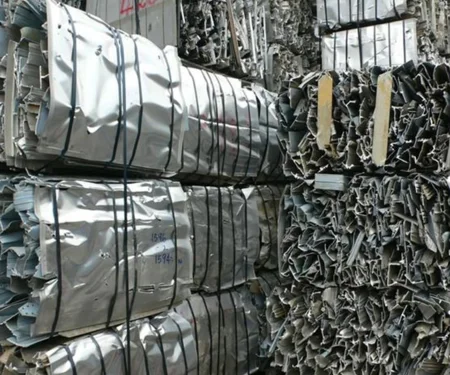
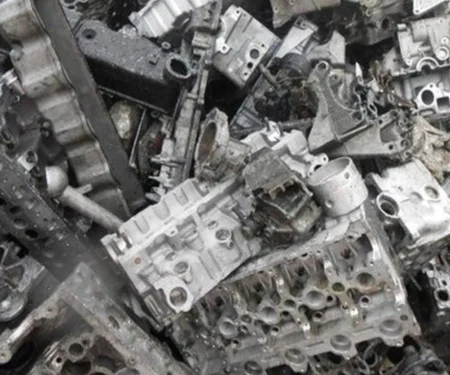
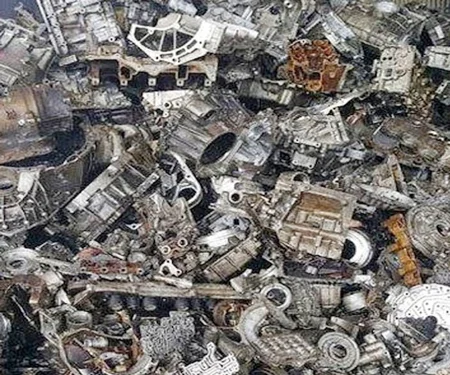
EU’s circular aluminium action plan aims to collect and recycle all aluminium products to the fullest

European Aluminium, located in Brussels, was created in 1981 to represent the European aluminium sector. They actively interact with decision makers and the broader stakeholder community to promote aluminium's remarkable characteristics, ensure growth, and maximise their metal's contribution to meeting Europe's sustainability problems.
The EU's proposed European Green Deal and its aims to mitigate climate change and reduce CO2 emissions include a heavy focus on circularity. Achieving a genuinely circular economy also opens up significant new commercial prospects in Europe. Building on its long-standing commitment to sustainability, the aluminium sector is dedicated to assisting in the implementation of the European Green Deal.
Since 1990, the industry has achieved a 55 percent reduction in direct CO2 emissions. Furthermore, European Aluminium's Vision 2050 lays out a clear path to a decarbonized, circular, and energy-efficient aluminium value chain in Europe by 2050. The Vision 2050 outlines future scenarios for aluminium that show the potential for primary production CO2 emissions reductions of up to 70 percent by 2050, allowing the sector to realise its full strategic potential.
This Action Plan expands on the aluminium industry's Vision 2050, focusing on recycling, and offers legislative proposals to help the sector attain complete circularity. Aluminium is a cyclical material that can be recycled several times without losing its qualities (lightness, conductivity, formability, durability, impermeability and multiple recyclability).
Aluminium has one of the greatest recycling rates of any material. In Europe, recycling rates in the automotive and construction industries are above 90 percent, while recycling rates for aluminium cans are over 75 percent. These aluminium recycling rates are achieved thanks to well-developed collection systems – particularly for end-of-life vehicles, building scrap, and used beverage cans; high scrap sorting rates; low losses when aluminium is re-melted to recycled metal; and a high-quality end product that can be used in high-value applications. As a result, the system is driven by the metal's inherent worth. By replacing carbon-intensive aluminium imports with recycled aluminium in Europe, large CO2 emissions may be avoided.

The recycling of aluminium uses just 5 percent of the energy required to make the raw metal, resulting in CO2 emissions of 0.5 tonne CO2 equivalent/tonne recycled aluminium (gate to gate). It does not take into account the carbon impact of aluminium scrap.
The aluminium industry is eager to take advantage of the possibilities that have arisen and to push the necessary adjustments. To maximise aluminium recycling rates and maintain the material in active use, it is critical to guarantee that all end-of-life aluminium goods are collected and recycled efficiently throughout Europe.
Aluminium has the potential to play a critical role in Europe's transition to a climate-neutral, circular economy. It is an important metal that is used to make a wide range of products and materials that are critical in helping Europe achieve a greener future. A wide range of qualities may be obtained by mixing aluminium with various alloying components (lightweight, durability, conductivity, formability). Aluminium's special qualities enable other industries, particularly the transportation industry, to meet their own CO2 emission reduction objectives.
The aluminium industry strives to guarantee that every scrap produced is of excellent quality and that it is minimised and recycled as efficiently as possible.
Meeting the growing demand in the automobile industry is one of the most difficult tasks. The usage of aluminium in the automotive industry will continue to grow, since the lightweight and other advantages that aluminium offers will be critical for future electric cars. However, because automobiles with combustion engine drive trains would represent a lesser market share, the need of recycled (also known as 'secondary') cast aluminium, especially for engine blocks, may decline.

The policy recommendations of European Aluminium aim to ensure – first and foremost – circular material handling throughout the entire value chain, beginning with product design; and, at the same time, to create adequate incentives for circular solutions and products, to stimulate investment in collection and sorting, and to foster production process innovation.
Aluminium Association’s new campaign focusses on the sustainable benefits of aluminium
Next articleAluminium packaging recycling rate surges 15% Y-o-Y in 2021; EFW collection increases by 8%
Grow with
AL Circle