European Aluminium charts ambitious science-based routes to decarbonise the aluminium industry by 2050
On November 14, 2023, European Aluminium unveiled its latest report titled "Net-Zero by 2050: Science-based Decarbonisation Pathways for the European Aluminium Industry" at a high-level event featuring Kerstin Jorna, Director-General at the European Commission's DG Grow. This report presents a thorough and practical framework to realise net-zero emissions throughout the entire aluminium value chain, encompassing primary production, semi-fabrication, and recycling.
The European aluminium industry, marked by its high energy consumption and challenging emissions reduction, accounts for around 24 million tonnes of CO2 equivalent emissions yearly. Despite this, aluminium plays a crucial role in advancing the transition to a fully decarbonised economy by supporting various clean technologies such as solar PV, wind power, heat pumps, and electric vehicles. Anticipating a 30 per cent increase in European aluminium demand by 2040 and the EU targeting 40 per cent satisfaction of this demand through domestically sourced raw materials, the industry is dedicated to ensuring sustainable growth without exacerbating global emissions.
Paul Voss, the Director General of European Aluminium, stated, "It is abundantly clear that our operations must align with the environmental limits set by our planet. Achieving net zero is not a distant aspiration; it's an imperative that demands immediate action. Our report presents concrete pathways tailored to fit the realities of our industry. Despite tough market conditions, the European aluminium industry is committed to taking purposeful steps and making the necessary investments towards a decarbonised and competitive future."
The report emphasizes the feasibility of adhering to the 1.5˚C carbon budget for the industry and achieving a reduction of more than 90 per cent in emissions by 2050, compared to the 2021 baseline, through decisive actions. This ambitious goal is promptly transitioning to a low-carbon electricity grid, incorporating inert anodes in smelters, and deploying alternative heat systems to address direct process emissions. Additionally, it underscores the importance of intensified recycling efforts.
Xavier Le Den, the Market Director at Ramboll Management Consulting, a consulting firm that collaborated on the study, stressed that "Through our comprehensive analysis in collaboration with European Aluminium, Ramboll has identified scalable technologies, process innovations and policy actions that are pivotal for the industry's decarbonisation. Our approach is grounded in real-world application, ensuring that the pathways we recommend are theoretically sound and practically attainable."
The journey to net zero is not one the industry can undertake alone. It requires a concerted effort supported by robust EU policies and leadership. European Aluminium has identified four critical policy areas to facilitate this transition:
"First of all, we need policies that stimulate the rapid development of cost-competitive renewable energy sources and support long-term power purchase agreements for energy-intensive industries such as ours. Just as crucial is the blend of policy and financial incentives that can fast-track the deployment of technologies to slash our process emissions while achieving a level playing field with our trade partners at production cost. Recycling is another cornerstone—there must be substantial incentives to enhance the recovery and recycling of aluminium scrap, driving down emissions further. And at the heart of all this lies the need for a bold industrial strategy that safeguards and boosts Europe's aluminium production, positioning us to meet increasing demand and lessen our import reliance sustainably," said Paul.
"We are looking forward to working hand in hand with EU policymakers and taking an active role in the Clean Transition Dialogues. Our goal is to produce the aluminium that Europe's green transition demands responsibly. We want to be part of the solution, not the problem," Paul concluded.
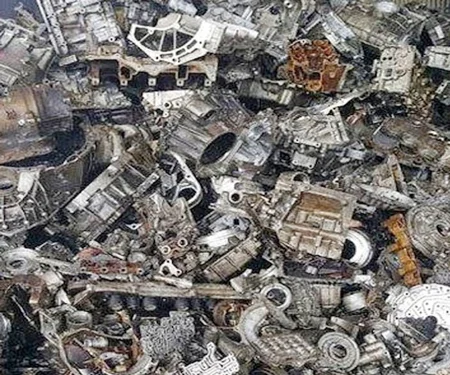
The global aluminium industry is shifting significantly towards sustainability, aiming to reduce its historically high energy consumption and greenhouse gas emissions. This transition involves adopting innovative technologies, such as renewable energy sources and enhanced energy-efficient production processes. Recycling is a key component, with recycled aluminium requiring substantially less energy than primary production. Additionally, circular economy principles, like closed-loop systems, are gaining traction, promoting a more sustainable lifecycle for aluminium products. As the industry integrates sustainability into its core strategies, it minimises its carbon footprint. It sets an example for other energy-intensive sectors, highlighting the transformative potential of sustainable practices in addressing climate change. Discover more about sustainability's role in the aluminium industry in AL Circle's report, "Sustainability in the Global Aluminium Industry."
Ministry of Equipment and Energy conducts screening process for green aluminium evaluation
Next articleChina Corporate Renewable Electricity Summit 2023: Navigating the green power transition
Grow with
AL Circle