A wave of demand is sweeping through Europe’s aluminium flat-rolled products sector, and this pace of growth is anticipated to reshape the entire market. Flat-roll products (excluding foil) have climbed from 3.95 million tonnes in 2020 to a projected 5.94 million tonnes in 2025. That’s a 50.38 per cent jump in just five years. And this is only the starting point. By 2032, consumption is expected to rise by around 123.3 per cent a surge tied from sustainability targets to changes in manufacturing techniques and the pressure to cut carbon emissions.
The plates segment has been following the same upward path. In 2020, it stood at 580 thousand tonnes. By 2025, the figure is expected to reach 856 thousand tonnes — a 47.6 per cent increase. Looking further ahead to 2032, consumption is projected to stand 112.1 per cent higher than in 2020. To explore the exact numbers, refer to the full report : Aluminium Flat Rolled Products: Insights & Forecast to 2030.
This growth is being pulled forward by sectors that can’t compromise on performance: aerospace, rail, renewable energy projects and industrial equipment. They all rely heavily on materials that are lightweight yet tough enough to withstand demanding environments.
Aluminium sheets have also seen a steady climb. Consumption rose from 1.29 million tonnes in 2020 to 1.47 million tonnes in 2021. By 2025, that number is expected to reach 2.29 million tonnes, reflecting a 77.52 per cent rise. The outlook for 2032 points to even stronger growth — up 168.22 per cent. Automakers (especially EV producers), construction companies, packaging manufacturers and industrial machinery makers are all contributing to this demand. And with the EU’s Green Deal pushing the use of recyclable, low-carbon materials, aluminium continues to gain ground.
How Europe is prioritising its domestic market
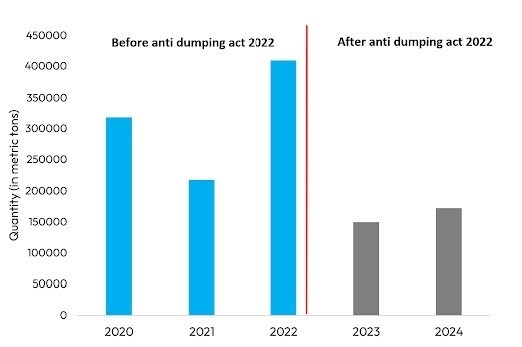
As demand gathered speed, Europe moved to protect its producers. In 2021, anti-dumping duties were introduced on flat-rolled aluminium products—between 14.3 and 24.6 per cent—effective for five years from July 2022. The impact was immediate. Trade flows shifted, dependence on Chinese supplies eased and cheaper, lower-grade aluminium could no longer undercut European material so easily.
As per AL Circle data, before anti-dumping duties, the EU imported 318.64 thousand tonnes of aluminium flat-rolled products from China in 2020. Once the duties were proposed, imports began to fall, dropping to 216.51 thousand tonnes. After the duties were imposed, volumes declined further to 149.89 thousand tonnes in 2023, before edging up slightly to 172.43 thousand tonnes in 2024.
With China’s presence reduced, other suppliers stepped into the gap. South Korea’s exports of plates, sheet and strip rose from about 11.57503 thousand tonnes in 2021 to 22.36466 thousand tonnes in 2024. Japan expanded its share too, from 1.63006 thousand tonnes in 2021 to 14.61312 thousand tonnes in 2024. The trade defence measures essentially reshaped the supply map, giving new exporters the room to grow.
Europe chose these two countries due to their favourable trade agreements: the EU–South Korea FTA, which has been in place since 2011 (ratified in 2015) and eliminates 98.7 per cent of tariffs on goods including aluminium, and the EU–Japan Economic Partnership Agreement, effective since 2019, which reduces tariffs and streamlines customs, technical requirements and product standards, ensuring smoother market access.
Domestic production strengthens as policy pressures build
Within Europe, producers have kept the supply base strong. Speira, an European aluminium rolling and recycling company delivers around 1 million tonnes of advanced rolled products each year.
AMAG Group also reported shipments of 320,800 tonnes in the first three quarters of 2025, just slightly below the 323,300 tonnes recorded the previous year. These shipments include coils, sheets and plates.
Novelis—still the world’s largest aluminium rolling manufacturer — adds more than 300,000 tonnes annually from its European operations, maintaining its focus on high-end products and recycling technologies while supplying automotive, packaging and industrial customers.
Policy has played its part too. The introduction of the Carbon Border Adjustment Mechanism (CBAM) in 2023 added a new competitive pressure by increasing the cost of high-carbon aluminium imports. This shift has encouraged cleaner production methods globally and helped level the field for European producers. Combined with earlier trade measures, CBAM has contributed to a more stable market after years of volatility caused by cheap imports.
Looking towards 2032, consumption for flat-rolled products, plates and sheets will remain strong, supported by sustainability targets, renewable-driven manufacturing and ongoing infrastructure investment. Europe’s aluminium market is positioned for steady expansion over the next decade. Consumption patterns are evolving, trade flows are shifting and policy continues to shape the direction of the sector — supporting a future built around low-carbon priorities.













_md.webp)








