EGA undrapes UAE's largest aluminium recycling plant, boosting low-carbon production and circular economy goals
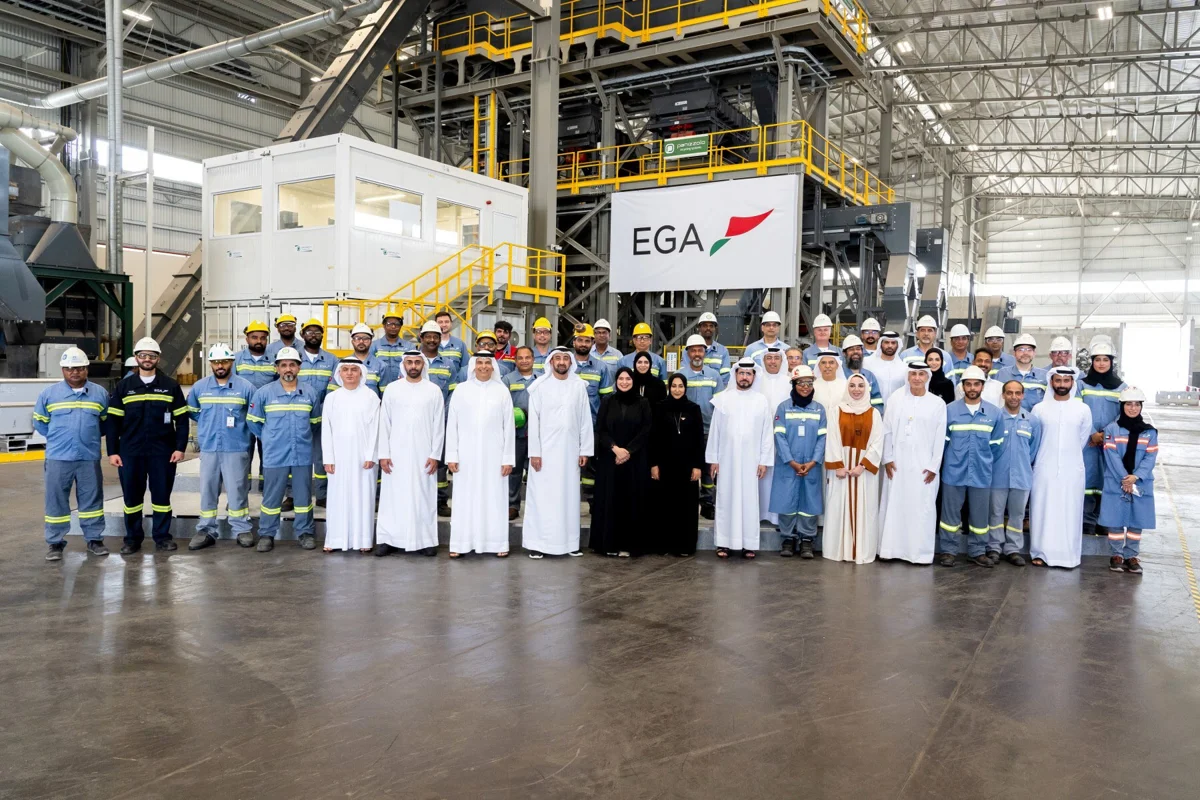
This image has been obtained via official Press Release
For years, the UAE has been exporting a quietly valuable resource: its own aluminium scrap. Collected domestically, that scrap has largely been shipped overseas for processing, stripping the national economy of the added value it could generate. That dynamic shifted decisively this week when Emirates Global Aluminium (EGA) officially opened the Al Taweelah recycling plant — a 185,000-tonne-per-year facility that now makes the Abu Dhabi-based producer the largest consumer of aluminium scrap inside the UAE.
The opening was attended by Her Excellency Dr Amna bint Abdullah Al Dahak, Minister of Climate Change and Environment; Her Excellency Dr Shaikha Salem Al Dhaheri, Secretary General of the Environment Agency – Abu Dhabi (EAD), EGA's Chairman Homaid Al Shimmari, Vice Chairman His Excellency Saeed Al Tayer; and senior members of EGA's Board and management team.
Delve deeper into the recycled aluminium and secondary aluminium market with our World Recycled ALuminium Market Analysis Industry forecast to 2032
Here’s a note on what Al Taweelah actually does, and why it's different
The plant processes post-consumer as well as some pre-consumer aluminium scrap into premium-grade billets and T-bars sold under EGA's RevivAL product brand.
But Al Taweelah is not simply a scrap-melting operation. EGA has built product flexibility into the facility from the ground up. Recycled metal can be blended with solar-powered primary aluminium to produce CelestiAL-R, or with nuclear-powered primary aluminium under the MinimAL-R label — giving EGA a suite of certified, low-carbon products that can meet the increasingly stringent carbon requirements of customers in Europe, Asia, and North America.
In a market where buyers in the automotive, construction, and packaging sectors are under growing pressure to document the carbon intensity of every tonne of aluminium they purchase, EGA's ability to offer recycled, solar-blended, and nuclear-blended aluminium from a single integrated platform is a sigh of relief.
A government priority
The presence of the UAE's Minister of Climate Change and Environment at the inauguration was not ceremonial. Her Excellency Dr Amna bint Abdullah Al Dahak used the occasion to frame aluminium recycling as a pillar of national policy, stating “Recycling is the cornerstone of the UAE’s Circular Economy Policy, which aims to transform the nation into a global hub for green development by shifting from linear to circular production and consumption, enhancing resource efficiency, and minimising waste. Aluminium represents one of our greatest opportunities to drive this transition from a linear to a circular model of production. It is infinitely recyclable, protecting our ecosystems while fuelling a sustainable, low-carbon economy. Recycling aluminium waste requires up to 95 per cent less energy compared to producing new primary aluminium from raw ore, saving significant energy and reducing greenhouse gas emissions.”
Book your seat for the free-to-attend webinar, "Autonomous furnace tending in aluminium cast houses: Improving safety, productivity and yield". Limited slots available
Built at scale and delivered safely
The sheer scale of Al Taweelah's construction reflects EGA's ambition. The project consumed over 26,300 cubic metres of concrete (equivalent to filling more than ten Olympic swimming pools) and more than 4,600 tonnes of structural steel, a volume approaching two-thirds of the iron mass of the Eiffel Tower.
The entire build was completed across 4 million working hours without a single lost-time injury, a safety record that deserves recognition alongside the technical achievement.
Production began in February 2026, though final commissioning was briefly interrupted following an Iranian attack on Khalifa Economic Zone Abu Dhabi on 28 March. Work resumed in April and cast metal production restarted in early May. Ramp-up to the plant's full 185,000-tonne annual capacity is expected within six months, contingent on scrap availability — a caveat worth watching, given ongoing tightness in quality scrap supply across the Middle East.
EGA's CEO on industrial strategy
Abdulnasser Bin Kalban, Chief Executive Officer of EGA, was direct about what Al Taweelah represents beyond recycling, “The inauguration of Al Taweelah recycling plant is a major milestone in EGA’s development of a global aluminium recycling business. This new plant turns aluminium waste generated in the UAE and elsewhere into new aluminium that makes modern life possible around the world. With this project, we have added a new industrial activity to EGA’s operations in the UAE, in line with Make it in the Emirates and the UAE’s Operation 300bn industrial growth strategy.”
The reference to Operation 300bn, the UAE's plan to grow the industrial sector's contribution to GDP to AED 300 billion by 2031, places Al Taweelah firmly within a broader economic narrative.
Explore the position of aluminium at the intersection of sustainability and strategy in Sustainability & Recycling: Aluminium's Dual Commitment
A global recycling platform taking shape
Al Taweelah is the most visible piece of what is becoming a genuinely global secondary aluminium operation for EGA. The company now holds recycling capacity exceeding 400,000 tonnes per year across three continents, with a further 200,000 tonnes under active development.
In Germany, EGA Leichtmetall is undergoing an expansion that will grow its footprint more than six-fold. A second plant near Hannover will add 150,000 tonnes of annual capacity and is scheduled for completion in 2028. In the United States, EGA Spectro Alloys in Minnesota wrapped up a 65,000-tonne expansion in 2025 and is already working through the regulatory and construction steps for a second phase that would add another 35,000 tonnes by 2027. And in Italy, EGA has announced plans to acquire an 80 per cent stake in Eco Green, a domestic recycling company, pending regulatory clearance.
Taken together, these moves are clearly calculated geographic diversification, spreading recycling capacity across key consuming markets rather than centralising it in the Gulf.

Can Europe secure 1Mt+ aluminium scrap for circularity goals while maintaining global competitiveness?
Next articlePrimary vs. Secondary Aluminium: Your scrap is worth more than your smelter
Grow with
AL Circle





