EGA reduces PFCs emission to record level in 2017 by successfully controlling Anode Effects
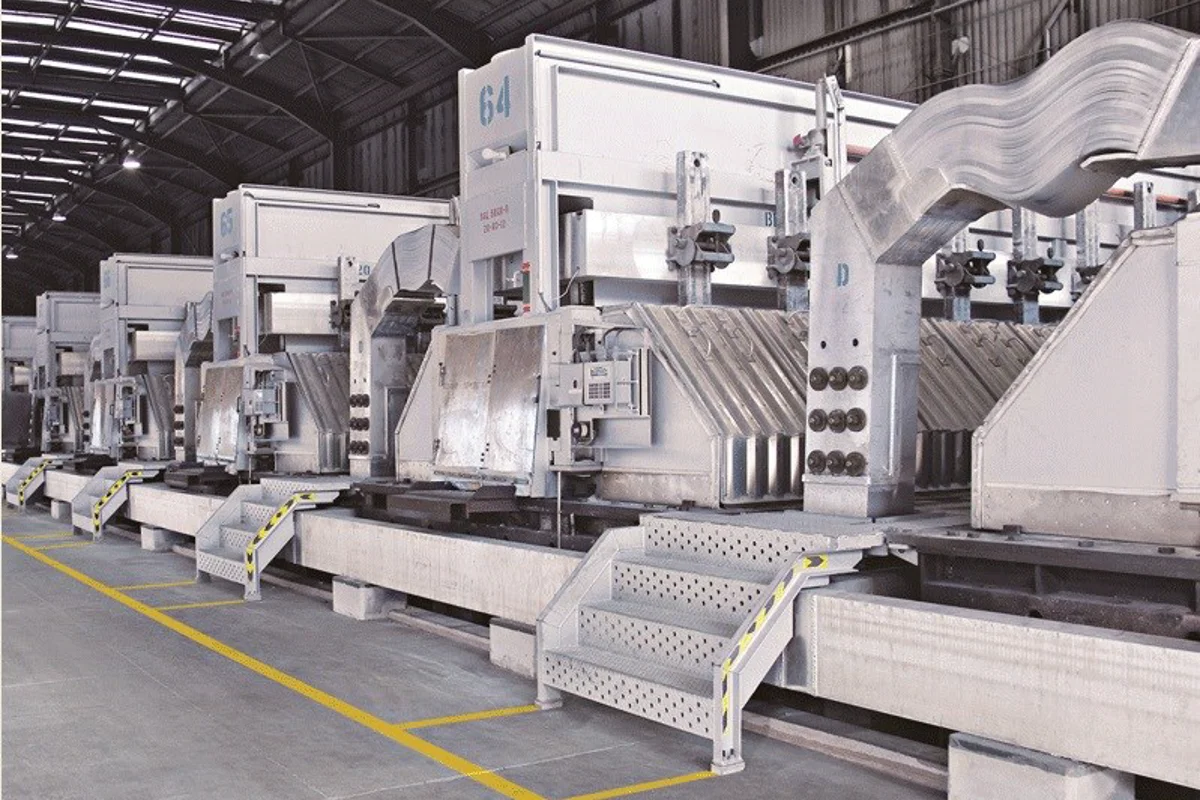
Emirates Global Aluminium, the largest industrial company in the United Arab Emirates outside oil and gas, today announced that its emissions of perfluorocarbons were a record low for the company in 2017, and that EGA has signed an agreement with the University of New South Wales to research further reductions.
Perfluorocarbons, known as PFCs, are a group of greenhouse gases and cutting down PFC emissions remains an important environmental goal for the global aluminium industry.
EGA’s emissions of PFCs were 22 kg per tonne of aluminium produced in 2017 compared to a global average of 380 kg per tonne in 2016, according to International Aluminium Institute statistics. At EGA’s newer Al Taweelah smelter, PFC emissions in 2017 were seven kilogrammes per tonne of aluminium produced.
In the aluminium industry reported PFC emissions are primarily associated with Anode Effects, which occurs when the alumina concentration falls in the electrolytic reduction cells. With the implementation of latest technology and operational upgrades, EGA has reduced the frequency of Anode Effects in its smelters from an average of once every three days in 2009 to less than once every 12 days in 2017. And the duration of Anode Effect has dropped from 44 seconds in 2009 to below 21 seconds in 2017.
EGA will conduct a new research with scientists from the University of New South Wales in order to reduce what the industry terms ‘background’ PFC emissions – those that are from variations in reduction cell conditions that are too small to be detected and remedied by the present control technology. The research aims to develop sophisticated monitoring technology that will enable semi-autonomous feeding of alumina in response to minute changes. More accurate feeding of alumina is also expected to lower energy consumption, reducing emissions of CO2.
The PFC emissions project is led by Executive Vice President Dr Ali Al Zarouni, who is in charge of the company’s aluminium smelters in Abu Dhabi and Dubai and EGA’s technology development.
Dr Al Zarouni said: “Reducing PFC emissions in the aluminium industry is a matter of fundamental environmental responsibility. Unfortunately no single factor provides the solution. Rather we have achieved our reductions through developing our own smelting and pot control technology, continuously improving our operational processes, and rigorously monitoring the quality of our raw materials.

EGA is a member of the global International Aluminium Institute and supports the Institute’s voluntary target of a 93% reduction in perfluorocarbon emissions at older smelters by 2020. EGA Jebel Ali achieved this reduction target five years earlier than the timeline in 2015. And notably, the company has reduced its total greenhouse gas emissions per tonne of aluminium by 10% since 2011.
A00 ingot price drops in a primarily passive China market; raw material and alloy prices remain flat
Next articleEcuador mulls construction of a new aluminium plant in 2024
Grow with
AL Circle





















