CMI and eminent packaging brands jointly back Mission Possible Partnership for net zero
The Can Manufacturers Institute (CMI) and its members, including aluminium beverage can manufacturers and can sheet producers, have agreed to endorse the Mission Possible Partnership's (MPP) strategy for achieving a net-zero, 1.5°C-aligned aluminium industry.
This endorsement aims to reduce the carbon footprint of primary aluminium in beverage cans, which will contribute to the fight against climate change. The carbon footprint of aluminium beverage cans made in North America has decreased by almost half since the 1990s. By adhering to the MPP strategy, further reductions in the carbon footprint of aluminium beverage cans can be achieved through the incorporation of low-carbon aluminium.
The aluminium industry will need to implement various actions to achieve net-zero greenhouse gas emissions by 2050 and limit global warming to 1.5°C from preindustrial levels. And this will be achievable by deploying new technologies, decarbonizing the power supply, and increasing material and product efficiency.
The MPP aluminium transition strategy provides an actionable, achievable plan for this transition. CMI aluminium beverage can sector members have recognized the importance of limiting global warming to 1.5°C and are agreeing to pursue actions to support the transition to achieve a 1.5°C-aligned scenario.
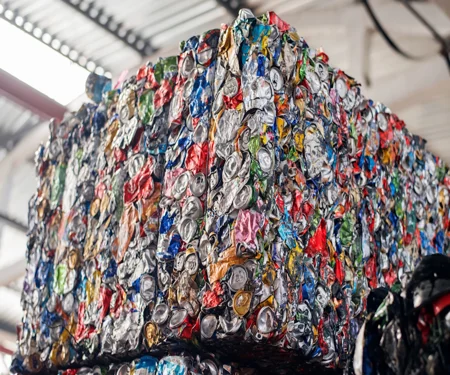
One way to reduce the carbon footprint of aluminium beverage cans is by increasing the recycled content used in new cans. The United States already has the highest average recycled content of any beverage container, at 73 per cent. If the industry can reach its stated aluminium beverage can recycling rate targets, this number will increase, further decreasing the need for primary aluminium.
CMI's vice president of sustainability, Scott Breen, narrated: "Our strategy has two parallel paths to further reduce the carbon footprint of the aluminium beverage can— lower the carbon footprint of any primary aluminium incorporated into beverage cans and increase the recovery of used beverage cans so the recycled content in new cans increases."
"Our members have shown leadership in both of these areas by endorsing Mission Possible Partnership's strategy to foster a net-zero, 1.5°C-aligned aluminium industry and by committing to ambitious U.S. aluminium beverage can recycling rate targets," Breen added.
The endorsements received follow the Global Aluminium Can Sustainability Summit in September 2022, which brought together over 100 leaders across the aluminium beverage can value chain. The Summit, co-organized by CMI and the International Aluminum Institute, focused on aluminium decarbonization. MPP unveiled the aluminium sector transition strategy for the first time as part of the Summit.

Enacting the sector transition strategy will require time and significant investment. MPP estimates that approximately $1 trillion in cumulative investment across the primary production value chain will be necessary to deliver a net-zero sector or a 1.5°C pathway. CMI, its members, and The Aluminum Association will work with stakeholders inside and outside of the industry to catalyze the necessary actions and investments to pursue this transition strategy.
Sanyuan Aluminium receives ASI Performance Standard Certification for coil & sheet processing
Next articleVilla Park receives US$97,500 in funding under the Every Bottle Back initiative
Grow with
AL Circle