China's Ecology and Environment Ministry redrafts import policy of secondary aluminium amid growing influx

The Ministry of Ecology and Environment has reportedly issued a letter seeking public opinion on the revised import policies of secondary aluminium alloy and aluminium alloy raw materials and secondary copper and copper alloy raw materials. It is a revised version of the “Announcement No. 43” issued in 2020.
The revised version has amended the policies for secondary aluminium alloy imports, taking into account the status and recent developments in the field. Once the revised policies are implemented, high-quality raw materials of secondary aluminium alloys, such as wrought aluminium alloy and secondary pure aluminium, will possibly be allowed for imports.
The revised draft includes the categories of secondary aluminium alloy to be imported, inspection standards, and index requirements. The main aim of this revision is to open up the import of overseas wrought aluminium alloy materials and secondary pure aluminium materials into the Chinese market.
The revised version also covers performance index requirements for secondary aluminium alloy and aluminium alloy materials. The requirements state that aluminium of imported secondary aluminium or the physical content of imported aluminium alloy should be ≥91%. It further provides a detailed classification of the size and conditions of the materials.
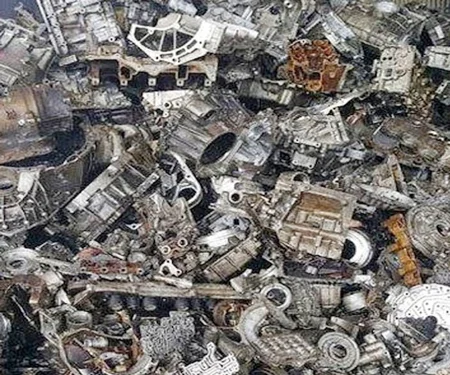
According to SMM, the domestic aluminium scrap supply in China has increased in line with the surge in production, owing to the expansion of domestic deep processing capacity of aluminium scrap, supported by domestic dual-carbon policies. Yet, there is an increased need for imported scrap to meet the growing demand in the downstream industry.
According to customs data, the import volume of aluminium scrap and shredded scrap reached 1.753 million tonnes in 2023, registering a Y-o-Y rise of 15.7 per cent. From January to May 2024, China’s total import volume of scrap was about 809,800 tonnes, up 22.9 per cent Y-o-Y. SMM believes China’s aluminium scrap import volume is largely influenced by the cost and profit of imported products, besides trade policies.
SMM expects the total import volume of aluminium scrap in 2024 to maintain a growth trend year-over-year, reaching 1.85 million tonnes.
The implementation of the revised import policy is expected to bring in the following impacts:
1) The imports of varied scrap
2) Standardisation of aluminium scrap and high-grade secondary aluminium alloy raw materials and
3) Operational benchmark for import, supervision, inspection, trade, and secondary aluminium raw materials production units
Sourced from SMM under the content exchange agreement
CBA proposes to increase the DRS locations in Ontario to recycle more aluminium cans
Next articleDaisy Goddard-Dickinson bags the first prize at Alupro’s national recycling competition
Grow with
AL Circle