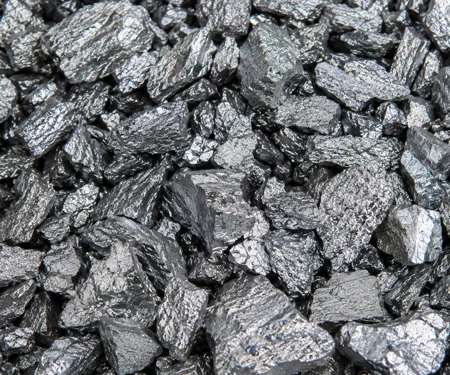
China's dependence on imported bauxite is a significant factor in the nation's superior ranking in alumina and primary aluminium production. The sheer volume of raw material required to maintain this ranking cannot be met by domestic sources alone. Therefore, any disruption in bauxite supply has a profound impact on the entire aluminium production supply chain, underscoring the gravity of the situation.
Guinea's role in the decline:
According to S&P Global, China's reliance on imported bauxite is as high as 57 per cent. Guinea, as the primary supplier of bauxite to the nation, plays a crucial role in China's import figures. The disruption in Guinea's bauxite export scenario has therefore had a significant impact on China's bauxite supply, highlighting the importance of Guinea's bauxite supply.
From January to September, bauxite supply from Guinea totalled 84.4924 million tonnes, accounting for 70.73 per cent of entire imports, rising 11.4 per cent Y-o-Y. In September, imports from Guinea dropped and were calculated to be 6.6926 million tonnes, descending 39.18 per cent M-o-M and 0.51 per cent lesser Y-o-Y. The imports dropped sharply, i.e. by 39.18 per cent M-o-M and 0.51 per cent Y-o-Y, with an absolute decrease of 4.311 million tonnes.
A key supplier, Emirates Global Aluminium (EGA), declared a suspension of bauxite exports from its subsidiary — Guinea Alumina Corporation (GAC).
Guinea's extreme weather conditions due to a disastrous flood in June 2024 have also contributed immensely towards the situation.
This is the third time in the present calendar year that the nation's alumina price has seen volatility. The first instance was in January due to Guinea's bauxite supply disruptions. The second was in May when Rio Tinto declared 'force majeure' on third-party shipments from its alumina refineries in Queensland due to limited gas supplies. 'Force majeure' is a legal term that refers to unforeseeable events that prevent a party from delivering a contract.
Further, stringent environmental checks have rendered multiple domestic bauxite mines non-compliant, leading to their discontinuation of operations early in the year. These checks, aimed at reducing environmental impact, have curbed the boost in alumina production.
Ground-zero scenario in other exporting countries:
Imports from Australia were 4.0511 million tonnes, up 11.68 per cent M-o-M, up 52.84 per cent Y-o-Y; imports from Turkey were 336,800 tonnes, from Laos 221,200 tonnes, from The Republic of Côte d'Ivoire 94,800 tonnes, from Montenegro 83,600 tonnes, from Brazil 50,100 tonnes, and from Malaysia 23,200 tonnes.
From January to September, imports from Australia were 29.3024 million tonnes, accounting for 24.53 per cent of total imports, up 19.77 per cent YoY; non-mainstream bauxite imports totalled 5.6562 million tonnes, accounting for 4.74 per cent of total imports, up 29.99 per cent compared to 2023 non-mainstream bauxite imports (excluding imports from Indonesian).
As for the non-mainstream bauxite import sources (other countries except Australia), in September 2024, bauxite imports from countries like Turkey, Laos, The Republic of Côte d'Ivoire, Montenegro, Brazil, and Malaysia counted as 809,800 tonnes, accounting for 7.01 per cent of total imports in September.
Meanwhile, Australia's Metro Mining has secured multi-cargo offtake agreements for bauxite shipments from its Bauxite Hills Mine in Queensland, covering the years 2025 and 2026. The agreements total 6.9 million wet metric tonnes (WMT) in 2025 and 6.1 million WMT in 2026, ensuring a robust demand for its bauxite supply.
The ongoing rainy season in Guinea continues to pose challenges, affecting domestic port arrivals and Keeping bauxite imports at a low level. However, based on shipment data, the worst of the impact may be behind us, and bauxite imports could see a slight increase. As we conclude October, though the rainy season's impact in Guinea is diminishing, and shipment volumes are on the rise, the demand-supply mismatch persists. It is anticipated that by the end of November to December, domestic port arrivals of bauxite from Guinea will see a significant increase, highlighting the ongoing challenges.













_md.webp)