Can aluminium salt slag become a resource? SGM's new sorting line says yes
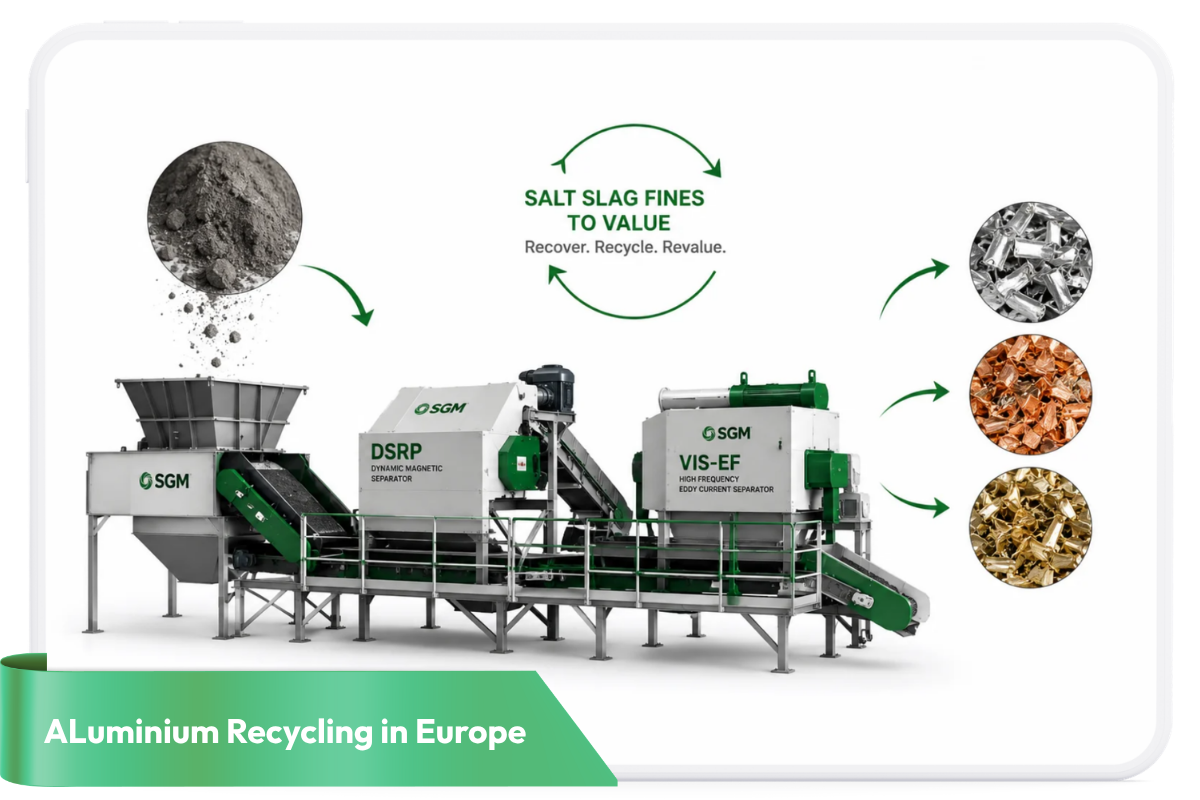
The image used in this article is generated with an AI tool and does not depict any real-time moment
Italian metals sorting technology specialist SGM Magnetics S.p.A. has introduced a new recovery system or sorting lineto extract commercial metals from salt slag fines, a byproduct of secondary aluminium production, addressing one of the industry's most difficult recycling streams.
SGM noted, “After crushing, grinding and classification, the fine fraction can still contain recoverable metallic aluminium and other valuable metals” during secondary aluminium smelting. However, the recovery has been a difficult feat owing to the high salt content, corrosive nature, abrasive dust and the micro-particle size of the fines.
According to SGM, particles measuring below 2 millimetres are especially difficult, as the metallic content is often irregularly shaped, rendering separation challenging.
Delve deeper into the recycled aluminium and secondary aluminium market with our World Recycled ALuminium Market Analysis Industry forecast to 2032
Residual ferrous particles can also reduce the effectiveness of downstream processing, while valuable aluminium and other non-ferrous metals frequently remain trapped in the reject stream.
The company noted that such recovery losses are equivalent to “a direct loss of recoverable metal and a lower value of the material sent back to remelting or further treatment.”
To improve metal recovery, SGM's newly developed line combines its DSRP dynamic magnetic separator with the VIS-EF high-frequency eddy current separator. The structure can be modified based on factors such as particle size distribution, ferrous and non-ferrous metal content, processing capacity and targeted recovery rates.
Within the system, the DSRP unit removes residual ferrous fines that may interfere with subsequent separation stages, while the VIS-EF separator is designed to recover fine aluminium particles and other non-ferrous metals from smaller material fractions.
Apart from aluminium salt slag, the technology is also equipped to recover metals from other fine waste streams like auto shredder residue (ASR).
To improve equipment durability when processing corrosive materials, SGM also offers the option of manufacturing key system components using AISI 316 stainless steel, helping extend operational life under demanding processing conditions.
Explore the position of aluminium at the intersection of sustainability and strategy in Sustainability & Recycling: Aluminium's Dual Commitment
Germany’s aluminium scrap exports rise 8.8% in Q1 2026 amid weak domestic demand and overseas pull: What does the trend reveal?
Next articleItochu and Daikin partner to recover aluminium from commercial air conditioners
Grow with
AL Circle