Brazil links rare earth access to domestic processing as US-China rivalry intensifies
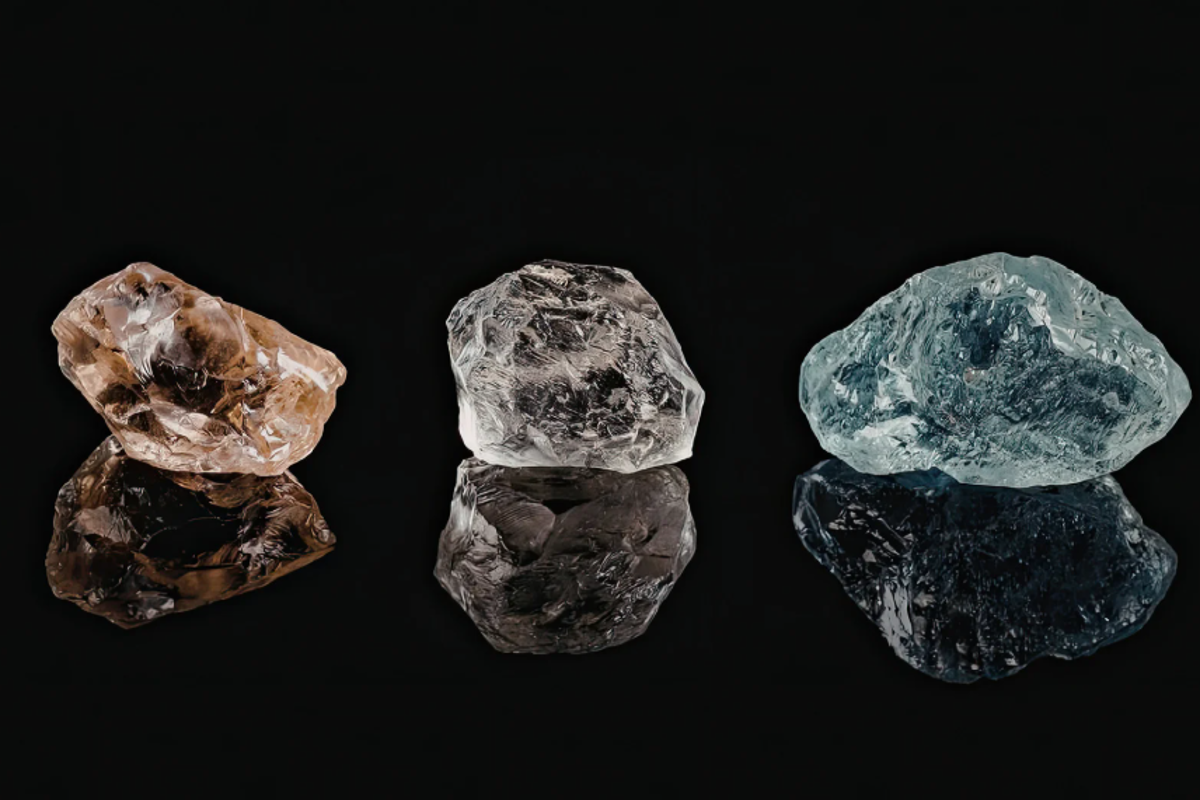
The image used in this article is a stock image for referential purposes only.
Leonardo Durans, a top official at the country’s industry ministry, mentioned during a press conference with international media that while Brazil is still welcoming foreign investment, its approach has changed. There’s now a clear expectation that all partners will focus on developing local technology and creating jobs.
Given the rising exploration for rare earth elements, Brazil is now moving to enter into a foreign partnership for processing rare earth minerals domestically due to the need for reserve access. As informed by a senior government official, this move comes as an answer to the growing competition between the Chinese and Western companies, who are deemed to be highly reliant on exporting the raw form of these resources.
Leonardo Durans on Brazil's new rare earth strategy
In a recent press conference with international media, a top official of Brazil's industry ministry, Leonardo Durans, mentioned that while Brazil is still welcoming foreign investment, it is undertaking a changed approach. This is because the main motive now for Brazil is to ensure that all partners will be focusing on developing local technologies as well as creating jobs.
As a response to the question whether Brazil will be forced by policy to choose sides in the US-China competition over critical minerals, Durans firmly dismissed that idea. In his response, he emphasised that the region will need to work with the US, the EU and China and then continue the dialogue with all the parties.
In the present scenario, Brazil attains a total of 10 per cent of the world's critical mineral reserves and the second largest reserves of rare earths and graphite. Apart from this, Brazil is also deemed to hold the third-largest reserve of nickel.
The challenge that needs to be solved
The major concern for Brazil to undertake the process domestically is the supply chain that was built by China many years ago. According to the International Energy Agency, China now handles about 91 per cent of the world's rare earth separation and refining. China's share of permanent magnet production has skyrocketed from around 50 per cent two decades ago to an impressive 94 per cent today.
This stronghold expanded in October when China implemented export controls on rare earth materials, processing equipment and technologies. These controls even extend beyond its borders, requiring export licenses for products made outside China if they contain more than 0.1 per cent of Chinese-origin rare earths or are produced using Chinese expertise.
While these restrictions were put on hold until November as part of a broader US-China trade agreement, reinstating this would not require the inclusion of any new regulations. Additionally, a separate licensing system for seven rare earth elements, which was introduced last April, is still in effect.
Must read: Key industry individuals share their thoughts on the trending topics
Solution to the challenge
Given the measures, it has been suggested that any processing facility built with Chinese technology or equipment might need approval from Beijing for exports. In order to overcome this challenge, Brazil launched MagBras, which is a government-led initiative conducted by the research network SENAI. In this program, the country's first domestic supply chain for permanent magnets will be created by partnering with private companies like mining giant Vale and Dutch car manufacturer Stellantis.
On the pilot scale, the initiative has produced magnets, but the commercial production is still deemed to be some years apart. Additionally, the budget of USD 12.6 million pales in comparison to the investments China has made to establish its processing dominance.
These challenges have been pinpointed by the industry experts, who have further highlighted that the essential processing equipment is sourced from one country and comes with lengthy delivery times.
With this, Brazilian authorities received the clarification that replicating China’s decades-long technological progress in a short period is unrealistic. With domestic processing capacity still lacking, the raw material has now become a valuable asset and Serra Verde, Brazil’s only active rare earth mine, is attracting growing interest, especially from the United States, in recent months.
Don’t miss out- Buyers are looking for your products on our B2B platform
Ending contract: A win or a loss?
The company, concerning its long-term supply agreements with Chinese buyers, which can be traced back to December, has decided to end them, stepping away from contracts that were originally set to last about ten years. However, in two months, the firm had managed to secure a financing package of USD 565 million from Washington’s overseas investment arm, the DFC, which even includes an option for the US government to take a minority equity stake.
Irrespective of the change, the Chinese investment is deemed to make its way into the broader sector, though the trends have shifted. This is because, back in 2024, mining represented 13 per cent of Chinese investment in Brazil, amounting to USD 556 million, as reported by the Brazil-China Business Council. This year, all the transactions mainly focused on acquiring existing operations instead of starting new projects from scratch.
Barrier in licensing framework
The licensing framework is said to hold certain barriers to foreign investment overall, with over 3,500 applications for rare earth exploration still pending. The approval process is said to be fragmented as it involves different federal agencies that are to handle environmental protection, indigenous land rights and cultural heritage, without a single point of access for investors.
Additionally, authorities have pointed out that a strong culture of judicial challenges tends to heighten perceived investment risks. This highlights the urgent need to tackle these structural issues to foster a more predictable and welcoming environment for investors.
_0_0.png)
SAGA metals to acquire Wolverine REE project to expand rare earth portfolio
Next articleIndia replicates solar sector strategy for its battery ecosystem, approves list of battery manufacturers
Grow with
AL Circle