Bahrain’s aluminium wire export to rebound in 2019 after a Y-o-Y drop in the previous year
The global aluminium wire market has been found growing at a steady rate over the past few years, primarily driven by the rising demand in the rapid urbanization around the world, the increased support from governments, as well as the new production techniques that reduce not only the cost of aluminium wire production but also significantly reduce the processing time of the wire rods. According to the latest report from Technavio, the global aluminium wire market is expected to grow at a CAGR of almost 2% through 2021.
{newsStudioGallery}
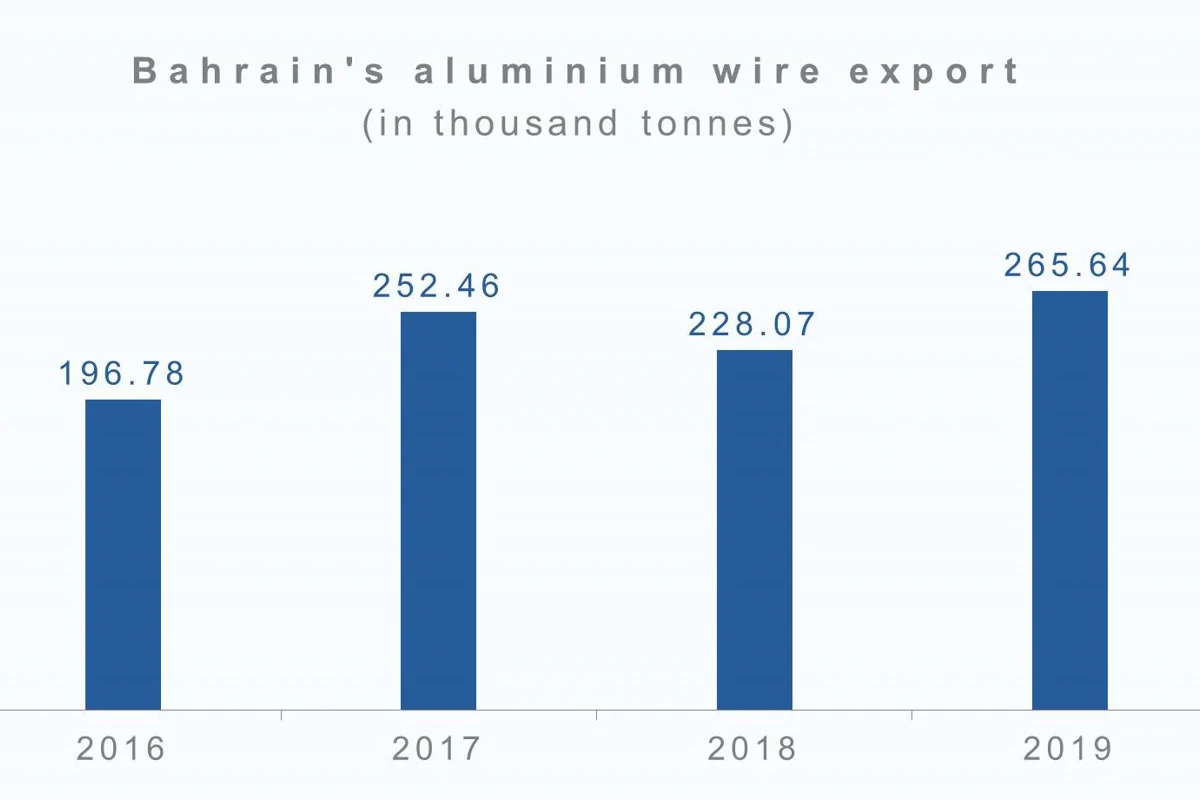
To cash on this, Bahrain has emerged to become the world’s leading aluminium wire market with some staggering growth in its production and export. As per the global export-import data, the country in 2017 had recorded a growth of 28 per cent in its aluminium wire export to 252,461 tonnes, compared to 196,786 tonnes in 2016. In 2018, the export amount dipped by about 10 per cent to 228,074 tonnes over the year, but expected to rebound in 2019 again to 265,641 tonnes, up 16.47 per cent year-on-year.
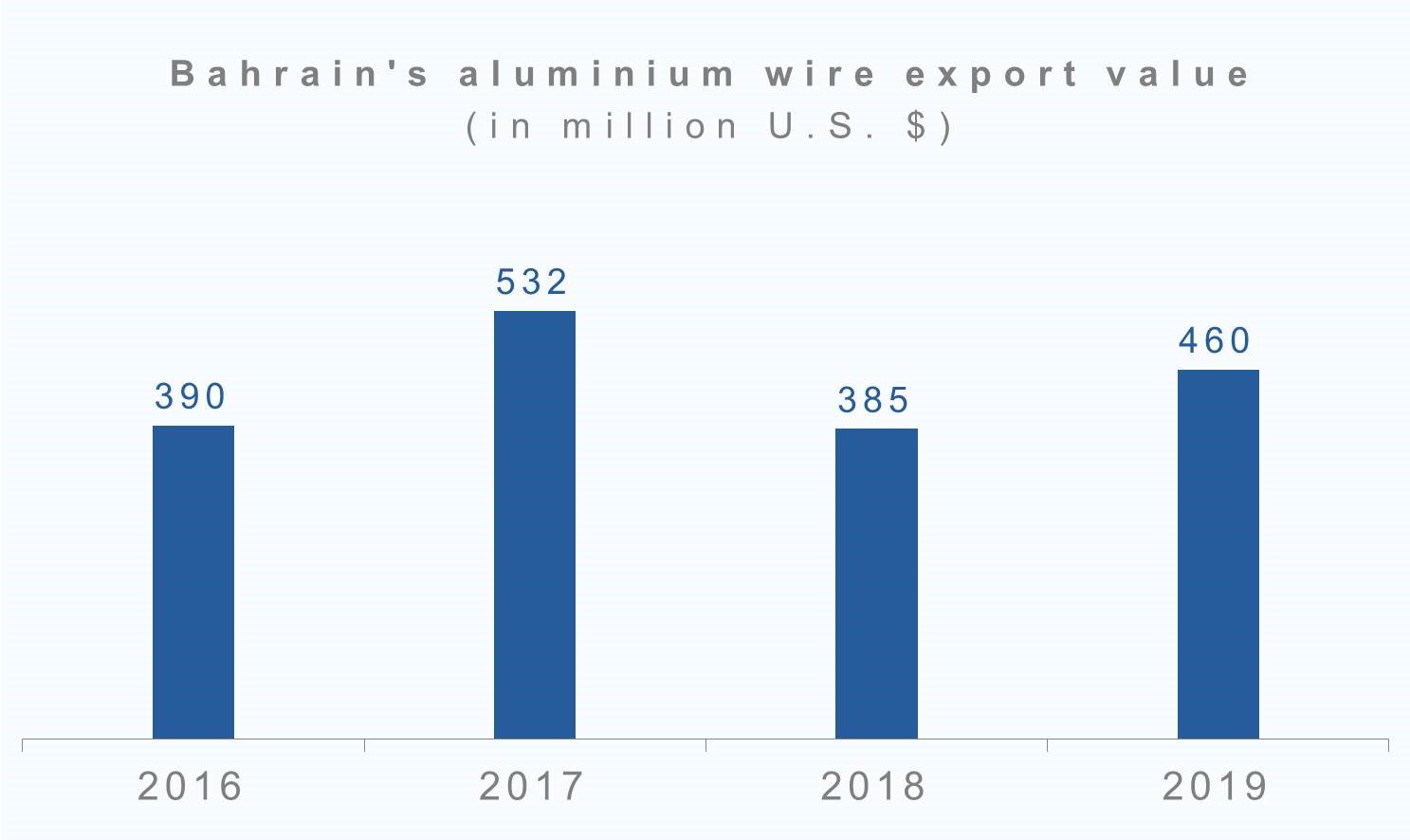
In consequence, Bahrain’s aluminium wire export value is estimated to grow as well by 19 per cent to US$459 million, followed by a drop in 2018 from US$532 million in 2017 to US$385 million in 2018. In 2016, the country’s export value was at US$390 million, which represents that the export cost in 2017 was higher by 36.41 per cent from that in 2016.
Aluminium Bahrain (Alba) is the oldest and the most profitable aluminium wire producer in the Middle East. Other companies in Bahrain like Midal Cables Limited and Wires International LLC also manufacture and export aluminium wire all over the world.

In 2019, Bahrain is expected to export the highest amount of aluminium wire to the US, providing 55,375 tonnes at US$121 million. Egypt is next in the queue that is expected to receive 36,939 tonnes of wire from Bahrain at the cost of US$30 million, followed by Saudi Arabia 31,535 tonnes at US$68 million.
Nalco signs contract with Midhani to form JVC for a high-end aluminium alloy plant
Next articleHindalco’s consolidated EBITDA down 13% in Q1 FY20; Aluminium VAPs output marginally up
Grow with
AL Circle