Aughinish Alumina to fund Limerick refinery closure costs under new State agreement
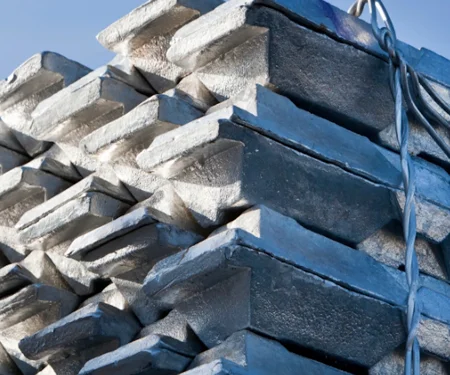
Stock image for referential purposes only
Aughinish Alumina will be required to provide almost EUR 31 million (USD 35.41 million) in financial security to cover the future closure of its alumina refinery in County Limerick and the environmental restoration of the site under a new agreement approved by Ireland's Environmental Protection Agency (EPA).
The revised arrangement, finalised in early June, significantly reduces the State's reliance on guarantees from the refinery's parent company, Rusal. While previous agreements depended on a €14 million parental guarantee from the Russian aluminium producer, the new framework requires Aughinish Alumina to provide nearly the entire EUR 30.8 million (USD 34.34 million) estimated closure cost, with Rusal's contribution reduced to around EUR 220,000 (USD 250,564).
According to the EPA, the updated financial provisions include a EUR 14 million (USD 15.96 million) secured account with Allied Irish Banks (AIB), over which the agency has first charge, along with an on-demand performance bond worth EUR 16.58 million (USD 18.90 million) that will remain in place until 2027.
The revised agreement comes amid uncertainty surrounding the refinery's future following Russia's invasion of Ukraine and ongoing discussions over potential European Union sanctions linked to Rusal. Government officials have previously expressed concerns about relying on the Russian company to meet long-term environmental obligations if sanctions were introduced.
Explore: The most comprehensive and forward-looking industry-focused report – Global Bauxite & Alumina Market Forecast to 2036: Supply–Demand, Trade Flows & Price Outlook
Aughinish Alumina, Europe's largest alumina refinery, occupies a 526-hectare site on the Shannon Estuary. A significant portion of the facility consists of a bauxite residue disposal area (BRDA), which contains millions of tonnes of bauxite residue generated during alumina production.
Under the refinery's closure, restoration and aftercare management plan, the site will be dismantled and the residue disposal area treated to minimise environmental risks before eventually being converted into a nature reserve. The restoration programme is expected to take up to 35 years.
Separately, the Irish government is completing an inquiry into the refinery's links with Russia. The findings will be submitted to the European Commission, which will decide whether alumina should be included in future sanctions against Russia. Reports suggest that any sanctions could significantly affect the refinery, as Russia accounts for around half of its alumina exports.
Explore our e-magazine ALuminium LeaderSpeak 2026 for the latest industry insights and trends.
Ireland considers EU funding as Aughinish Alumina faces Russia sanctions risk
Next articleIreland probes Russian-linked Aughinish Alumina exports after Zelenskyy calls for EU sanctions
Grow with
AL Circle