ASX Rare Earths quarterly wrap: Four Brazil explorers accelerate project momentum
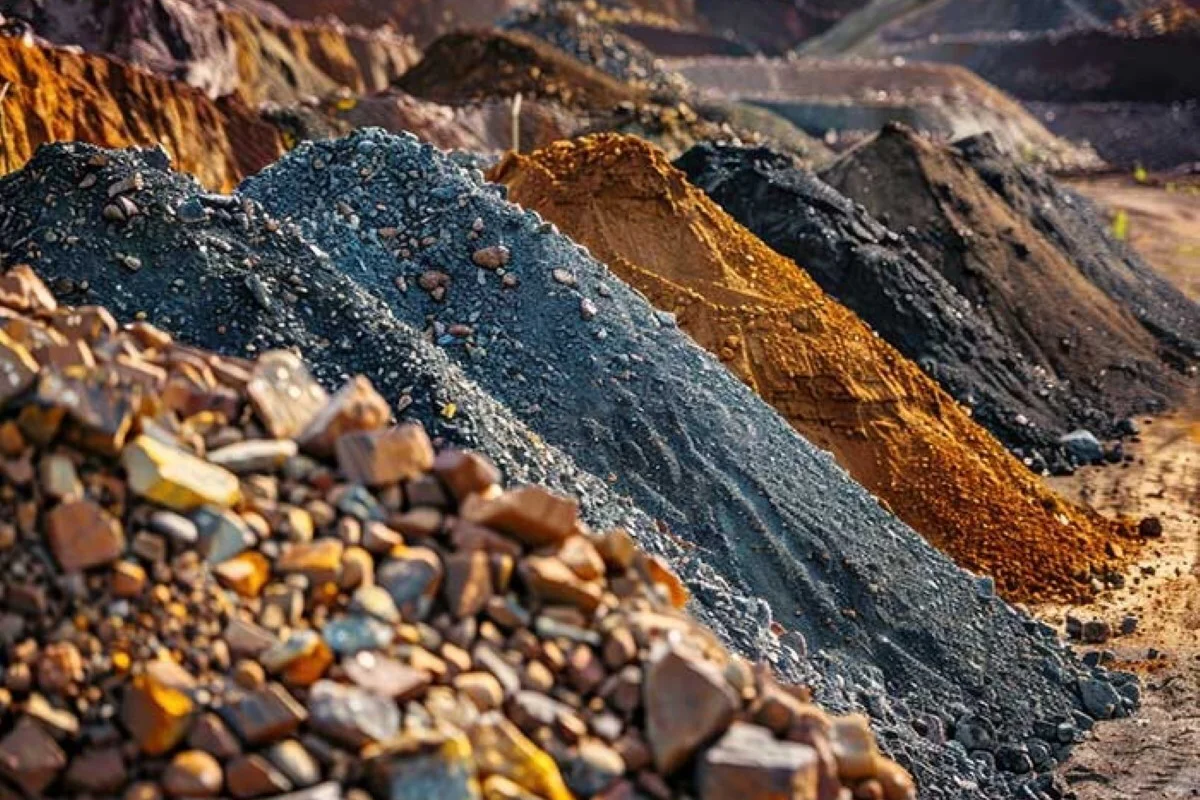
Stock image for referential purposes only
ASX-listed rare earth explorers in Brazil, for the quarterly update, have showcased the latest project advancements, resource developments and strategic moves. This latest update emphasises how the region is playing an increasingly vital role in bolstering global rare earth supply chains. Here is a compilation, as drafted by Stockhead, providing an overview of four ASX rare earths stocks advancing projects in South America.
St George Mining
The mining firm, in this quarter, has started its Araxá rare earths and niobium project in Brazil. Concerning this project, the firm has boosted 75 per cent in the Mineral Resource Estimate (MRE), which is said to be standing at 70.91 million tonnes with a grade of 4.06 per cent Total Rare Earth Oxides (TREO) and 0.62 per cent Niobium Oxide (Nb2O5).
The resource confidence of the firm also rose by 218 per cent in the measured and indicated category, totalling 29.49 million tonnes at 4.56 per cent TREO and 0.75 per cent Nb2O5.
It is believed by the firm's management that Araxá is the largest and the highest-grade carbonatite-hosted rare earths deposit in South America and the second largest in the world, following Lynas Rare Earths’ Mt Weld operation in Western Australia.
Additionally, the firm's drilling efforts show potential with recent results outside the MRE showing 178.7 meters intercept at 4.34 per cent TREO and 0.75 per cent Nb2O5 from the surface. Alongside this, there are additional high-grade findings, such as 43 meters at 8.02 per cent TREO and 0.74 per cent Nb2O5 and 100.35 meters at 1.73 per cent TREO and 0.33 per cent Nb2O5.
Owing to these results, it is anticipated that the project will pave the way for a future resource upgrade and will play a key role in the feasibility study inputs. Along with this, the firm is also pushing its development strategy with the aim of expanding its offtake alliance with REalloys and forging new partnerships with Boston Metal, Tecnicas Reunidas and Nanum Nanotecnologia.
Axel REE
The firm has been advancing in various technical workstreams this quarter to mitigate risks associated with the in-situ recovery (ISR) development pathway at its Woolrich rare earths and gallium deposit, which is part of the larger Caladão project in Brazil.
Post the quarter, Woolrich was chosen as the location for the company’s first ISR field trial program. This has been possible because of its reliable ionic clay system characteristics, with Auger drilling showing results, with soluble TREO grades averaging 464ppm, including a magnet-rich mix of about 42 per cent MREO and 40 per cent NdPr.
Don’t miss out- Buyers are looking for your products on our B2B platform
Additionally, the Caladão project boosts resources of 572Mt at 1506ppm TREO and 439Mt at 38ppm gallium. Infill drilling and 3D geological modelling are currently in progress with the aim of aiding the future wields and ISR field trials at the 128Mt Woolrich deposit. A multidisciplinary technical team has been developed, which includes geological, engineering, environmental, safety, and specialist consulting areas for designing and implementing the program.
Additionally, metallurgical activities have started by conducting column and sequential leach tests at Core Resources to replicate ISR conditions and gather insights on leach kinetics, reagent use and recovery performance.
Alongside this, the firm is also engaging with rare earth traders and supply chain participants. This engagement aims towards collecting preliminary data on product specifications, pricing, and potential offtake volumes.
Moreover, the firm has also completed the auger drilling programs at its nearby Caldas rare earths project and the data is now being integrated to establish an initial exploration target.
Also read: India to build a six-month strategic stockpile of lithium, cobalt and rare earths as demand rises
Australian Mines
Recently, in this quarter, Australian Mines completed its shallow auger drilling program at its Jequie rare earths project in Brazil. The program involved a 72-hole campaign totalling 500.6 meters across two key REE-in-soil targets.
At Jequie South, the firm collected 45 samples for assaying and an impressive 69 per cent of those returned TREO values over 400ppm. What stood out is the standout intercept of 15 meters at 1720ppm TREO starting from 6 meters down, which included a remarkable 3 meters at 3055ppm TREO. The other hole showed a solid 2.0 meters at 1842ppm TREO from 6 meters.
Concerning this, the firm identified two main target areas at Jequie South, which are North Dário Meira Eluvial and South Dário Meira Eluvial. At the Jequie North, 56 auger holes covering 291 meters produced 105 samples, with 55 per cent showing TREO values above 400ppm, including a notable intercept of 9.0 meters at 1028ppm TREO.
Owing to this, the firm is now conducting follow-up exploration across both Jequie North and South, which will include geological mapping, geochemical sampling and more auger drilling. Additionally, the firm is also considering metallurgical testwork to further evaluate the project’s exploration potential.
Alongside this, Australia Mines is starting with a systematic soil grid sampling program, which is being carried out across seven drainage basins, promising for rare earths at the Resende project. It also has potential for tin, lithium and tantalum. These basins are located in the western part of the tenure and have previously shown anomalous TREO values exceeding 1000ppm.
For forward-thinking aluminium market insights amidst supply chain and price challenges, read "ALuminium LeaderSpeak 2026."
Core Energy Minerals
Core Energy Minerals, in the March quarter, announced the start of its exploration efforts at its fully owned Itambe and Tunas rare earths projects in Brazil.
In the first phase of the project, a detailed exploration campaign at Itambe has been shared, which aims to build high-grade soil anomalies which have been previously discovered by Rio Tinto. In this phase, a preliminary reconnaissance mapping and sampling across 90 per cent of the area is also included, where exploration has not yet been undertaken.
To start with, the firm is planning to conduct first-pass auger sampling over the existing soil anomalies to gather samples for initial leach recovery tests and to pinpoint targets for their first drilling efforts.
At Tunas, the exploration plans include infill auger drilling, retracing the earlier work which provided fruitful rare earth mineralisation in highly weathered saprolitic clays. For this, the firm is also planning to undertake geological mapping and sampling in the Campo Largo area to evaluate the rare earth element potential of the identified radiometric anomalies.
Management emphasised that the proposed programs at Itambe and Tunas are essential for deepening their understanding of the mineralising systems and creating a pipeline of high-priority targets, with the first drilling campaigns still on schedule for the second quarter of 2026.
_0_0.png)
Japan and Australia boost critical minerals cooperation to counter supply risks
Next articleVedanta Chairman Anil Agarwal calls for self-reliance amid 50% import dependence on resources
Grow with
AL Circle