www.businessweek.com
Aluminum deficit to deepen fourfold as metals healthiest
Edited by : AL CIRCLE
3 min read
Aluminum, the biggest gainer among base metals on the London Metal Exchange last quarter, will fall into a deficit almost four times larger than previously estimated as demand grows faster than expected, according to Standard Bank Plc.
Global consumption will outstrip production by 806,000 metric tons this year, more than a previous estimate of 217,000 tons, the bank’s analysts including Walter de Wet and Leon Westgate said in a report today. Industrial metals have the “healthiest fundamentals” among commodities on a three-year outlook and most base metals will be in deficits either this year or next, the analysts said.
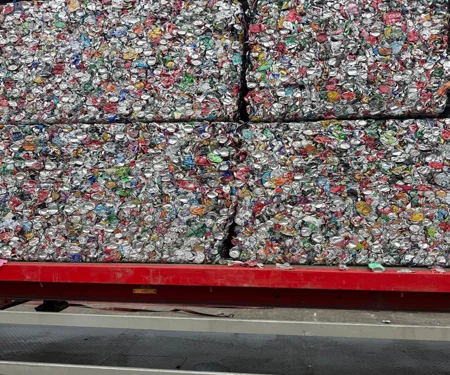
The metal, used in everything from aircraft to beverage cans and window frames, has risen 7.4 percent this year on the LME. Stockpiles monitored by the bourse have declined 15 percent over the same period to 4.6 million tons, the lowest since December 2011. The aluminum market will swing into a deficit this year for the first time in seven, the bank said.
“Our latest changes mostly reflect demand-side revisions,” the bank said. “The aluminum market is tightening up from a fundamental point of view and this is lending background support to prices.”
The metal for delivery in three months on the LME slid 1.3 percent to $1,935 a ton at 10:27 a.m. in London. The metal rose 3.7 percent last quarter.
Standard Bank has also doubled its deficit estimate for next year to 1.27 million tons and raised its forecast for 2016 to 894,000 tons, from 624,000 tons previously. It also increased its global demand growth forecast for this year to 6.8 percent, from 6.1 percent.
The cumulative deficit from this year until 2016 of 2.97 million tons is still above the 5.53 million tons that built up during the preceding six years, the bank said. “While aluminum will find price support, there is still a lot of metal to digest before stock levels become a concern,” the analysts wrote.
The bank remains bullish copper as the market transitions to a small surplus then back toward deficits toward end of decade, they said.
Iron ore, which has slumped 42 percent this year, may weaken further in the fourth quarter as the seaborne glut overshadows the exit of Chinese supplies, the bank also said. The steelmaking ingredient will be about $75 to $85 a ton in the October-December period before recovering in the first quarter when construction activity restarts. The shuttering of about 260 million tons is needed at prices of $80 for supply and demand to balance, the bank estimates.
Gold will struggle to rise in the next two quarters even as Asia’s physical demand may strengthen in the three months to December, according to Standard Bank. Before prices can begin to rise, China needs to de-stock after the imports “binge” in 2013 while custom duties on gold imports are relaxed in India to spur an improvement in demand. U.S. real interest rates will also have to normalize, the bank said.
Bullion, which rallied in the first half of the year amid escalating tensions in Ukraine and the Middle East, posted its first quarterly decline in 2014. Demand for precious metals as a protection of wealth has been eroded by the outlook for a strengthening U.S. economy.
Global consumption will outstrip production by 806,000 metric tons this year, more than a previous estimate of 217,000 tons, the bank’s analysts including Walter de Wet and Leon Westgate said in a report today. Industrial metals have the “healthiest fundamentals” among commodities on a three-year outlook and most base metals will be in deficits either this year or next, the analysts said.
The metal, used in everything from aircraft to beverage cans and window frames, has risen 7.4 percent this year on the LME. Stockpiles monitored by the bourse have declined 15 percent over the same period to 4.6 million tons, the lowest since December 2011. The aluminum market will swing into a deficit this year for the first time in seven, the bank said.
“Our latest changes mostly reflect demand-side revisions,” the bank said. “The aluminum market is tightening up from a fundamental point of view and this is lending background support to prices.”
The metal for delivery in three months on the LME slid 1.3 percent to $1,935 a ton at 10:27 a.m. in London. The metal rose 3.7 percent last quarter.
Standard Bank has also doubled its deficit estimate for next year to 1.27 million tons and raised its forecast for 2016 to 894,000 tons, from 624,000 tons previously. It also increased its global demand growth forecast for this year to 6.8 percent, from 6.1 percent.
The cumulative deficit from this year until 2016 of 2.97 million tons is still above the 5.53 million tons that built up during the preceding six years, the bank said. “While aluminum will find price support, there is still a lot of metal to digest before stock levels become a concern,” the analysts wrote.
The bank remains bullish copper as the market transitions to a small surplus then back toward deficits toward end of decade, they said.
Iron ore, which has slumped 42 percent this year, may weaken further in the fourth quarter as the seaborne glut overshadows the exit of Chinese supplies, the bank also said. The steelmaking ingredient will be about $75 to $85 a ton in the October-December period before recovering in the first quarter when construction activity restarts. The shuttering of about 260 million tons is needed at prices of $80 for supply and demand to balance, the bank estimates.
Gold will struggle to rise in the next two quarters even as Asia’s physical demand may strengthen in the three months to December, according to Standard Bank. Before prices can begin to rise, China needs to de-stock after the imports “binge” in 2013 while custom duties on gold imports are relaxed in India to spur an improvement in demand. U.S. real interest rates will also have to normalize, the bank said.
Bullion, which rallied in the first half of the year amid escalating tensions in Ukraine and the Middle East, posted its first quarterly decline in 2014. Demand for precious metals as a protection of wealth has been eroded by the outlook for a strengthening U.S. economy.
Unlock full access – sign up for FREE.
Key benefits
Find exclusive data-driven insights and in-depth analysis
Get our daily newsletter delivered straight to your inbox
Access real-time and historical price trends from global indices
Post and respond to latest business leads
Stay ahead with alerts on learning tools
...and so much more!SIGN UP / LOGIN
Previous article
EGA among five GCC firms named in list of 'global challengers'
Next articleAlcoa to Host Webcast of Third Quarter 2014 Results
Grow with
AL Circle