The London Metal Exchange (LME) aluminium price chart recovered in the October 26 trading session across the pricing and near-term contract segments compared to the October 23 close. Longer-dated contracts, inventories, and the alumina price, however, edged lower. The LME aluminium cash bid price gained 0.13 per cent on October 26, advancing from USD 3,042.5 per tonne to USD 3,046.5 per tonne. The offer price surged from USD 3,043 per tonne to USD 3,047.5 per tonne , up 0.15 per cent day-on-day. Explore- Most comprehensive and forward-looking industry-focused report — Global Bauxite & Alumina Market Forecast to 2036: Supply–Demand, Trade Flows & Price Outlook The LME aluminium three-month bid price reported a 0.27 per cent rise from USD 3,017 per tonne on October 23 to USD 3,025 per tonne...
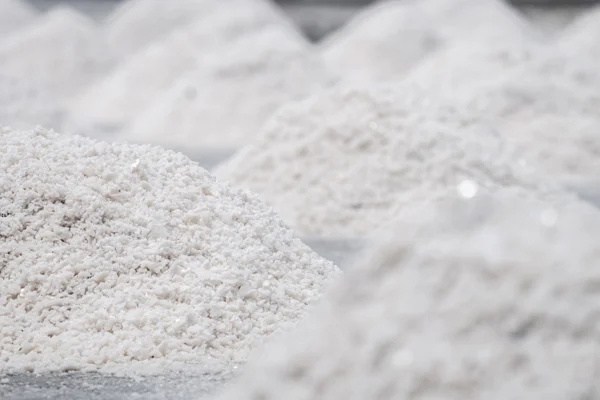
Domestic spot alumina prices edged down slightly last week amid flat trading activity. Recent alumina price movements were mainly attributed to earlier concentrated restocking by downstream buyers, which has led to accumulating inventories at rail stations and smelters. Coupled with supply-side maintenance-driven output cuts that are still building, readily available spot volumes have tightened relatively. Only sporadic tender deals were heard recently, leaving prices in a temporary steady phase. On the bauxite front, domestic ore prices saw limited movement last week. Supply-side bottlenecks are unlikely to ease in the near term, with mines prioritising captive supply, leaving little excess spot material available. For imported ore, freight rates rebounded slightly and consecutively last...
Grow with
AL Circle

ALENZ is calling for provisional trade protection as rising low-cost aluminium extrusion imports put pressure on domestic producers during an ongoing safeguard investigation. New Zealand's aluminium extrusion industry is urging the government to introduce temporary trade protection as imports surge 38 per cent year-on-year, putting pressure on local manufacturers while a safeguard investigation is underway. The Aluminium Extruders Association of New Zealand (ALENZ) asked the Ministry of Business, Innovation and Employment (MBIE) in January to investigate whether safeguard measures should be applied under the Trade (Safeguard Measures) Act. MBIE began an 85-day investigation in May, after the government accepted the need to examine the industry's concerns. ALENZ is now calling for a...

PT Alamtri Resources Indonesia Tbk (ADRO), the Jakarta-listed natural resources company, is entering a new stage of growth as its aluminium smelting investments begin to take shape alongside stronger margins from its metallurgical coal business. The outlook has strengthened Sucor Sekuritas' view of the company, with the brokerage retaining its bullish rating and a target price of IDR 3,800 (USD 0.24) per share. Analysts see Alamtri as an attractive value opportunity, citing its high-margin mining operations, sizeable internal cash reserves and potential for rapid revenue growth over the medium term. Alamtri's growing presence in green metal refining is also drawing attention from international investors watching Southeast Asia's transition economy. The company's strategy provides an...

The European Union’s aluminium extrusion trade is moving in two distinct, although equally subdued, directions. Exports have remained broadly resilient despite repeated fluctuations, while imports have been declining consistently since reaching a peak in 2022, according to International Trade Administration data. As far as exports are concerned, the volumes have been fluctuating over the years now. After declining for the two consecutive years by total 10.14 per cent from 345,241.74 tonnes to 310,217.09 tonnes in 2020, the exports rose strikingly in the subsequent year and regained higher volume than in 2018 level, coming in at 356,523.94 tonnes in 2021. However, the recovery did not last beyond two years and eventually plunged to as low as 319,840 tonnes as of 2023. They subsequently...

At the US-Canada border, aluminium is constantly on the move, but the direction of trade is far from balanced. In the first six months of 2026, the US imported 907,581.44 tonnes of primary aluminium from Canada, while exporting only 78,886.12 tonnes of semi-fabricated aluminium products such as sheets, plates, foils, extruded profiles, tubes and wire to Canada. US therefore imported about 11.5 times more primary aluminium from Canada than it exported in semi-fabricated form. That raises a question for the aluminium industry. If such large volumes of Canadian primary metal are entering the US, and the country has a sizeable downstream processing base, why is so little semi-finished aluminium travelling back to Canada? The answer lies in the different roles the two countries have developed...

The European Union (EU) is preparing a broader restriction on aluminium scrap exports to non-Organisation for Economic Co-operation and Development (OECD) countries, replacing an earlier trade proposal that would have covered only part of the bloc’s scrap flows. The move could largely impact international aluminium recycling trade, especially major Asian destinations such as China and India. As per an official statement released from the cabinet, EU Executive Vice-President Stephane Sejourne has “decided to withdraw the proposal and to explore a proposal, independent from trade instruments.” and is instead working on a delegated act under the Waste Shipment Regulation. The European Commission had initially been expected to introduce limited measures on September 23. However, “In the...

A NewPro study supports a staged 2,000-to-4,000-tonne-per-year high-purity alumina plant on the US Gulf Coast, with a post-tax NPV of about USD373 million and a 42.3 per cent IRR. Impact Minerals is advancing plans for a modular high-purity alumina (HPA) plant in the US after an independent scoping study identified a preferred development case on the Gulf Coast. The study, completed by NewPro for Impact's 50 per cent-owned Alluminous Pty Ltd, supports a staged facility starting at 2,000 tonnes per year of HPA and scaling to 4,000 tonnes per year. It models a post-tax NPV₈ of AUD 518 million (USD 373 million) and an internal rate of return of 42.3 per cent, based on an AUD/USD rate of about 0.7206 on September 7, 2026. The findings strengthen Alluminous' plan to establish its first...

A truck’s overall weight comes from dozens of components, including the engine, chassis, tyres, etc. Wheels are one area where fleets can explore lightweighting. Traditional steel wheels, widely used across the transport industry, are known for their robustness. Forged Alcoa aluminium wheels offer another option, combining reduced weight with the strength needed for demanding commercial applications. Alcoa aluminium wheels come into focus when fleets looking to improve truck efficiency, payload and operating productivity, consider fuel, tyres, aerodynamics and driver behaviour as well as an essential factor of the vehicle weight. For fleet operators, the question is becoming less about simply asking “How much does it cost?” and more about “How much weight are we carrying, and what is that...

A WBCSD study says advanced sorting technology is available, but stronger demand for grade-specific secondary aluminium is needed to unlock investment. Technology for sorting mixed aluminium scrap has advanced significantly, but weak domestic markets for some recovered grades are limiting investment in automated sorting infrastructure, according to a study by the World Business Council for Sustainable Development (WBCSD). The study, conducted through WBCSD's North America Aluminum Initiative, examined whether technologies such as X-ray transmission (XRT) and laser-induced breakdown spectroscopy (LIBS) could help transform mixed aluminium scrap into higher-quality, grade-specific secondary metal for domestic use. Its conclusion is that technology is only part of the equation. Recyclers...

LME aluminium prices edged lower on September 4 compared with the previous trading day, while aluminium stocks also declined marginally. The most notable movement was in cancelled warrants, which fell by more than 38 per cent day on day. On September 4, the LME aluminium cash bid price stood at USD 3292 per tonne, down 0.30 per cent from USD 3302 per tonne on September 3. The cash offer price stood at USD 3292.5 per tonne , compared with USD 3303 per tonne a day earlier, marking a 0.32 per cent decline. The LME aluminium 3-month bid price stood at USD 3292 per tonne on September 4, down 0.33 per cent from USD 3303 per tonne on September 3. The 3-month offer price stood at USD 3293 per tonne, compared with USD 3303.5 per tonne previously, representing a 0.32 per cent decline. Explore- Most...

Fenesta has commissioned a new aluminium extrusion plant in Kota, Rajasthan, expanding its presence in the aluminium value chain and creating a new business vertical serving external customers. The Gurugram-based windows and doors business of DCMShriram Ltd said the facility will initially support its internal extrusion requirements, giving the company greater control over production and reducing its reliance on external suppliers. The plant will also supply aluminium extrusions to original equipment manufacturers (OEMs) and other users, allowing Fenesta to participate directly in the wider extrusion market. To know the global production, demand and consumption forecasts of aluminium extrusions, explore our report "The World of Aluminium Extrusions to 2035" Bringing extrusion in-house The...

Sanket Deora takes over as Chief Financial Officer following the resignation of Shashank Shekhar Chaturvedi, effective September 3, 2026. Sampat Aluminium has appointed Sanket Sanjay Deora as its new Chief Financial Officer and Key Managerial Personnel, marking a change in the aluminium manufacturer's finance leadership. The company's Board of Directors approved the appointment at a meeting on September 3, 2026, following the resignation of outgoing CFO Shashank Shekhar Chaturvedi. Chaturvedi stepped down citing pre-occupation and other personal commitments. The company said he confirmed that there were no other material reasons for his resignation and that all dues payable to him had been cleared. To know the global production, demand and consumption forecasts of aluminium extrusions,...

The aluminium industry stands at a juncture material quality, recycling capacity, cross-border cooperation, carbon compliance and energy security are falling into a network of interconnectivity. The aluminium supply chain is evolving from simply securing enough metal to securing the right quality, the right carbon profile, the right technology and the right energy at the right cost. For businesses, this means supply-chain decisions are increasingly becoming strategic rather than purely transactional. From secondary aluminium trust to a recycling ecosystem India’s secondary aluminium market is expanding, but buyers need stronger checks before committing to suppliers, as trust has to accompany volume. As Indian buyers increase their participation in secondary aluminium, supplier...

Fun Kids, the UK’s leading radio station for children, families and parents, released the final episode of the Amazing Aluminium podcast series on 2nd September. Co-created by the Aluminium Packaging Recycling Organisation (Alupro), Amazing Aluminium touches on the metal’s composition, its widespread applications and how it’s recycled, with the next and final episode focusing on its future. Fun Kids is available across the UK on DAB digital radio, and online. The Amazing Aluminium podcast series is part of Alupro’s wider national initiative to get primary and secondary school pupils excited about recycling. Through its Learning Aluminium website, parents, pupils, carers and teachers can download further free resources to help build knowledge about packaging materials and recycling best...

Indian electronics manufacturers are increasingly substituting aluminium for copper in key components as surging metal costs put pressure on margins. Indian electronics manufacturers are turning to aluminium and steel as alternatives to copper as a sharp rise in copper prices pushes up production costs and squeezes operating margins. Copper prices have climbed nearly 45 per cent year-on-year, prompting companies to pursue so-called value engineering across components such as motor windings, condenser coils and transformers. The shift towards lower-cost materials could reduce overall manufacturing costs by around 2 per cent to 6 per cent, according to the source. The move comes as electronics companies face less room to pass higher input costs on to consumers. Several manufacturers have...

Thailand has opened a new anti-dumping exporter review covering Chinese aluminium extrusions, with a provisional 21.94 per cent cash deposit rate set for the applicant. Thailand's Department of Foreign Trade has initiated a new exporter review covering aluminium extrusions from China, adding another layer of scrutiny to imports that are already subject to definitive anti-dumping duties. The review follows an application from Chinese producer Guangdong Shengyu Xingda Aluminum Profile Co., Ltd. As part of the proceeding, Thai authorities established a provisional anti-dumping cash deposit rate of 21.94 per cent, calculated on a cost, insurance and freight (CIF) basis. The provisional rate will apply for up to one year or until the review is concluded, whichever comes first. To know the...

Storvik and Charl-Pol have launched Alumotion to bring proven robotic solutions, local engineering and lifecycle support closer to Canada's aluminium smelters. Canadian aluminium smelters are set to gain a new source of automation expertise as Storvik and Canadian technology company Charl-Pol launch Alumotion, a joint venture focused on robotised solutions for aluminium production. The venture will initially concentrate on robotised anode assembly solutions, combining Storvik's automation expertise with Charl-Pol's established Canadian engineering and industrial capabilities. The aim is to give smelters access to proven technology while keeping engineering, manufacturing, project execution and long-term service closer to their operations. For aluminium producers, the offering is...

Hungary will raise the maximum fine for serious environmental violations by large manufacturers to 5 billion forints (USD 16 million) under new measures to strengthen environmental oversight across industries, including EV battery manufacturing, recycling, and decommissioning. The changes come as Hungary continues to play a major role in Europe's EV battery manufacturing industry. The new rules place greater attention on how manufacturing facilities operate, while also covering battery recycling and the decommissioning of plants. This could encourage companies to invest further in cleaner production methods, improved monitoring and technologies that help identify and manage environmental risks. Prime Minister Peter Magyar said the measures are intended to create a stronger deterrent and...

Odisha has brought forward its investment roadshow in the United Arab Emirates as competition among Indian states for overseas capital intensifies. The programme was initially planned for December, but growing investor outreach by other states prompted the government to advance the visit, according to officials from the state industries department. The three-day roadshow will take place in Abu Dhabi and Dubai from September 9 to 11, led by Odisha Chief Minister Mohan Charan Majhi. It follows Madhya Pradesh’s UAE investment programme, scheduled for September 6 to 8. Additional Chief Secretary for Industries Hemant Sharma said the state could not afford to delay its international outreach while competing regions were already approaching overseas investors. Odisha will use the visit to...