2026 brings in CBAM: A challenge for European importers or a price for Indian exporters?
Explore- Most accurate data to drive business decisions with 50+ reports across the value chain
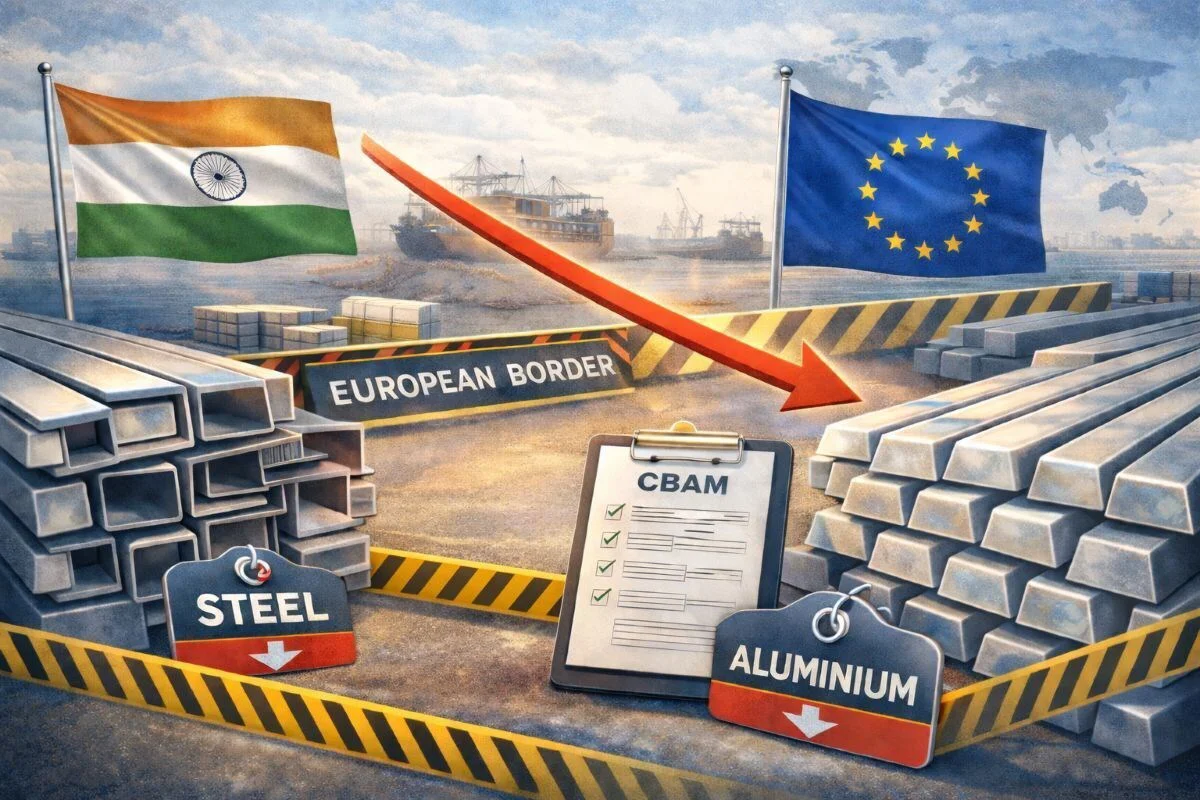
Starting from January 1, 2026, aluminium and steel exports from India will face carbon-related duties. This is owing to the Carbon Border Adjustment Mechanism (CBAM) enforced by the European Union (EU), which comes into effect today. The Global Trade Research Initiative (GTRI) observes that while, apparently, the EU importers need to pay the CBAM levy, it is the Indian exporting industry, likely to bear the actual brunt of lowered aluminium and steel prices.
The GTRI report states that in order to maintain the competitive edge, several Indian exporters may have to reduce metal (aluminium and steel) prices up to 15-22 per cent. This would let EU buyers absorb the carbon tax in their margins. Additionally, the contract terms would turn more rigid, and the supplier selection criteria stricter.
The CBAM stipulations
As CBAM is said to be a plant-based carbon emission accounting regulation, exporters need to calculate the embedded emissions for electricity use and combustion of direct fuel.
CBAM does not consider ESG disclosures or sustainability reports. Compliance demands plant-level emissions data verified by EU-approved auditors, defaulting on which leads to inflated costs up to 30-80 per cent. Independent verification of emissions data will be mandatory with only EU-recognised or ISO 14065-adhering verifiers.
Also read: One month to CBAM: what’s in, what’s out, who pays, and how the aluminium industry must prepare
The GTRI projections
Regarding the carbon tax burden, GTRI warns the aluminium industry of its dependence on the electricity intensity and use of power sources. For instance, coal-powered aluminium may face very sharp hits. It further predicts loss of competitiveness for the steel industry in the high-emission production routes, like blast furnaces.
FY25 has witnessed aluminium and steel exports from India to the EU already dropping 24.4 per cent due to CBAM anticipation. Micro, small and medium enterprises (MSMEs) remain most vulnerable, lacking data access and facing exclusion without upgrades, and eventually facing challenges in verification and higher compliance charges.
Ajay Srivastava, GTRI founder, noted, "A key concern flagged in the report is that large producers often do not share plant-level emissions data with MSMEs that source steel or aluminium from them. In the absence of verified data, EU authorities may apply default emission values, sharply inflating the carbon cost even when actual emissions are lower."
This is likely to lead such small industries to make an exit from the export market of the EU supply chain unless corrective measures are introduced to balance the situation.
Long-term implications
As the MSMEs face an uncertain future and verification defaulters risk losing business in the EU market, low-emissions producers, on the other hand, anticipate gaining an edge with the shift in global trade dynamics.
Must read: Key industry individuals share their thoughts on the trending topics

Ravi Shahi takes charge as the Chief Commercial Officer at Vedanta’s Jharsuguda smelter
Next articleOff-Season, coupled with high aluminium prices, the proportion of liquid aluminium declined in December
Grow with
AL Circle