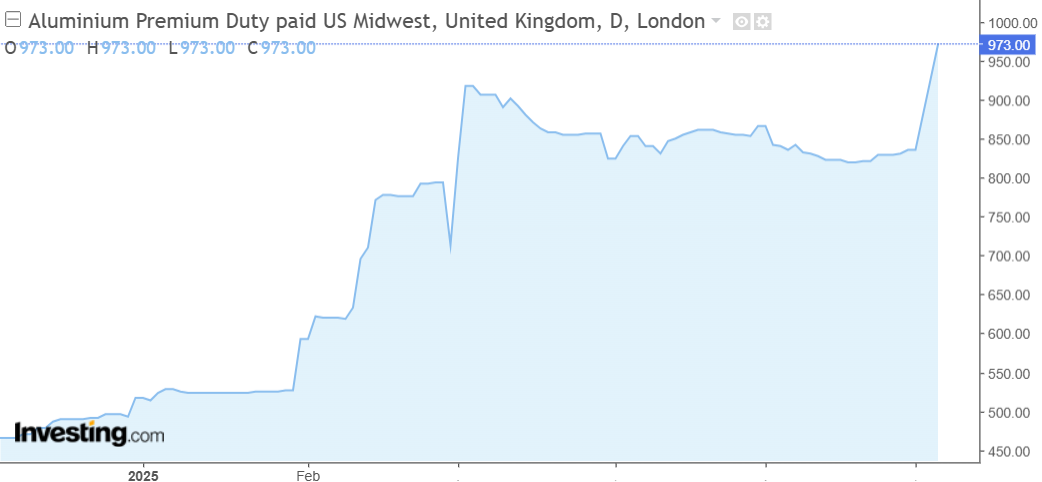
The implementation of the United States’ tariff hike to 50 per cent on June 4 instantly prompted a 4.85 per cent surge in the US Midwest duty-paid premium on the physical market on June 5, clocked at USD 973, compared to USD 928 the previous day.
Trump doubled the aluminium and steel tariff from 25 per cent to 50 per cent, creating severe tensions among key players in the industry worldwide, especially those heavily reliant on imports and exports. Ever since Donald Trump proposed tariffs on aluminium and steel with his second term of his presidency, the US Midwest duty-paid premium witnessed a gain of 190 per cent.
It is already known that the US heavily relies on imports when aluminium is in question. To date, the exports have been paying the premiums per the benchmark set by the London Metal Exchange (LME), and the premium costs cover the taxes and freight. However, the increased premium cost can directly affect the exporters and end-users.
Premium trends in last one month of 2025
As per the price range provided by investing.com, from May 6 to 13, the premiums represented a downward movement, when the price dropped from USD 843.32 to USD 829.41. In the same week, the premiums represented an upward movement on May 9, 2025, where the same rose to USD 844.00. The following week, the premiums represented a fluctuating movement but mainly a downward trend where the price further reduced to USD 822.01.
In the ensuing week, as per the price range provided by investing.com, the premiums continued to represent a fluctuation, showing both upward and downward trends. After May 30, 2025, the premium price witnessed a similar hike, which was last seen on May 30, 2025, when the price stood at USD 838.00. However, the previous day's price was closed at USD 832.35, representing an increase of 0.68 per cent.
While the premium remained steady on June 2, it began to climb sharply from June 3 following the tariff hike announcement, jumping from USD 883 to USD 973.
Image source: investing.com
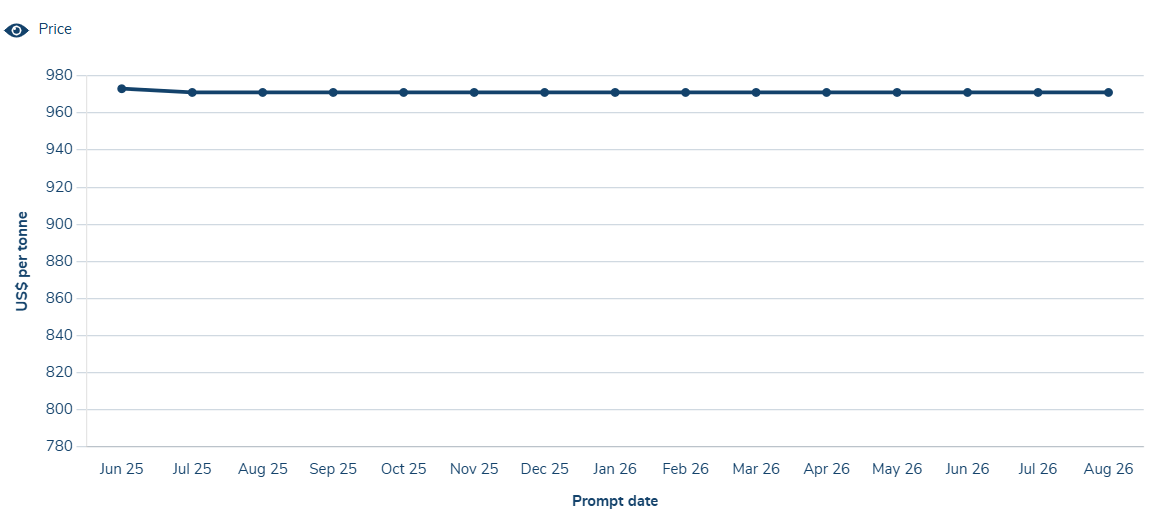
As per the price benchmark set by LME, for June 2025, the premium price would be static at USD 973.00. However, the premium price is subject to change from July 2025, when the price is estimated to fall to USD 971 and is predicted to remain at the same price for the rest of the year.
Impact of increased tariff and premium
The newly imposed 50 per cent tariff for aluminium exports, effective from June 4, 2025, is set to cause price shifts in both the household and industrial products. This is because of the rising prices of raw materials, which will ultimately weigh on end-user product costs..
Consumer categories that may see price hikes with the new tariff are likely:
Severe tension has been hovering over automobile manufacturers as most of the making process relies on aluminium, especially for lightweight automotive alloys. We can see aluminium, from the automobile body and structure to engine parts. The sudden doubling of the tariff from 25 per cent to 50 per cent can double the price of the cars. However, Trump has made automobile manufacturing easy by keeping the tariff 25 per cent for imported vehicles.
This can be a severe shock for athletes and sports enthusiasts as they may witness higher prices for equipment like tennis rackets, lacrosse sticks, baseball bats and others containing aluminium. An increased price has been seen for the aluminium bats, which were deemed expensive before the tariff hit. This may have direct repercussions for people interested and willing to participate actively in different sports.
As the increased tariff has come into being, the prices of the beverage cans, be it for soda, seltzer or beer, are also likely to increase, directly impacting US consumers. Apart from the consumers, major business brands would have to alter their strategy as per the 50 per cent imposed tariff. Moreover, if the increased price is not viable for consumers, big brands may switch back to plastic.
Canned and packaged goods
The people of the US may also face increased prices while purchasing groceries. This is because most nonperishable goods, be it chickpeas, soups, beans and so on, come in aluminium cans. With the 50 per cent tariff on aluminium, consumers can be hesitant to pay higher prices for products, especially those demanded regularly.
Different household appliances, likely dryers, dishwashers, air conditioners and so on, are also highly affected by the imposed 50 tariff by Trump on June 4, 2025. This can create added tension among consumers and manufacturers since increased prices would decrease market demand. The price hike can also affect simple tasks like lawn mowing because the product used contains aluminium.
The doubled tariff on aluminium and the increase in the premium prices will hamper the US from importing aluminium or products made of it. A significant decrease in consumer purchasing power will also be witnessed, affecting the country's overall economy and directly impacting industries. Will Trump continue to have a blank site for all these sectoral and consumer impacts?













_md.webp)
_md.webp)







