您想继续阅读英文文章还
是切换到中文?
是切换到中文?

THINK ALUMINIUM THINK AL CIRCLE


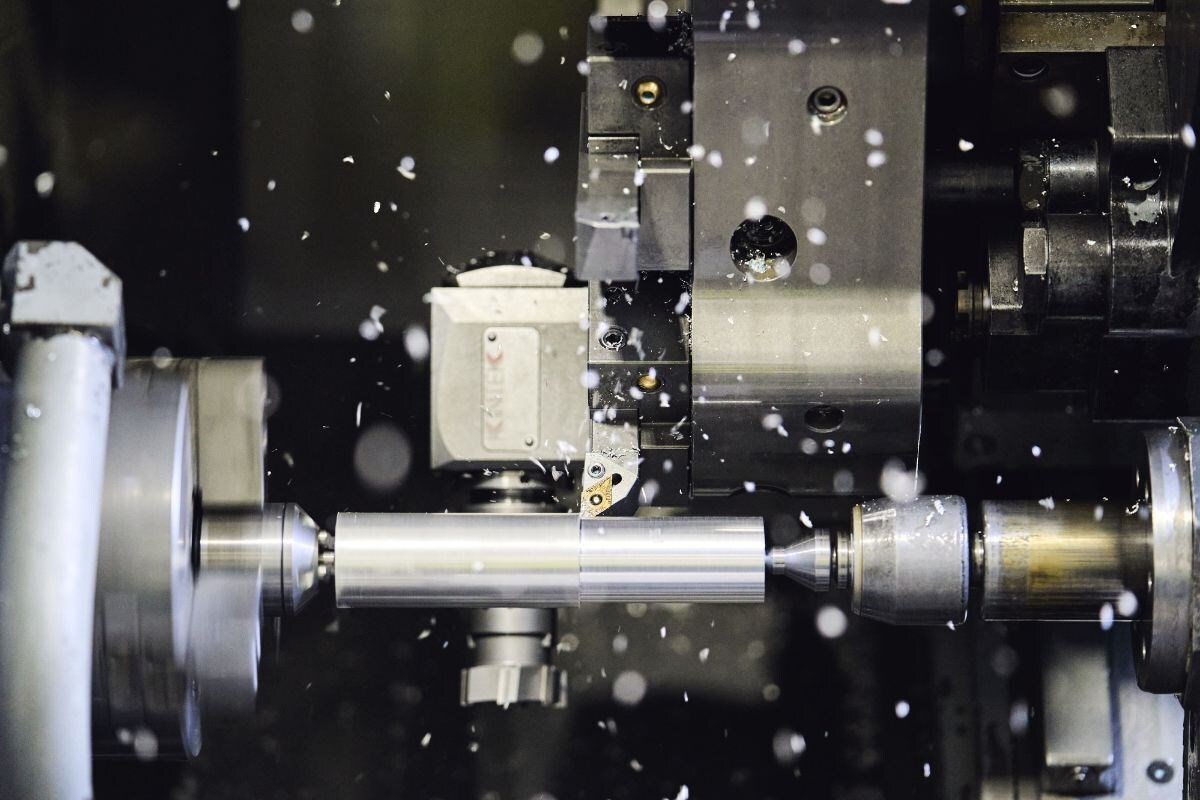
This image has been obtained via official Press Release
Founded in 1968 in Rovato, Eural Gnutti has built its position as the world’s leading manufacturer of drawn aluminium bars and one of Europe’s largest producers of extruded bars and profiles. Its aluminium bars serve demanding sectors such as mechanical engineering, automotive, aerospace, medical, electrical, electronics and defence, while its heat-treated profiles support applications across automotive, pneumatic, actuator, hydraulic and heat sink manufacturing.
As industries accelerate their shift away from lead-based metals, Eural Gnutti’s 2033 lead-free aluminium alloy emerges as more than a material innovation; it represents a strategic response to the future of precision machining. In this interview, Eural Gnutti explains how 2033 was developed to match the productivity of traditional free-cutting aluminium and brass, while improving weldability, anodising performance, tool life and regulatory readiness.
AL Circle: Eural Gnutti’s 2033 alloy has garnered significant attention for its performance. Could you share the story behind its development and what makes it a standout in the lead-free aluminium space?
Eural Gnutti : Eural Gnutti S.p.A began developing lead-free alloys with high machinability well before the official adoption of certain EU regulations restricting the use of lead in metals intended for machining. Following the success of the 6026LF lead-free alloy, Eural registered the 2033 LEAD FREE alloy in 2018. The best-known and most widely used 2xxx series (Al-Cu) alloys for machining bars are 2011, with a lead content of between 0.2 and 0.4 per cent and therefore compliant with RoHS regulations for electrical and electronic applications, and the twin alloys 2007 and 2030, with an even higher lead content.
Thanks to a lower melting point compared to other alloying elements, it allows the chip to break into small fragments during turning operations. With these references in mind, Eural Gnutti S.p.A has developed 2033 to meet the requirements that made the 2011/2007/2030 alloys famous and, at the same time, to improve upon the weaknesses of these alloys that have shaped the history of mechanical engineering, particularly in Europe. Thus, equivalent mechanical properties, equivalent machinability and improvements in weldability and suitability for anodising.
AL Circle: Lead-free alloys are becoming a significant topic in industries such as luxury goods and automotive. How do you see the demand for lead-free aluminium growing across different sectors in the next 5–10 years?
Eural Gnutti: The lead-free, highly machinable alloys 2033/6026LF/2077 developed by Eural Gnutti S.p.A ensure high productivity. Against a backdrop of lead reduction in aluminium and other metals such as brass and steel, they guarantee continuity for all those who use them.
AL Circle: Eural Gnutti and Tornos France have forged a strong partnership. How did this collaboration come to fruition, and what were the main objectives for both companies in this venture?
Eural Gnutti: The collaboration came about almost spontaneously. In the run-up to the Simodec trade fair, Tornos was looking for an innovative, high-performance aluminium, and the news reached us through our distribution channels. We are always open to this sort of initiative.
AL Circle: The 2033 alloy is designed for better chip fragmentation and machinability. How does it perform compared to traditional alloys like brass or standard aluminium in terms of processing efficiency and tooling life?
Eural Gnutti: The highly machinable 2033 LEAD FREE alloy offers an alternative to other metals, particularly brass. Users of this metal have always been used to excellent machinability thanks to its high lead content. The lead-free alternatives to brass currently available, which comply with upcoming regulatory restrictions, do not yet guarantee excellent productivity. The 2033 alloy therefore becomes a very attractive solution, guaranteeing excellent machinability despite being lead-free, whilst maintaining the same average tool life.
AL Circle: At the Simodec exhibition, Tornos showcased the capabilities of the 2033 alloy in a live demonstration. Could you walk us through the practical test and its outcome, particularly in terms of performance and finish quality?
Eural Gnutti: Tornos’s aim was to create a charming little gadget: a small folding knife made entirely of metal – aluminium for the handle, steel for the blade and the ring, and finally titanium for the locking screw. In detail, the handle was machined through turning, milling, drilling and threading operations, followed by a tumbling finish, which produced a particularly shiny surface. The use of tools common for steel, combined with increased cutting speed, also helped to improve chip management.
AL Circle: How does the 2033 alloy contribute to operational continuity and reduce tool breakage during machining?
Eural Gnutti: Alloy 2033 is a highly technical solution, developed specifically to ensure consistency and uniformity. Its chemical composition, combined with the expert management and precise distribution of low-melting elements within the alloy, ensures excellent machinability and prevents tool breakage, thereby extending the tools’ natural lifetime.
AL Circle: With growing demand for sustainable materials, how does the lead-free aluminium 2033 alloy cater to the environmental and safety concerns of industries like luxury goods and watchmaking?
Eural Gnutti: The luxury and watchmaking sectors – and, indeed, an ever-growing number of other sectors – are paying increasing attention to issues such as the environment and safety. During the development of this alloy, Eural Gnutti S.p.A ensured that it could be produced using a significant proportion of recycled aluminium. During 2023 and 2024, specifically for the 2033 alloy, Eural managed to achieve peaks of over 90 per cent recycled aluminium, thereby preventing the release of substantial amounts of CO2 into the atmosphere that would otherwise have occurred if primary aluminium had been used. Lead is also coming under increasing pressure from various sides and has been recognised as toxic by several studies. We are pleased that, thanks to the decision to invest in lead-free solutions, Eural has been able to demonstrate that another alloy in the Lead Free family, the 6026LF, is now a candidate for approval for food contact.
AL Circle: How does the 2033 alloy align with global regulatory changes related to skin contact and the use of lead in materials? How do you foresee the 2033 alloy contributing to the future of precision machining and the use of lead-free materials in industrial applications?
Eural Gnutti: Alloy 2033, developed from the outset as a lead-free alloy, naturally meets the typical requirements of these sectors. But, to be honest, we expect much more from many other sectors. Alloy 2033 LEAD FREE has been specifically designed as an alternative to standard, highly machinable alloys commonly used today in electronic and electrical applications, including the automotive sector. In 2027, two key directives will come into force: RoHS in June and ELV in December. Neither will permit the use of lead in metals intended for machining. Those using alloys such as 2011 (Pb 0.2–0.4 per cent), which is in high demand in Western countries and some Asian countries due to its long tradition and excellent machinability, will have no better alternative than 2033 to maintain the same productivity or even improve it. Finally, in the long term, when and if the reach regulation also changes – as seems inevitable – and reduces the maximum lead content to almost zero, 2033 will reign supreme among the 2xxx series of free-cutting aluminium alloys, offering customers a solution characterised by excellent machinability, high mechanical properties and, at the same time, compliance with future restrictions.