







Introduction
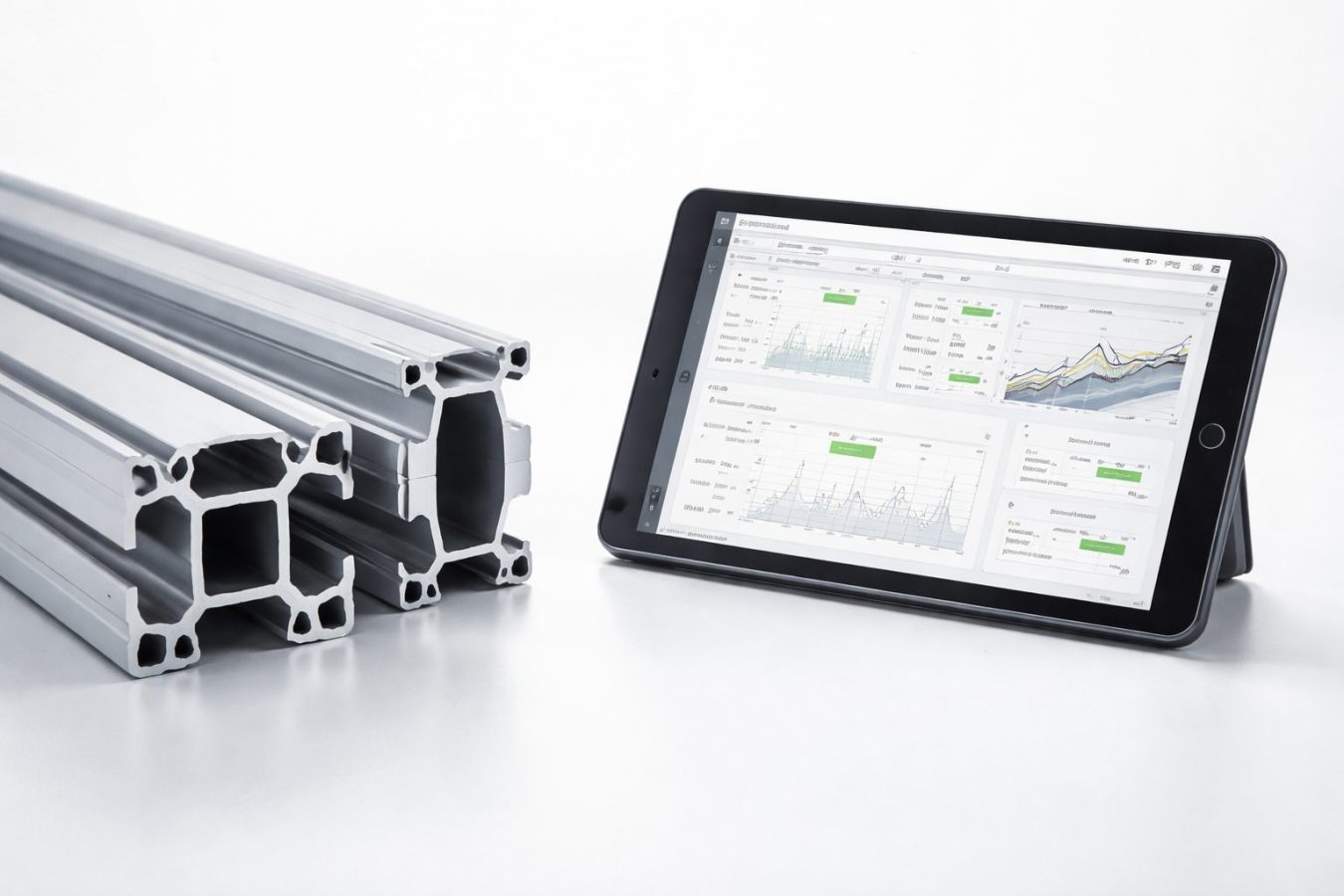
In today’s aluminium extrusion landscape, productivity is no longer driven by hardware alone. The integration of intelligent software and process optimisation tools is becoming critical for improving output, quality, and operational consistency.
This case study explores how a leading global extrusion player leveraged advanced software and process engineering to transform its production performance, delivering measurable gains in both productivity and product quality.
Company Overview
The company operates multiple state-of-the-art aluminium extrusion facilities across Europe, delivering high-value profiles through advanced manufacturing and strict quality control systems.
With a strong focus on innovation and operational excellence, the company continuously invests in technologies that improve efficiency, scalability and competitiveness in global markets.
The Challenge
Despite having advanced production infrastructure, the company faced several limitations within its extrusion operations:
- Difficulty in maximising productivity across extrusion lines
- Inconsistent profile quality due to process variability
- Limited control over process parameters during daily operations
- Underutilised production capacity
The core objective was clear: increase productivity while ensuring consistent, high-quality extrusion output.
The Solution
To address these challenges, the company implemented an integrated approach combining software, process redesign, and advanced cooling technology:
- Deployment of specialised extrusion software for process control
- Introduction of liquid nitrogen-based cooling technology
- Redesign of extrusion dies to optimise performance
- Development of data-driven production “recipes” for repeatability
The goal was not just incremental improvement, but full control over process stability and output consistency.
Implementation Approach
The transformation was executed in structured phases:
1. Software Integration
The extrusion software was installed to enable real-time monitoring, data collection, and automated control of process parameters.

2. Pilot Trials
Temporary infrastructure was deployed to conduct controlled trial runs, thereby validating the new system before full-scale implementation.
3. Process Optimisation
Extrusion dies were redesigned in collaboration with suppliers to maximise the benefits of the new system.
4. Full Deployment
A permanent infrastructure was installed, followed by system validation, operator training, and go-live execution.
Despite operational challenges, including remote execution during COVID, implementation was completed efficiently within a few months.
Data Management & Process Control
A key differentiator in this transformation was data-driven extrusion management:
- All production data was captured and stored centrally
- Process “recipes” were created based on die and alloy combinations
- Automated parameter settings ensured repeatability across runs
- Integration with PLC systems enabled real-time execution
This ensured consistent production outcomes and reduced dependency on manual intervention.
Results Achieved
The implementation delivered strong, measurable results:
- 32% increase in productivity across extrusion operations
- Significant improvement in profile quality and consistency
- Stabilised production processes with reduced variability
- Faster return on investment, achieved within months
Additionally, the improved process stability enabled the company to free up production capacity and strengthen its competitive positioning.
Scaling the Impact
Following the success of the initial deployment:
- The company began expanding the solution across additional dies
- The system was replicated in other production facilities
- Continuous improvement methodologies were adopted for ongoing optimisation
This demonstrates a shift from a one-time upgrade to a long-term digital transformation strategy in extrusion operations.
Key Takeaways for the Aluminium Industry
This case study highlights a broader shift in aluminium extrusion:
- Software is becoming central to process control, not just support
- Data-driven production enables consistency and scalability
- Process redesign (dies, cooling, parameters) is essential for real gains
- ROI from digitalisation in extrusion can be realised quickly
For extrusion players, the takeaway is simple:
If you are still relying purely on mechanical optimisation, you are already behind.
Conclusion
The future of aluminium extrusion lies at the intersection of engineering, software and data intelligence.
This case demonstrates that with the right integration of digital tools and process innovation, manufacturers can achieve substantial improvements in productivity, quality and operational control, without necessarily expanding physical capacity.
The question is no longer whether to adopt such technologies, but how fast you can implement them before competitors do.


 Voyagerman Technology


